Artisan Charcuterie Board Recipe: High-Contrast Assembly
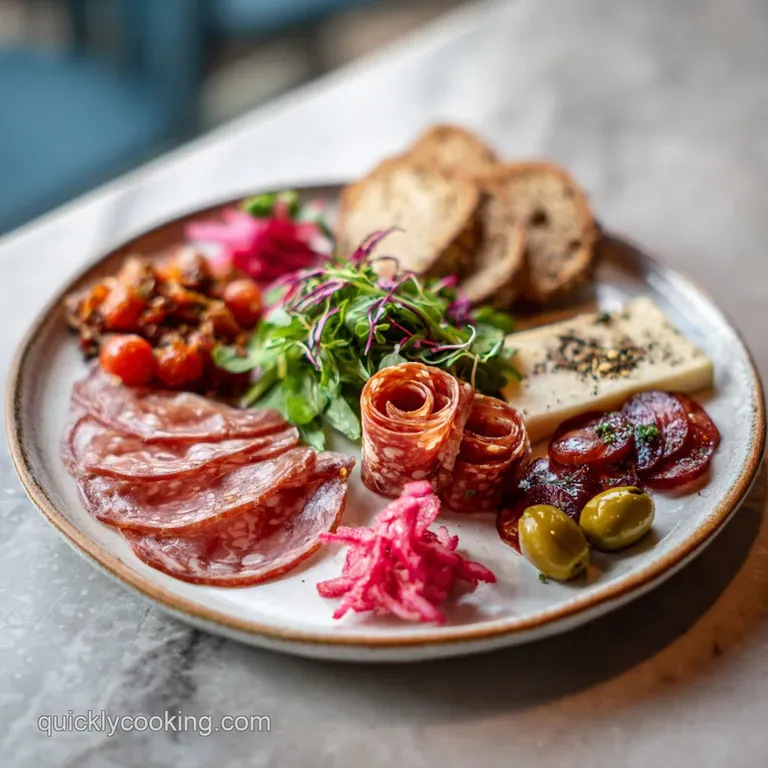
- Time: Active 25 minutes, Passive 0 minutes, Total 25 minutes
- Flavor/Texture Hook: A balance of salty cured meats, creamy bold cheeses, and snappy fresh produce.
- Perfect for: Impromptu dinner parties, holiday gatherings, or a sophisticated "no cook" weeknight meal.
- Essential Specs for Your Party Board
- Sourcing the Best Artisan Ingredients
- Minimal Tools for Maximum Assembly
- Fast Assembly Steps for Perfect Results
- Pro Tips to Avoid Common Mistakes
- Easy Variations for Any Special Occasion
- Storage Tips for Leftover Meat Cheese
- Perfect Pairings for Better Board Flow
- High in Sodium
- Recipe FAQs
- 📝 Recipe Card
Essential Specs for Your Party Board
The Physics of the Palette: Fat molecules in cheese and Wagyu salami coat your taste buds, while the acetic acid in cornichons acts as a surfactant to "scrub" the tongue. This chemical reset ensures every single bite tastes as vibrant as the first one you took.
| Servings | Ingredient Adjustments | Board Size | Assembly Time |
|---|---|---|---|
| 4-5 people | Half all quantities | 10x10 inch | 15 minutes |
| 9 people | Use full Schema list | 18x12 inch | 25 minutes |
| 15-18 people | Double meats and crackers | 24x18 inch | 40 minutes |
When I first started, I used to put the crackers on the board way too early. Big mistake. The moisture from the grapes and the humidity from the fridge will turn a "shatter crisp" flatbread into a sad, soggy cardboard strip in no time. Always add the grains last. Also, if you’re looking for a sweet finish to follow this savory spread, my Pumpkin Cheesecake Recipe makes a fantastic companion for the colder months.
Sourcing the Best Artisan Ingredients
Selecting ingredients isn't just about grabbing what's on sale. It's about a diverse "Protein Portfolio" and a curated "Cheese Curation." You want a mix of textures: the "snap" of the salami, the "crumble" of the cheddar, and the "spread" of the goat cheese.
| Component | Science Role | Pro Secret |
|---|---|---|
| Prosciutto di Parma | Salt cured preservation | Let it sit at room temp for 10 mins so the fat turns translucent. |
| Triple Cream Brie | Lipid heavy mouthfeel | Slice while cold for clean edges, then let it bloom for creaminess. |
| Raw Honey | Enzyme rich sweetness | Place near the goat cheese; the sugar cuts through the tangy caproic acid. |
| Castelvetrano Olives | Brine based palate cleanser | Buy "pitted" to keep the assembly fast and the eating effortless. |
- - 4 oz Prosciutto di Parma
- Thinly shaved. Why this? The high salt content provides a necessary punch against mild cheeses.
- - 4 oz Bresaola
- Lean beef. Why this? Offers a deep, earthy contrast to the fattier pork options.
- - 3 oz Wagyu Salami
- Uncured. Why this? Wagyu fat melts at a lower temperature, creating a buttery texture.
- - 3 oz Smoked Turkey Breast
- Thickly cubed. Why this? Adds bulk and a familiar, smokey flavor profile.
- - 5 oz Sharp Aged Cheddar
- Crumbled. Why this? Aged cheddars have lactate crystals that provide a satisfying "crunch."
- - 5 oz Triple Cream Brie
- Whole wheel. Why this? Acts as the "anchor" for the center of the board.
- - 4 oz Goat Cheese Log
- Herb or pepper crusted. Why this? The crust adds immediate visual texture and herbal notes.
- - 4 oz Manchego cheese
- Sliced triangles. Why this? A firm sheep’s milk cheese that stands up to the honey.
- - 1 box Sourdough Flatbreads
- Tangy and rigid.
- - 1 cup Multi seed Crackers
- For nutty flavor.
- - 0.5 cup Raw Marcona Almonds
- These are the "queen of almonds" for a reason.
- - 0.5 cup Toasted Walnuts
- Adds a bitter earthy note.
- - 1 cup Fresh Raspberries/Blackberries
- Visual pops of color.
- - 0.5 cup Castelvetrano Olives
- Mild and buttery, not overly salty.
- - 0.25 cup Cornichons
- Essential for acidity.
- - 2 tbsp Raw Honey
- For drizzling.
- - 1 bunch Fresh Rosemary
- For aromatics and filling gaps.
Minimal Tools for Maximum Assembly
You don't need fancy specialized tools to make a professional board. Efficiency is about using what you have to create speed. A large wooden cutting board is the standard, but a slate tile or even a clean marble slab works beautifully.
Chef Tip: If you don't have a honeycomb, just use a small espresso spoon for the honey to prevent it from running all over your crackers.
The Essential Tool Kit
- 1 Large Board: Wood or slate, at least 18x12 inches.
- 3 Small Ramekins: For the olives, honey, and cornichons.
- 1 Sharp Chef's Knife: For cubing the turkey and slicing the Manchego.
- Cheese Spreaders: One for the Brie and one for the goat cheese.
If you are planning a smaller gathering, like a girls' night, you can adapt these techniques into a Fun and Tasty recipe using a smaller tray and a few festive swaps.
Fast Assembly Steps for Perfect Results
Let's crack on with the build. We're going from the largest items to the smallest "fillers" to ensure the board looks lush and full.
- Place the Ramekins. Put your 2 tbsp Raw Honey, 0.5 cup Castelvetrano Olives, and 0.25 cup Cornichons in small bowls and place them in a triangle pattern on the board. Note: This creates the visual "skeleton" of the board.
- Anchor the Cheese. Place the 5 oz Triple Cream Brie wheel in the center. Crumble the 5 oz Sharp Aged Cheddar into rustic chunks and place them in a corner. Wait for the Manchego.
- Slice the Manchego. Cut the 4 oz Manchego into uniform triangles and "fan" them out along one edge of the board. Note: Fanning creates a sense of movement.
- Position the Goat Cheese. Place the 4 oz Goat Cheese Log opposite the Brie. Ensure the crust faces up.
- Sculpt the Prosciutto. Take the 4 oz Prosciutto di Parma and ribbon each slice. Note: Gently fold it back and forth like an accordion before placing to add height.
- Tile the Bresaola and Salami. Lay the 4 oz Bresaola in a shingled line. Fold the 3 oz Wagyu Salami into quarters (circles folded in half, then half again) to create "meat flowers."
- Add the Turkey. Pile the 3 oz Smoked Turkey Breast cubes in any remaining large open spaces. Keep it grouped.
- Nestle the Produce. Tuck the 1 cup Fresh Raspberries and Blackberries into the gaps between the meats and cheeses. Use them as "buffers" to keep wet fruit away from dry crackers.
- Incorporate the Grains. Arrange the 1 box Sourdough Flatbreads and 1 cup Multi seed Crackers in the outer edges.
- Final Flourish. Sprinkle the 0.5 cup Marcona Almonds and 0.5 cup Walnuts into the tiny holes. Tuck the bunch of Fresh Rosemary throughout for scent.
| Method | Total Time | Visual Style | Best For |
|---|---|---|---|
| Structured Rows | 15 minutes | Clean and modern | Corporate events |
| Abundant Chaos | 25 minutes | Rustic and lush | Home parties |
| Minimalist Plate | 10 minutes | Sparse and elegant | Pre dinner snack |
Pro Tips to Avoid Common Mistakes
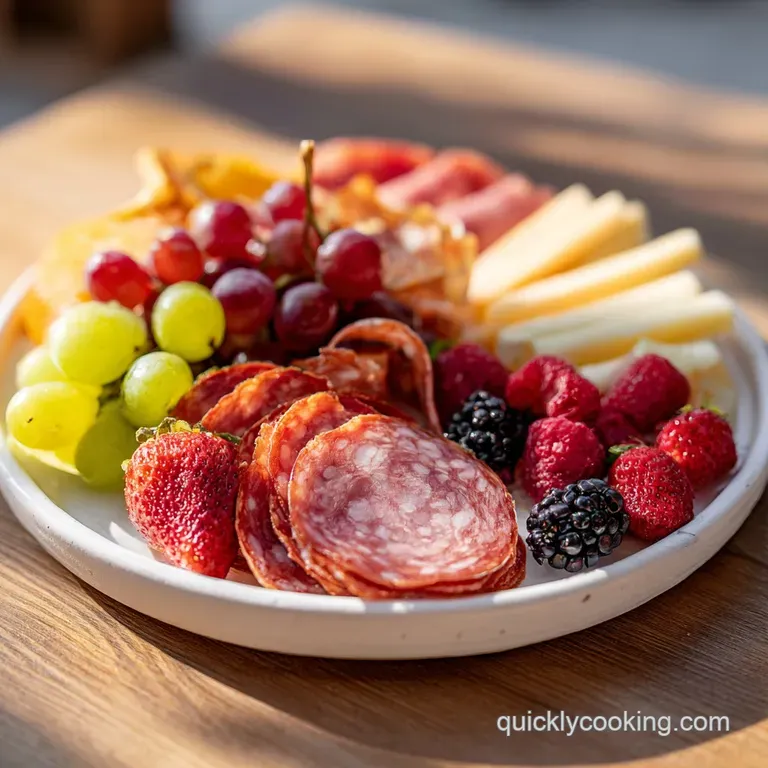
The biggest pitfall I see is "The Sahara Effect" - where the board looks dry and uninviting. This usually happens when you don't use enough "fillers." Those almonds and berries aren't just for eating; they are there to hide the wood of the board. If you can see the board, keep adding nuts!
Why Your Cheese Sweats
Leaving cheese out too long in a warm room causes the butterfat to separate from the milk solids. This results in an oily sheen that looks unappealing.
| Problem | Root Cause | Solution |
|---|---|---|
| Sweaty Cheese | Room temp too high | Take cheese out only 30 mins before serving. |
| Soggy Crackers | Contact with fruit/brine | Place crackers last or on a separate side plate. |
| Dull Colors | Lack of contrast | Add more berries or a sprig of bright green rosemary. |
Common Mistakes Checklist
- ✓ Don't slice the Brie wheel; let guests do it to keep the center moist.
- ✓ Avoid "meat mountains"; ribbon the prosciutto to create air and volume.
- ✓ Pat your olives dry with a paper towel before placing them near crackers.
- ✓ Use different shapes: cubes, triangles, crumbles, and ribbons.
- ✓ Group items by "pairing" (e.g., honey near the blue or goat cheese).
Easy Variations for Any Special Occasion
You can easily pivot this artisan charcuterie board recipe to fit different dietary needs or seasonal themes without losing the "wow" factor.
Pivoting to Plant Based
If you have vegan guests, replace the meats with marinated artichoke hearts, smoked tofu cubes, and roasted red peppers. For the cheese, high-quality cashew based "brie" or almond milk feta works surprisingly well. If you're looking for a fully balanced vegan option, you might like my Vegan Buddha Bowl recipe.
Embracing Seasonal Vibrancy
- Autumn: Swap raspberries for sliced persimmons and add dried figs.
- Spring: Use fresh radishes and snap peas instead of heavy nuts.
- Summer: Add slices of fresh peach and swap the cheddar for a fresh burrata ball.
Downsizing for Two
If you're making this for a date night, use a small dinner plate. Choose just two meats (Prosciutto and Salami) and two cheeses (Brie and Cheddar). Reduce the nuts to a single handful and skip the turkey.
Storage Tips for Leftover Meat Cheese
Charcuterie is the ultimate "zero waste" meal because everything can be repurposed. However, once a board has been sitting out for a few hours, you need to be smart about how you save the leftovers.
- Fridge: Store leftover meats and cheeses in separate airtight containers. Cheeses should be wrapped in parchment paper first, then plastic wrap, to let them "breathe" slightly. They will stay fresh for 3-5 days.
- Freezer: Do not freeze the Brie or Goat Cheese; the texture will become grainy and unpleasant. You can freeze the Salami and Bresaola for up to 2 months, though the texture might be slightly firmer upon thawing.
- Zero Waste Tip: Take all those leftover "nubs" of cheese and the last few slices of meat, chop them up, and toss them into a frittata or a gourmet mac and cheese the next morning. The rosemary sprigs can be dried and used for roasting potatoes later in the week.
Perfect Pairings for Better Board Flow
To really make this artisan charcuterie board recipe sing, you need to consider what people are drinking. The high fat content of the triple cream brie needs something with bubbles or high acidity to cut through it.
Beverage Dynamics
A dry Prosecco or a crisp Sauvignon Blanc is my go to. The effervescence literally lifts the fat off your palate, making you ready for the next bite of salty prosciutto. If you prefer beer, a Belgian Saison with its spicy, fruity notes is a classic pairing for aged cheddar.
The Maillard Myth
Some people think the flavor of smoked turkey or cured meats comes solely from the salt. That is a myth! While salt is the preservative, the deep flavor in the Smoked Turkey Breast comes from the Maillard reaction during the smoking process, and the Bresaola develops its "umami" through slow enzyme breakdown during air drying.
Understanding this helps you appreciate why a "low sodium" option for the prosciutto is still so flavorful.
Room Temperature Bloom
Never serve cheese straight from the fridge. Give it 30 minutes to "bloom." The fats need to soften to release their full aromatic profile. If you eat a cold Brie, you're missing about 40% of the flavor. Trust me on this patience pays off in taste.
Building this board is about more than just food; it's about creating a centerpiece that invites people to linger and talk. Right then, you've got the science, the steps, and the shortcuts. Go grab your board and let's get building!
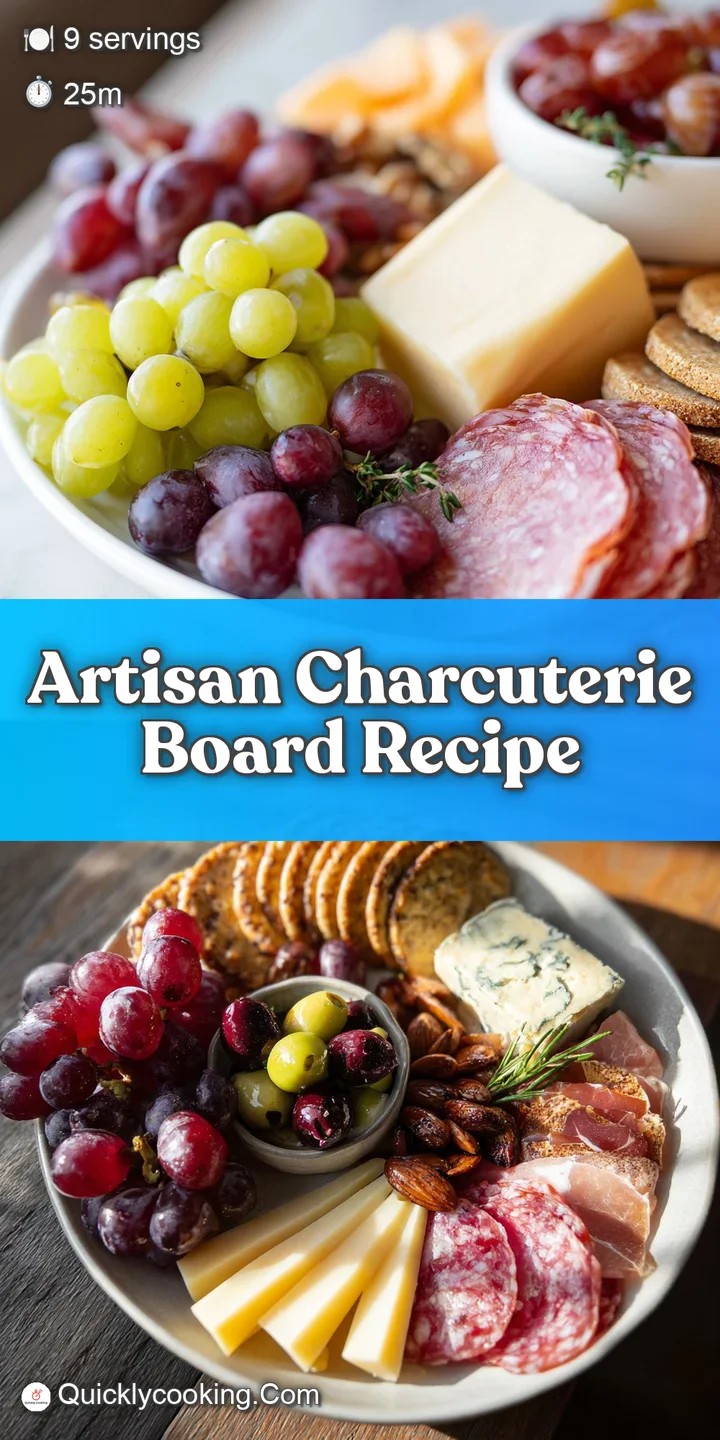
High in Sodium
805 mg mg of sodium per serving (35% of daily value)
The American Heart Association recommends limiting sodium intake to about 2,300mg per day.
Tips to Reduce Sodium in Your Charcuterie Board
-
Swap Meats Strategically-25%
Prosciutto, Bresaola, and Wagyu Salami are very high in sodium. Substitute some of these with unsalted roasted chicken breast or additional smoked turkey breast (check the label for lower sodium options) to significantly reduce sodium.
-
Select Lower Sodium Cheeses-15%
Aged cheddar and Manchego are higher in sodium. Replace a portion of these with a naturally lower sodium cheese like fresh mozzarella or ricotta, while keeping other cheeses to retain desired flavors.
-
Limit Olive Consumption-10%
Olives contribute significantly to the sodium content. Reduce the portion of Castelvetrano olives to 0.25 cup or less or consider using only a handful as garnish instead of serving them as a side.
-
Choose Low-Sodium Crackers-10%
Sourdough flatbreads and multi seed crackers can be high in sodium. Opt for unsalted or low-sodium versions, or try cucumber slices or bell pepper strips instead.
-
Reduce Cornichons Portion-5%
Cornichons are pickled and contain a substantial amount of sodium. Reduce the portion to 1 tbsp or less or substitute with fresh cucumber.
-
Control Honey Drizzle
While honey itself is low in sodium, excessive amounts contribute to overall sweetness. Be mindful of the quantity you use and drizzle sparingly.
-
Flavor with Herbs
Enhance the flavors of your charcuterie board with fresh herbs and spices instead of relying on salt. Rosemary, in this case, helps add depth and complexity without adding any sodium.
Recipe FAQs
What is the 3 3 3 3 rule for charcuterie?
No, that specific numerical rule is not standard. Many boards follow a rough guideline of three meats, three cheeses, three starches, and three accoutrements (like fruit or pickles) for balance, but it is not a strict culinary law.
What is artisan charcuterie?
Yes, artisan refers to small batch, high-quality preparation. Artisan charcuterie uses traditional curing methods, superior cuts of meat, and often includes locally sourced or specialized ingredients, contrasting mass produced versions.
How to make an aesthetically pleasing charcuterie board?
Place large items first, then fill every gap with small components. Start by anchoring your cheeses and placing ramekins for wet items, then weave meats around them, ending with nuts and herbs to cover all visible board space.
What not to put on a charcuterie board?
Avoid anything that will immediately wilt, bleed color, or become soggy. Wet items like fresh pineapple or canned vegetables should be avoided unless placed in a separate, sealed vessel. Also, avoid slicing delicate cheese far in advance.
Is it true that I must let the cheese sit at room temperature for flavor?
Yes, cheese absolutely needs to bloom at room temperature. Serving cheese straight from the fridge mutes the flavor because the fat molecules are too firm to release their complex aromas; aim for 30 minutes out before serving.
Why do my crackers get soggy when assembling ahead of time?
Crackers absorb ambient moisture from fresh fruit and vinegary pickles left in close proximity. To prevent this, always add crackers and bread components last, or serve them on a separate side plate completely detached from the main board.
Can I substitute cured meats with leftover cooked items?
No, you should strictly use cured or preserved meats for authenticity and safety. Leftover cooked items, like plain roast beef, lack the necessary preservation (salt and drying) required for classical charcuterie presentation. If you enjoy mastering flavor profiles in the oven, see how we use high heat techniques in the Homemade Banana Bread Recipe to lock in moisture.
Artisan Charcuterie Board Guide
Ingredients:
Instructions:
Nutrition Facts:
| Calories | 440 kcal |
|---|---|
| Protein | 30 g |
| Fat | 35 g |
| Carbs | 29 g |
| Fiber | 4 g |
| Sugar | 7 g |
| Sodium | 805 mg |
