Roasted Beet Avocado Feta Salad Recipe
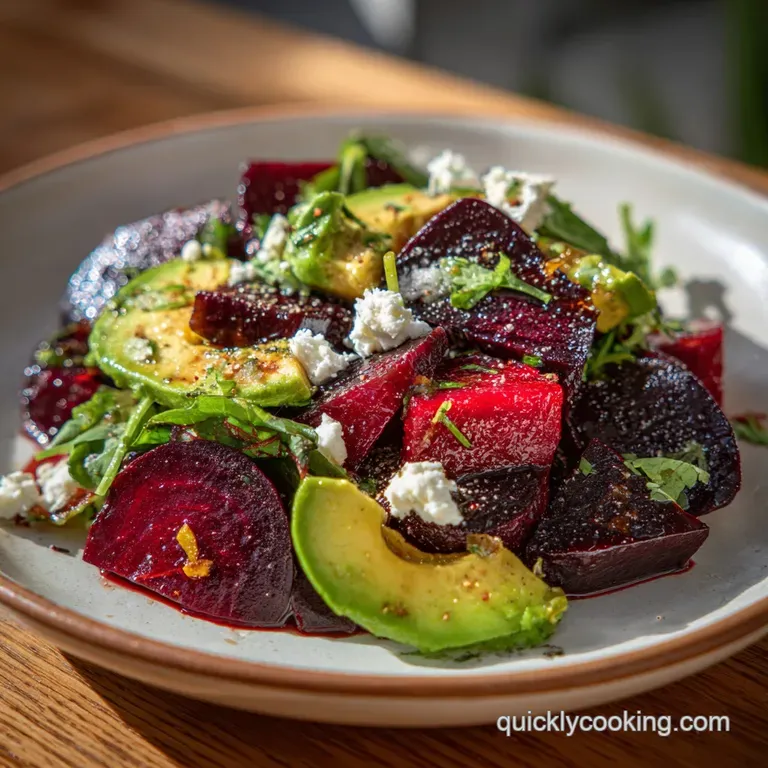
- Time: Active 15 minutes, Passive 25 minutes, Total 40 minutes
- Flavor/Texture Hook: Earthy roasted sweetness meets velvety avocado and salty feta crumbles.
- Perfect for: High efficiency meal prep, vibrant dinner parties, or a nutrient dense lunch.
- Master the Perfect Roasted Beet Avocado Feta Salad Recipe
- The Science of the Concentrated Roast
- Essential Component Analysis for Peak Flavor
- Quality Elements for Your Kitchen Assembly
- Professional Hardware for a Streamlined Prep
- Executing the Triple Phase Cooking Flow
- Navigating the Troubleshooting Logic
- Efficient Scaling for Large Groups
- Debunking Kitchen Misconceptions
- Storage Guidelines and Zero Waste
- Dynamic Pairing Suggestions
- Recipe FAQs
- 📝 Recipe Card
Master the Perfect Roasted Beet Avocado Feta Salad Recipe
The first time I pulled a tray of beets out of the oven, I realized I’d been doing it all wrong for years. The aroma hitting my kitchen wasn't just "vegetal" it was deep, caramelized, and almost like dark chocolate.
That sizzle when the balsamic dressing hits the warm, roasted cubes is the exact moment this dish transforms from a standard side into a crave worthy centerpiece. I used to spend hours boiling whole beets, only to end up with a stained kitchen and a muddy flavor, but this over high heat cubing method changed the game for my weekly meal prep.
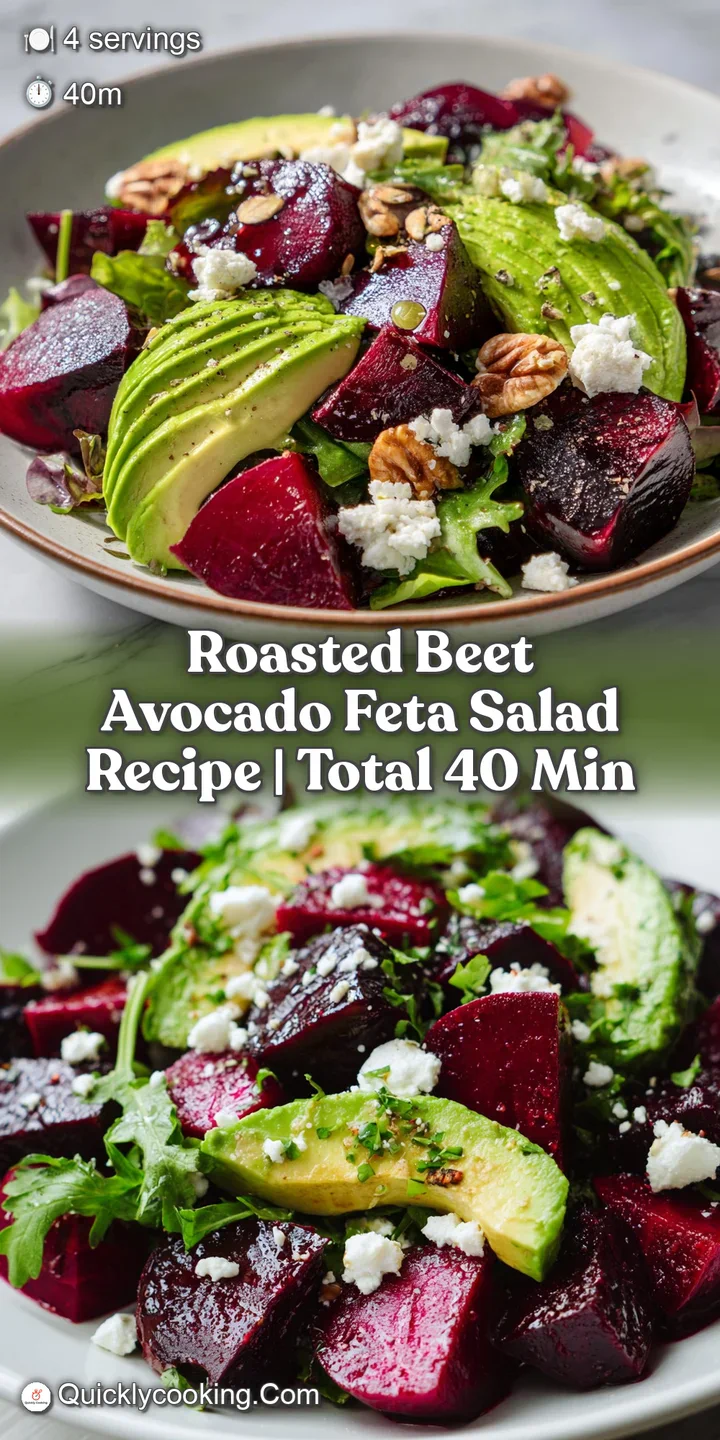
We are diving into a workflow that prioritizes speed without sacrificing that concentrated, earthy punch. You’ll get that satisfying "pop" from the toasted walnuts and the creamy, rich mouthfeel of the avocado, all tied together with a citrus balsamic zing.
Trust me on this: once you see how the feta starts to slightly soften against the residual heat of the beets, you'll never go back to cold, canned versions again. Let’s get your oven preheated and move fast we’ve got a masterpiece to build.
The Science of the Concentrated Roast
Maillard Caramelization: Cubing the beets to 1/2 inch increases surface area, allowing high heat to trigger the Maillard reaction faster than roasting whole. This transforms the natural sugars into complex, savory compounds that mimic the depth of roasted meat.
Lipid Emulsification: The Dijon mustard in our dressing acts as a stabilizer, binding the 4 tbsp extra virgin olive oil and vinegar into a creamy sauce. This ensures the dressing clings to the slick avocado skin rather than sliding to the bottom of the bowl.
| Servings | Ingredient Adjustments | Pan Size | Cook Time |
|---|---|---|---|
| 2 people | 1.5 beets, 1 avocado, 2 cups greens | Small sheet pan | 22 minutes |
| 4 people | 3 beets, 2 avocados, 4 cups greens | 13x18 inch rimmed sheet | 25 minutes |
| 8 people | 6 beets, 4 avocados, 8 cups greens | Two large sheet pans | 30 minutes |
Scaling this recipe is straightforward, but remember that overcrowding the pan is the enemy of a good roast. If the beets are too close, they steam instead of sear, losing that vital textural contrast. If you're looking for another variation of this profile, you might enjoy my Roasted Beet recipe which brings sweet potatoes into the mix for even more heartiness.
Essential Component Analysis for Peak Flavor
| Ingredient | Science Role | Pro Secret |
|---|---|---|
| Medium Beets (450g) | Primary Sugar Source | Keep cubes uniform to ensure every piece hits the fork tender stage at the exact same second. |
| Aged Balsamic | Acidic Brightener | Use a syrupy aged balsamic to provide a natural glaze that sticks to the roasted edges. |
| Ripe Avocados (300g) | Texture Carrier | Slice them last to prevent oxidation and maintain that velvety, buttery contrast against the beets. |
Roasting is the heavy lifter here, much like the technique used in my Mediterranean Chicken Gyro Recipe where heat transforms simple ingredients. When selecting your beets, look for firm roots with smooth skin; if the greens are still attached, save them for a sauté that's zero waste efficiency at its best.
Quality Elements for Your Kitchen Assembly
To execute this roasted beet avocado feta salad recipe, you’ll need the following high-quality components. I’ve included my favorite swaps for when you’re in a rush or want to experiment with different flavor profiles.
- 3 medium beets (450g): Peeled and 1/2 inch cubed. Why this? Cubing ensures a 25 minute cook time instead of 60+ minutes for whole roasting.
- 4 tbsp extra virgin olive oil: Divided for roasting and dressing. Why this? high-quality oil provides the fatty backbone needed to balance the beet’s earthiness.
- 1/2 tsp sea salt & 1/4 tsp cracked black pepper:Why this? Essential for drawing out moisture during the roasting process.
- 2 tbsp aged balsamic vinegar:Why this? Its sweetness cuts through the salty feta and rich avocado perfectly.
- 1 tbsp fresh orange juice:Why this? Citrus brightens the heavy, earthy tones of the root vegetables.
- 1 tsp Dijon mustard:Why this? The key emulsifier that keeps your dressing from separating on the plate.
- 1 small shallot: Finely minced. Why this? Adds a sharp, delicate bite that is less aggressive than raw garlic.
- 2 ripe avocados (300g): Cubed. Why this? Provides a velvety mouthfeel that mimics a heavy cream sauce without the dairy weight.
- 1/2 cup feta cheese (75g): Crumbled. Why this? The saltiness acts as a natural flavor enhancer for the sweet roasted beets.
- 4 cups arugula or baby spinach (120g):Why this? Peppery arugula provides a necessary bitter counterpoint to the sweet components.
- 1/4 cup toasted walnuts (30g):Why this? Adds a critical "shatter" texture to an otherwise soft salad.
- Fresh mint or parsley: For garnish.
| Original Ingredient | Substitute | Why It Works |
|---|---|---|
| Feta Cheese | Goat Cheese | Offers a creamier, tangier finish. Note: Does not crumble as cleanly as feta. |
| Walnuts | Toasted Pistachios | Adds a vibrant green color and a slightly sweeter, buttery crunch. |
| Balsamic Vinegar | Apple Cider Vinegar | Provides a sharper, fruitier punch. Note: Add a pinch of honey to mimic balsamic sweetness. |
Professional Hardware for a Streamlined Prep
Efficiency starts with the right tools. You don't need a professional kitchen, but a heavy rimmed baking sheet (like a Nordic Ware half sheet) is non negotiable for even heat distribution. A sharp chef’s knife will make cubing the beets and avocados a breeze, reducing your active prep time significantly.
I also recommend a small glass jar with a tight fitting lid for the dressing. Shaking is far more efficient than whisking when you're trying to emulsify Dijon and oil. Finally, a large stainless steel bowl gives you the room to toss the greens without bruising the delicate arugula leaves.
Executing the Triple Phase Cooking Flow
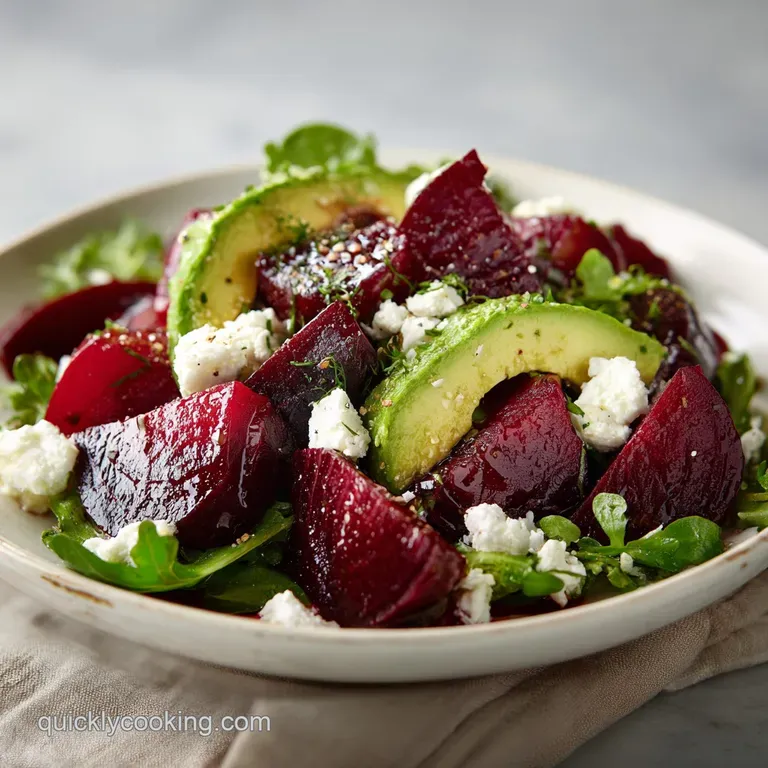
1. The over High heat Roast
Preheat your oven to 400°F (200°C). Toss the 450g of cubed beets with 2 tbsp of the olive oil, sea salt, and pepper directly on the sheet pan. Spread them into a single layer if they touch, they won't get those crispy, caramelized edges we’re after.
Bake for 25 minutes until the edges are dark and the centers are tender when pierced.
2. The Emulsified Dressing
While the beets roast, combine the balsamic vinegar, orange juice, Dijon, minced shallot, and the remaining 2 tbsp of olive oil in your jar. Shake vigorously for 30 seconds until the mixture is opaque and thickened. Note: Preparing this early allows the shallots to mellow in the acid of the vinegar.
3. The Layered Assembly
Place your 120g of arugula in a wide bowl. Add the warm roasted beets and half of the dressing, tossing gently. This "wilts" the greens just slightly, making them easier to eat. Top with the 300g of cubed avocado, 75g of feta, and 30g of toasted walnuts. Drizzle the remaining dressing over the top just before serving.
| Method | Time | Texture | Best For |
|---|---|---|---|
| over High heat Roast | 25 minutes | Crisp edges, tender center | Maximum flavor and speed |
| Air Fryer | 15 minutes | Very crunchy exterior | Small batches/Solo meals |
| Steaming | 10 minutes | Soft, uniform, earthy | low-fat diets (loses caramelization) |
Chef's Tip: If you want to prevent the beets from staining the entire salad pink, toss the beets in a separate small bowl with a teaspoon of the dressing before adding them to the greens. This "seals" the surface briefly and keeps your avocado and feta looking pristine.
This dish can also serve as a Simple Side Salad recipe if you skip the walnuts and use a lighter lemon vinaigrette, though I highly recommend sticking to the balsamic for the full experience.
Navigating the Troubleshooting Logic
Why Your Beets Are Shriveled
This usually happens when the cubes are cut too small or the oven is too hot for too long. If you cut them smaller than 1/2 inch, check them at the 18 minute mark. You want them tender, not dehydrated.
Why Your Dressing Is Breaking
If you see pools of oil, the emulsion has failed. This typically occurs when there isn't enough Dijon or you didn't shake it hard enough. Add another half teaspoon of mustard and shake again the lecithin in the mustard is the glue that holds the fat and acid together.
| Problem | Root Cause | Solution |
|---|---|---|
| Soggy Arugula | Dressing added too early | Only dress the greens right before the plate hits the table. |
| Bitter Beets | Skin not fully removed | Ensure you peel the beets deeply; the "earthy" flavor lives mostly in the skin. |
| Mushy Avocado | Over ripe fruit | Use avocados that give slightly to gentle pressure but aren't soft like a sponge. |
Common Mistakes Checklist
- ✓ Skipping the peeling step; beet skin can be gritty and overly bitter.
- ✓ Adding the avocado to the hot sheet pan; it should only touch the beets once they've cooled for 2 minutes.
- ✓ Using "pre crumbled" feta; buying a block in brine and crumbling it yourself ensures a creamier texture.
- ✓ Forgeting to toast the walnuts; raw walnuts lack the depth and "shatter" required for this dish.
- ✓ Over mixing the salad; a light fold keeps the colors distinct and the ingredients intact.
Efficient Scaling for Large Groups
When doubling or tripling this roasted beet avocado feta salad recipe, the most important factor is oven real estate. You cannot crowd the beets. If you're cooking for eight, use two separate baking sheets and rotate them halfway through the 25 minute cook time to account for oven hot spots.
For the dressing, you don't need to double the shallots exactly 1.5x the amount is usually enough to provide the flavor without overpowering the citrus. However, keep the oil to acid ratio strict to maintain the emulsification.
If you are making a massive batch for a party, keep the roasted beets, dressing, and chopped toppings in separate containers and assemble at the very last second.
Debunking Kitchen Misconceptions
One common myth is that you must roast beets whole in foil to keep them moist. While that works for a silky texture, it's inefficient for a weeknight. Cubing them raw and roasting at high heat actually creates a superior flavor profile because of the increased surface area for caramelization.
You aren't losing moisture; you're concentrating flavor.
Another misconception is that avocados will turn brown instantly in a salad. Because our dressing contains orange juice and balsamic vinegar (both acidic), the pH level of the avocado surface is lowered, which significantly slows down the oxidation process.
You can easily prep this salad an hour before a dinner party if it's dressed properly.
Storage Guidelines and Zero Waste
Storage: Store the roasted beets and dressing separately in the fridge for up to 4 days. Once the salad is fully assembled with the greens and avocado, it is best eaten within 2 hours. The salt in the feta and dressing will eventually draw water out of the greens, leading to wilting.
Freezing: I do not recommend freezing the assembled salad or the raw avocados. However, you can freeze roasted beet cubes for up to 3 months. To use them, thaw in the fridge and give them a quick 5 minute blast in a 400°F oven to restore their texture before adding to fresh greens.
Zero Waste: Don't throw away those beet peels! If you have an air fryer, toss them with a little oil and salt and fry at 350°F for 8 minutes for "beet chips." Similarly, if your walnuts have a few small "dust" pieces at the bottom of the bag, toss those into the dressing for extra thickness and a nutty undertone.
Dynamic Pairing Suggestions
This salad is a powerhouse on its own, but it truly shines when served alongside a protein that can stand up to its bold flavors. I love serving this with a simple grilled salmon fillet or a lemon herb roasted chicken. The acidity in the balsamic dressing acts as a palate cleanser between bites of rich meat.
If you're keeping it vegetarian, pair this with a warm quinoa bowl or a thick slice of toasted sourdough rubbed with a raw garlic clove. The creaminess of the avocado and the salt of the feta make it a perfect companion to crusty, artisanal breads. For a full Mediterranean inspired spread, consider adding it to a menu featuring my Mediterranean Chicken Gyro Recipe — the flavor profiles are incredibly complementary.
3 Step Time Plan Execution
- Prep Flow: Cube beets and start the roast. While they cook, mince shallots and prep the dressing in a jar.
- Cooking Flow: Toast walnuts in a dry pan for 3 minutes while the beets finish their final 5 minutes of roasting.
- Finish: Cube avocado last, toss the warm beets with greens, and top with the feta/walnuts/dressing.
Decision Shortcuts
- If you want a sweeter profile: Swap the walnuts for honey roasted pecans and add an extra teaspoon of orange juice to the dressing.
- If you want a spicier kick: Add 1/4 teaspoon of red pepper flakes to the beets before roasting.
- If you want a more filling meal: Add 1 cup of cooked, chilled farro or quinoa to the arugula base.
This roasted beet avocado feta salad recipe is all about high efficiency moves that yield high end results. Get those beets in the oven and enjoy the process!
Recipe FAQs
What is the single most important step for deep beet flavor?
Cube the beets before roasting. Cubing increases the surface area, maximizing contact with the high heat for faster sugar caramelization, which concentrates the flavor profile dramatically.
Is it true that I must roast beets whole in foil to prevent dryness?
No, this is a common misconception. Cubing the beets raw and roasting at 400°F ensures concentrated flavor through searing rather than steaming, which happens when wrapped.
How to stop the avocado from turning brown before serving?
Toss the avocado lightly with the prepared dressing immediately after cubing. The acid from the vinegar and orange juice in the dressing lowers the pH on the surface, slowing the oxidation process significantly.
How to ensure the dressing stays creamy and doesn't separate?
Use the Dijon mustard as your primary emulsifier. Whisk vigorously or shake hard in a sealed jar to force the oil and vinegar to bind around the mustard solids.
Can I substitute the walnuts with something else for crunch?
Yes, toasted pistachios are an excellent substitute. Toasting them first enhances their flavor, similar to how we draw out the depth of flavor in other roasted components, like in a Sheet Pan Chicken recipe.
How far ahead of time can I prepare the components?
Roast the beets and make the dressing up to 3 days in advance. Store them separately in the refrigerator; only assemble the salad with greens and avocado within 1 hour of serving to maintain texture.
What technique in this recipe transfers easily to other vegetable salads?
Mastering the high heat, single layer roasting for caramelization transfers well. If you enjoyed controlling the texture here, apply the same surface area logic to root vegetables in dishes like our Creamy Garlic Shrimp recipe to maximize savory depth.
Beet Avocado Feta Salad
Ingredients:
Instructions:
Nutrition Facts:
| Calories | 420 kcal |
|---|---|
| Protein | 7.8 g |
| Fat | 35.1 g |
| Carbs | 22.7 g |
| Fiber | 9.2 g |
| Sugar | 12.8 g |
| Sodium | 563 mg |
