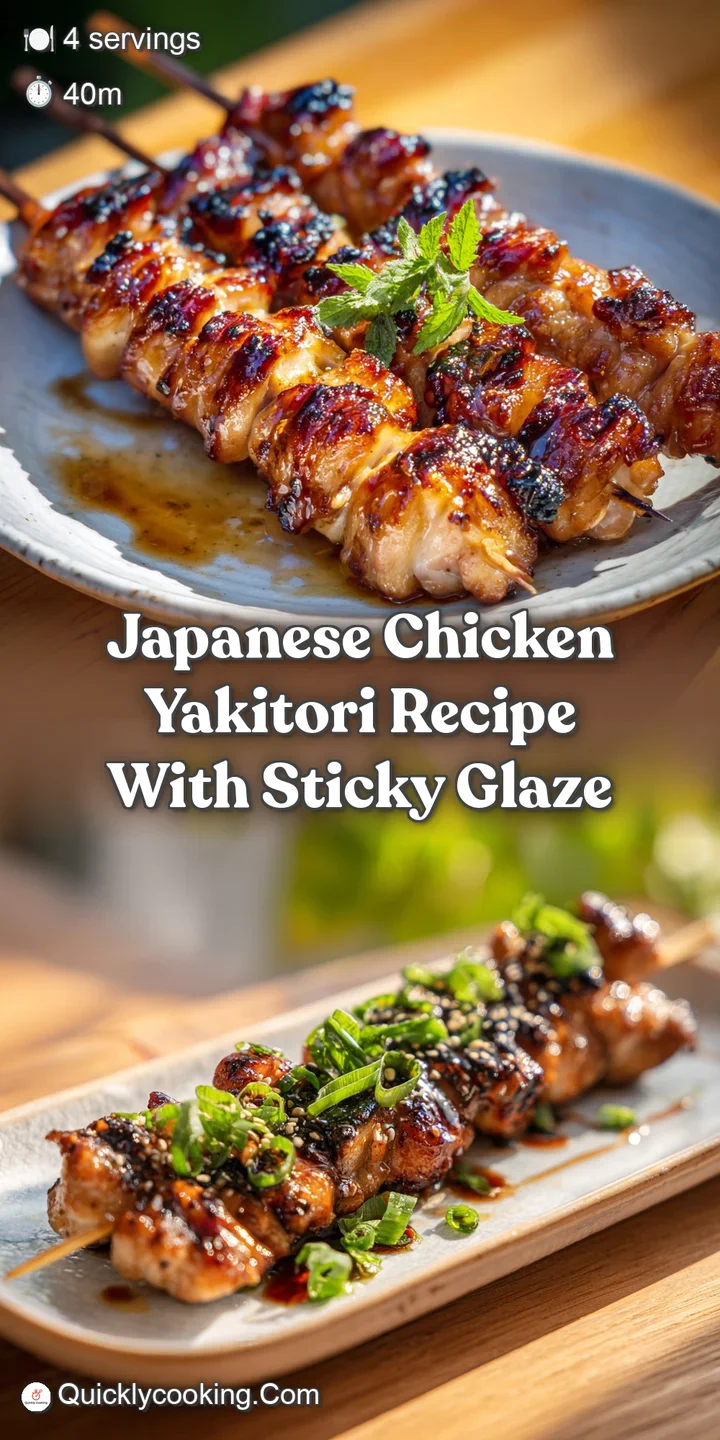
Japanese Chicken Yakitori Recipe
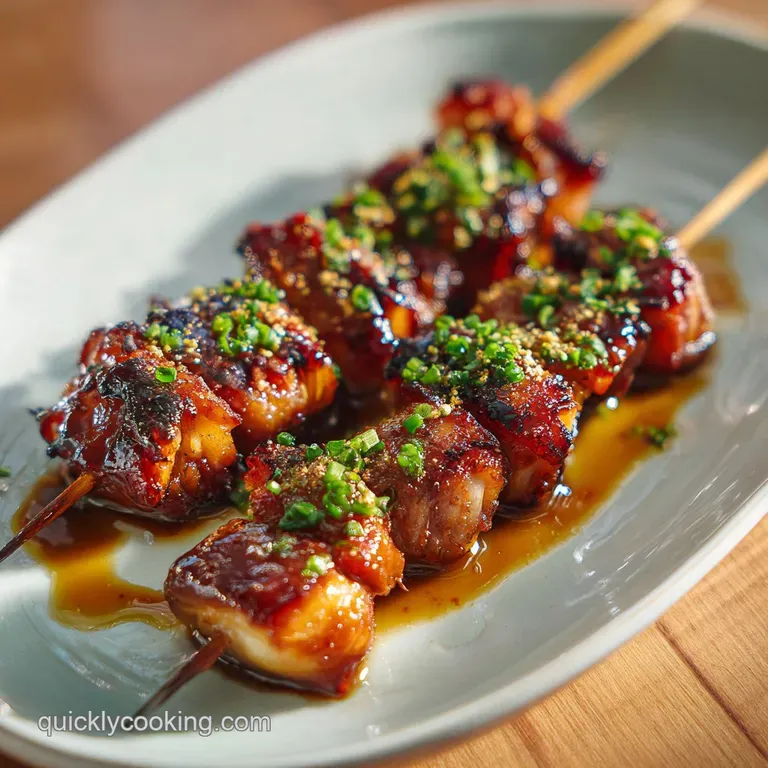
- Time: Active 25 minutes, Passive 15 minutes, Total 40 minutes
- Flavor/Texture Hook: Sticky, smoky, and shatter crisp skin
- Perfect for: High speed weeknight dinners or impressive appetizers
- Techniques for Maximum Glaze Adhesion
- Essential Measurements for Skewer Success
- High Impact Pantry Ingredients for Umami
- Basic Tools for Better Grilling
- Precise Steps for Perfect Sizzle
- Fixing Common Texture and Flavor Issues
- Variations for Better Budget Meals
- Storage and Reheating Strategy Guide
- Balancing Flavors with Simple Sides
- Very High in Sodium
- Recipe FAQs
- 📝 Recipe Card
Techniques for Maximum Glaze Adhesion
The beauty of this dish lies in the interaction between heat and sugar. When you brush that sauce onto the chicken, you aren't just flavoring it, you're creating a physical barrier that locks in moisture while the exterior caramelizes.
It is a fast paced dance between the heat of your broiler and the viscosity of your tare. If the sauce is too thin, it slides off into the pan. If it's too thick, it burns before the chicken is safe to eat.
### To Achieve the Gloss
Reducing the sauce is the most critical step. We start with a mix of soy sauce, mirin, and sake, then simmer it until it coats the back of a spoon. This isn't just about concentration, it's about the Maillard reaction.
By pre simmering with ginger and garlic, we infuse the liquid with aromatics that stand up to the intense heat of the grill.
### For Maximum Juiciness
Using chicken thighs instead of breasts is a non negotiable rule for me. Thighs have the fat content necessary to stay velvety even under the direct flame of a broiler. That fat renders out during the cook, basting the meat from the inside out and providing the high efficiency flavor transfer we're looking for.
### For Restaurant Quality Char
The "dip and cook" method is how the pros do it. You don't just glaze once. You cook the chicken until it's almost done, then dip or brush, char, and repeat. This builds up layers of flavor, creating a complex crust that is impossible to achieve with a single coating.
The Physics of the Glaze
The sugar in the mirin and granulated sugar undergoes pyrolysis at high temperatures, turning from a liquid into a sticky solid. This creates a "thermal seal" that prevents the internal juices from evaporating during the final over high heat sear.
Chef Tip: Soak your bamboo skewers in heavily salted water for 30 minutes before threading. The salt deeply seasons the wood, which prevents it from igniting and adds a subtle seasoning to the center of the chicken pieces.
| Thickness | Internal Temp | Rest Time | Visual Cue |
|---|---|---|---|
| 1 inch cube | 165°F (74°C) | 3 mins | Juices run clear |
| 0.5 inch cube | 165°F (74°C) | 2 mins | Firm to the touch |
| Thicker chunks | 170°F (77°C) | 5 mins | No pink at the bone |
The thickness of your chicken determines everything. If you cut the pieces too small, they'll dry out before the scallions have a chance to char. I usually aim for uniform 1 inch cubes to ensure they cook at the same rate as the 1 inch scallion whites.
Essential Measurements for Skewer Success
| Ingredient | Science Role | Pro Secret |
|---|---|---|
| Soy Sauce | Provides salt and amino acids | Use a dark soy for deeper color |
| Mirin | Adds shine and mild sweetness | Lowers the freezing point for storage |
| Chicken Thighs | High fat for moisture retention | Keep the skin on for extra crunch |
Understanding these components helps you troubleshoot on the fly. If your sauce isn't shiny enough, you likely need a touch more mirin. If the meat is too salty, you can balance it with a tiny splash of water or extra sugar during the reduction phase.
High Impact Pantry Ingredients for Umami
You don't need a massive grocery haul for an authentic result. This is a budget smart recipe because most of these items are shelf stable staples. If you're looking for another fast protein fix, you might also like my Korean Spicy Chicken recipe which uses similar pantry basics but with a fiery twist.
- 1.5 lbs chicken thighs: Boneless and skin on for the best fat to meat ratio.
- 2 bunches scallions: Use the white and light green parts. Why this? They provide a sharp, sweet contrast to the salty meat.
- 0.5 cup soy sauce: The foundation of the tare.
- 0.5 cup mirin: Essential for that signature Japanese gloss.
- 0.25 cup sake: Cleans the palate and tenderizes the meat.
- 0.25 cup granulated sugar: Speeds up the caramelization process.
- 1 scallion green, smashed: For aromatic infusion in the sauce.
- 1 slice fresh ginger, smashed: Adds a subtle, peppery heat.
- 1 clove garlic, crushed: Provides depth to the base.
- 1 tablespoon neutral oil: To prevent initial sticking on the pan or rack.
- 1 teaspoon shichimi togarashi: Optional, for a citrusy spice finish.
| Original Ingredient | Substitute | Why It Works |
|---|---|---|
| Sake | Dry Sherry | Similar acidity and alcohol content. Note: Adds a slightly nuttier flavor |
| Mirin | Honey + Splash of Water | Provides the necessary sugar for the glaze. Note: Lacks the fermented tang |
| Shichimi Togarashi | Red Pepper Flakes | Adds the necessary heat without the citrus notes |
Substituting sake with sherry is a common trick I've used when I didn't want to run to the specialty store. It's affordable and keeps the recipe within a reasonable budget without sacrificing the final texture.
Basic Tools for Better Grilling
You don't need a Konro grill to make this work. A standard broiler or a heavy cast iron skillet will get you those charred edges just fine. I actually prefer a broiler for yakitori because it mimics the top down heat of charcoal more effectively than a flat pan.
If you enjoy the process of skewering and over high heat cooking, you should definitely check out my Mediterranean Chicken Gyro Recipe for a different flavor profile using similar techniques.
- Bamboo Skewers: 6 inch skewers are the perfect size for standard pans.
- Small Saucepan: For reducing the tare quickly.
- Pastry Brush: To layer the glaze during the final minutes.
- Wire Rack: Essential if using the oven, as it allows air to circulate around the meat.
Precise Steps for Perfect Sizzle
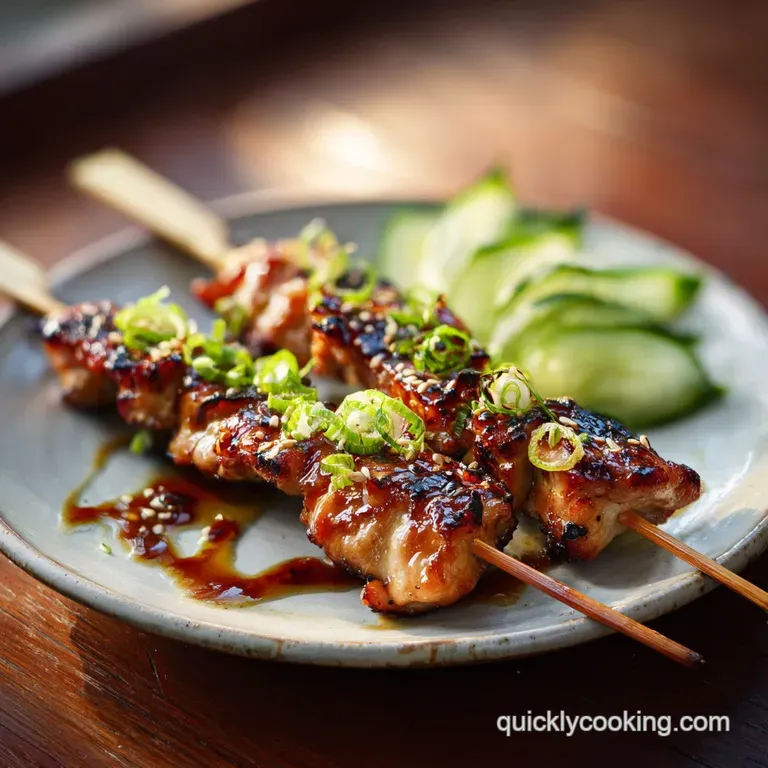
### For the Authentic Tare
- Combine soy sauce, mirin, sake, sugar, smashed scallion green, ginger, and garlic in a small saucepan.
- Bring to a boil over medium high heat. Note: Watch carefully so it doesn't boil over.
- Reduce heat to low and simmer 15 minutes until the liquid is reduced by half and thick enough to coat a spoon.
- Strain the sauce into a clean bowl and let it cool slightly while you prep the chicken.
### For the Skewers
- Cut the chicken thighs into 1 inch pieces, keeping as much skin as possible on each piece.
- Cut the scallions into 1 inch lengths, matching the size of the chicken.
- Thread the chicken and scallions onto the soaked skewers, alternating between the two. Note: Don't pack them too tightly or the centers won't cook.
- Lightly brush the assembled skewers with neutral oil.
### Phase 3: The Glaze and Char Sequence
- Preheat your broiler to high or heat a skillet over medium high heat.
- Place the skewers on the rack and cook for 6 minutes, turning once, until the chicken begins to turn opaque and the edges brown.
- Brush a generous layer of the reduced sauce onto the skewers.
- Continue cooking for another 2-4 minutes, flipping and glazing once more, until the sauce is bubbling, dark, and slightly charred.
- Remove from heat and give them one final light brush of fresh sauce before serving with shichimi togarashi.
Chef Tip: To get that professional look, use a kitchen torch for 10 seconds at the very end. It's a high efficiency way to get those tiny spots of black char without overcooking the meat.
Fixing Common Texture and Flavor Issues
### To Fix Rubbery Chicken
This usually happens because the chicken was cooked too slowly at a low temperature. When the heat isn't high enough, the fat doesn't render properly and the skin becomes chewy instead of crispy. Always ensure your broiler or pan is fully preheated before the chicken makes contact.
### For Scallions That Burn Fast
If your scallions are turning to ash before the chicken is done, you might be placing the skewers too close to the heat source. Try moving the oven rack down one level. Also, ensure the scallions are nestled tightly between the chicken pieces, which helps shield them from the most direct heat.
| Problem | Root Cause | Solution |
|---|---|---|
| Sauce won't stick | Not reduced enough | Simmer longer until it reaches a syrup like consistency |
| Chicken is dry | Used breast meat | Switch to thighs; the fat content is essential for high heat |
| Skewers catching fire | Didn't soak long enough | Soak for at least 30 minutes in water; use foil to cover ends |
Common Mistakes Checklist
- ✓ Didn't pat the chicken dry? Excess moisture will steam the meat instead of searing it.
- ✓ Skimping on the sugar? You need the sugar for the glaze to actually brown.
- ✓ Crowding the pan? Leave a centimeter between skewers so the air can circulate.
- ✓ Forgetting to flip? Even heat distribution requires at least one turn mid cook.
- ✓ Skipping the rest? Let them sit for 3 minutes so the juices redistribute.
Variations for Better Budget Meals
Scaling this recipe is easy because the ratios are so simple. If you're cooking for a crowd, keep in mind that the sauce can be doubled without much extra effort, though it will take a few more minutes to reduce.
- To scale DOWN: You can easily halve this for a solo dinner. Use a smaller saucepan for the sauce so it doesn't evaporate too quickly.
- To scale UP: When doubling or tripling, use two separate baking sheets in the oven and rotate them halfway through. Don't crowd one sheet or the temperature will drop too much.
- Baking adjustment: If you prefer the oven at a steady temp rather than the broiler, set it to 200°C. You will lose some of the char, but the cooking will be more hands off.
Cooking Method Comparison
| Method | Time | Texture | Best For |
|---|---|---|---|
| Broiler | 10 mins | Maximum char, crispy skin | Authentic street food vibes |
| Stovetop Skillet | 12 mins | Even browning, very juicy | Easy cleanup, no smoke kitchen |
| Air Fryer | 8 mins | Extra crispy, less char | Speed and small batches |
If you find yourself making this often, you'll see it’s quite similar to the fast paced technique in my General Tsos Chicken recipe, where the sauce reduction makes or breaks the dish.
### The Spicy Negima Twist
Add a teaspoon of chili crisp or sriracha to the sauce while it simmers. This isn't traditional, but it adds a modern kick that pairs beautifully with a cold beverage.
### Low Carb/Keto Variation
Swap the granulated sugar for a brown sugar alternative (like erythritol) and use a low carb soy sauce substitute. Note that the glaze won't get quite as sticky, so you'll want to rely more on the broiler for browning.
Storage and Reheating Strategy Guide
Storage: Store any leftover skewers in an airtight container in the fridge for up to 3 days. I actually find that the sauce penetrates the meat even more overnight, making them great for lunch the next day.
Freezing: You can freeze the raw, skewered chicken and scallions for up to 2 months. However, I recommend freezing the sauce separately. Thaw completely in the fridge before cooking as usual.
Reheating: Avoid the microwave if you can. It turns the chicken rubbery. Instead, pop them back under the broiler for 2-3 minutes or into an air fryer at 180°C for 4 minutes to refresh the crispiness.
Zero Waste Tip: Don't throw away the scallion roots or the ginger peel! Put them in a freezer bag for your next batch of homemade chicken stock. The leftover yakitori sauce is also incredible drizzled over a simple bowl of steamed rice or used as a marinade for grilled salmon.
Balancing Flavors with Simple Sides
Yakitori is rich and salty, so it needs something bright or neutral to balance it out. A simple cucumber salad with rice vinegar is my go to. The acidity cuts right through the fatty chicken skin and the sweet glaze.
You can also serve these skewers over a bed of shredded cabbage or with a side of grilled shishito peppers. If you want a more substantial meal, a bowl of miso soup and some steamed white rice make this a full Japanese feast.
### Debunking Grill Myths
- Myth: You must use charcoal for "real" yakitori. While charcoal adds a specific smoky flavor, the core of the experience is the sauce and the quality of the chicken. A broiler provides the high, direct heat needed to mimic a grill perfectly.
- Myth: Authentic sauce takes hours to make. Most of the time in commercial kitchens is spent aging the sauce (adding new sauce to old batches), but you can get 90% of the way there in 15 minutes by properly reducing your ingredients at home.
- Myth: You should marinate the chicken first. Yakitori is about the contrast between the unseasoned interior and the heavy glaze on the outside. Marinating can actually make the meat too salty and prevent the skin from getting crispy.
Enjoy the process! It's one of those recipes where you'll get better every single time you make it. Once you master the timing of the glaze, you'll be the designated skewer maker for every gathering.
Very High in Sodium
1180 mg mg of sodium per serving (51% of daily value)
The American Heart Association recommends limiting sodium intake to no more than 2,300mg per day for most adults. This recipe significantly exceeds that limit.
Tips to Reduce Sodium in Your Teriyaki Chicken
-
Reduce Soy Sauce-30%
Soy sauce is the primary sodium source. Reduce the amount of soy sauce by half (to 1/4 cup) and replace the rest with water or a low-sodium chicken broth (check label). This will significantly cut down on the sodium content. Be mindful of the sodium content in any broth you choose.
-
Low-Sodium Soy Sauce-20%
Opt for a low-sodium or reduced sodium soy sauce. This simple substitution can reduce sodium intake without drastically changing the flavor profile. Look for options that contain at least 25% less sodium than the regular version.
-
Balance the Sweetness-15%
Because you are reducing soy sauce, consider balancing flavor. Instead of granulated sugar, consider a natural sweetener like honey or maple syrup (start with a smaller quantity and add more to taste), which can enhance the flavor complexity and help compensate for the sodium reduction.
-
Increase Aromatics-10%
Increase the amount of scallions, ginger, and garlic. These aromatics provide depth of flavor and can help compensate for the reduced sodium content. Consider adding a pinch of red pepper flakes (instead of togarashi) for added flavor without adding sodium.
-
Spice it Up!
Experiment with other sodium free spices and herbs to enhance the flavor. Black pepper, garlic powder (not garlic salt!), ginger powder, or a dash of cayenne pepper can add depth and complexity to the dish.
Recipe FAQs
Should I use chicken breast or thigh meat for authentic yakitori?
No, chicken thighs are mandatory. Thighs contain the necessary fat content to remain velvety under the high heat required for the glaze to caramelize properly.
How long do I need to soak the bamboo skewers?
Soak the skewers for a minimum of 30 minutes in heavily salted water. This step not only prevents the wood from igniting but also imparts a subtle seasoning into the center of the chicken pieces during cooking.
How do I know when the tare sauce reduction is finished?
Simmer until the liquid is reduced by half and coats the back of a spoon. This concentration ensures the sauce is viscous enough to adhere to the meat rather than sliding off into the pan.
Can I marinate the chicken before skewering to save time?
No, this is a common misconception. Traditional yakitori relies on the contrast between the unseasoned interior and the heavy glaze, and marinating can prevent the skin from achieving the required crispness.
What is the best method to achieve the restaurant quality char on the glaze?
Use the dip and cook method, applying multiple thin layers. Cook the chicken until nearly done, then brush with sauce, char briefly, and repeat the process.
What internal temperature must the chicken thighs reach for safe consumption?
Cook chicken thighs to 165°F (74°C) for safe eating, then rest for 2-3 minutes. For thicker cuts, aim for 170°F (77°C) to ensure doneness throughout the meatier parts.
If I don't have mirin, what is the best substitute for achieving the signature gloss?
Substitute mirin with a mixture of honey and a splash of water. This substitution provides the necessary sugar for gloss, though it will lack the fermented tang of true mirin, similar to how we balance sugar in the Fast Greek Yogurt recipe.
Chicken Yakitori Skewers Recipe
Ingredients:
Instructions:
Nutrition Facts:
| Calories | 485 kcal |
|---|---|
| Protein | 32g |
| Fat | 26g |
| Carbs | 24g |
| Fiber | 1.2g |
| Sugar | 21g |
| Sodium | 1180mg |
