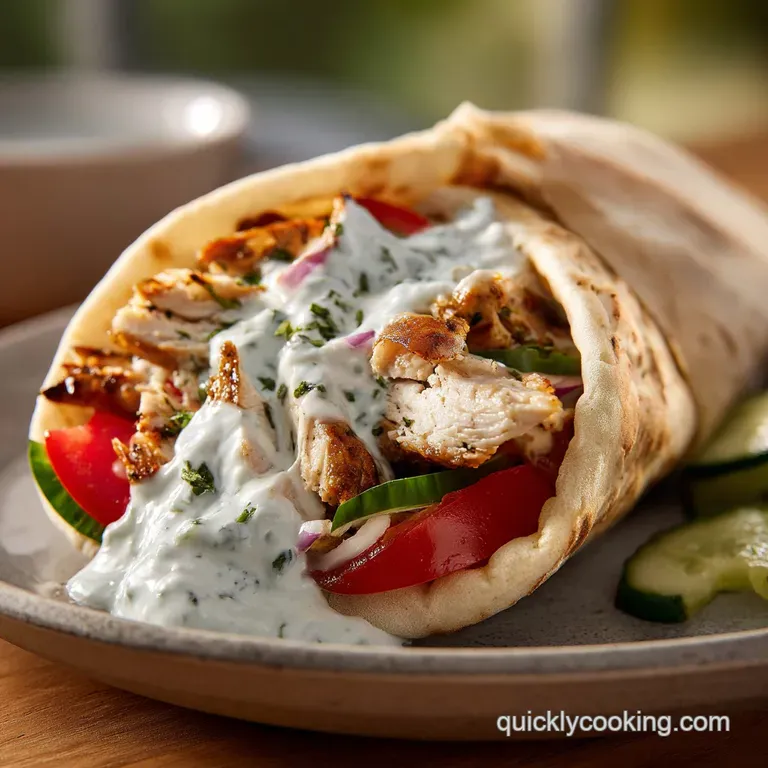
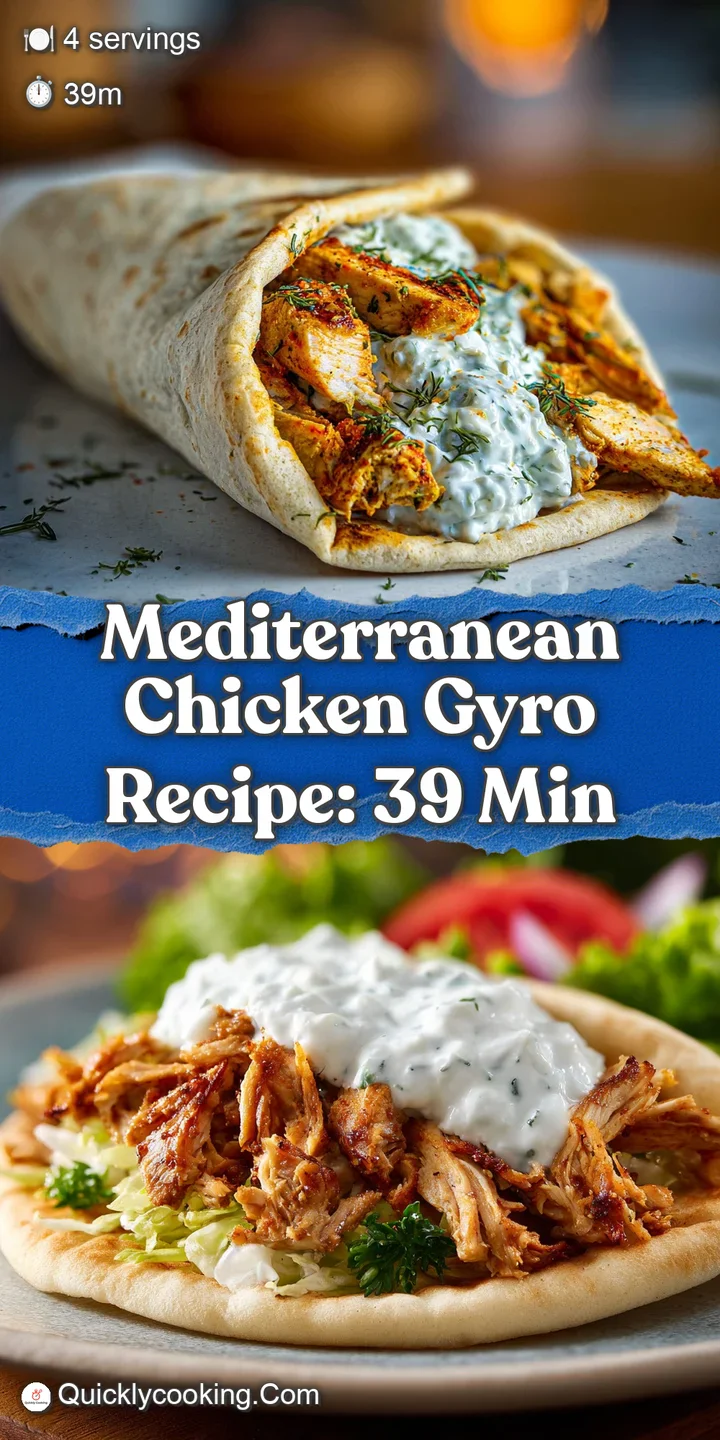
Mediterranean Chicken Gyro with Creamy Feta Tzatziki
- Time: Active 20 mins, Passive 45 mins, Total 65 mins
- Flavor/Texture Hook: Sizzling lemon herb chicken paired with velvety, salty feta cream
- Perfect for: High efficiency weeknight dinners or meal prep enthusiasts
- Making Mediterranean Chicken Gyro with Creamy Feta Tzatziki
- Why This Quick Recipe Works
- Component Analysis for Peak Efficiency
- Essential Ingredients for Best Flavor
- Tools for a Speedier Kitchen
- Step-by-Step Cooking and Assembly
- Solving Your Most Common Mistakes
- Customizing Your Perfect Gyro Bowl
- Scaling for Families or Singles
- Searing and Yogurt Realities
- Smart Storage and Zero Waste
- Serving Ideas for Full Meals
- High in Sodium (⚠️)
- Recipe FAQs
- 📝 Recipe Card
Making Mediterranean Chicken Gyro with Creamy Feta Tzatziki
I still remember the first time I tried to make gyros at home; I ended up with a soggy mess of watery cucumbers and chicken that looked more boiled than grilled. The kitchen smelled like a lemon grove, but the texture was all wrong, and the "pita" just disintegrated under the weight of the sauce.
It was a disaster, but it taught me the most important lesson in Mediterranean cooking: moisture is your friend in the meat, but your absolute enemy in the sauce.
Since then, I've obsessed over streamlining the process to get that street food char in a standard home kitchen. This Mediterranean Chicken Gyro with Creamy Feta Tzatziki recipe is a guaranteed weeknight dinner winner.
We aren't just throwing things in a pan; we're using a few high efficiency tricks to ensure the chicken stays succulent while the tzatziki keeps its structure. It's about working smarter, not longer, to get that restaurant quality "sizzle" on your own stovetop.
You don't need a vertical rotisserie to get these results. By focusing on the surface area of the chicken strips and the hydration level of your cucumbers, you can pull this off in just over an hour.
Trust me, once you hear that first strip of seasoned chicken hit the hot oil and smell the dried oregano blooming, you'll know exactly why I stopped ordering takeout versions of this.
Why This Quick Recipe Works
- Maillard Acceleration: The small amount of honey in the marinade acts as a catalyst for browning, allowing the chicken to develop a dark, savory crust in minutes before the center can overcook.
- Osmotic Dehydration: Grating and then squeezing the cucumber removes excess water that would otherwise "break" the yogurt emulsion, ensuring the sauce stays thick and velvety.
- Enzymatic Tenderization: The acidity from the lemon juice and red wine vinegar breaks down tough muscle fibers in the chicken breast, keeping it tender despite the over high heat sear.
- Lipid Soluble Aromatics: Garlic and oregano are infused directly into the olive oil marinade, which carries those flavors deep into the protein more effectively than a dry rub.
| Chicken Strip Thickness | Internal Temp | Rest Time | Visual Cue |
|---|---|---|---|
| 1 cm (thin strips) | 74°C | 3 minutes | No longer translucent; golden edges |
| 2 cm (cubes) | 74°C | 5 minutes | Firm to touch; juices run clear |
| 3 cm (whole breast) | 74°C | 8 minutes | Deeply browned; center is opaque white |
When you're aiming for speed, the thickness of your protein is the biggest variable in your kitchen. Cutting the 680g of chicken into thin, uniform strips is my favorite shortcut because it increases the surface area for the marinade and reduces cook time to almost nothing. If you're into quick poultry meals that maximize flavor to effort ratios, you might also like my Sheet Pan Chicken recipe.
Component Analysis for Peak Efficiency
| Ingredient | Science Role | Pro Secret |
|---|---|---|
| Greek Yogurt (240ml) | Provides a creamy, acidic base that balances the saltiness of the feta. | Use full fat only; low-fat versions contain stabilizers that make the sauce "rubbery." |
| English Cucumber (0.5) | Adds essential crunch and a cooling element to the spicy, charred meat. | Grate it onto a clean tea towel and wring it out like you're trying to dry a sponge. |
| Honey (5ml) | Promotes rapid caramelization and balances the sharp vinegar/lemon notes. | Swap for maple syrup if you're out; the sugar content is what matters for the sear. |
| Feta Cheese (75g) | Acts as a natural salt source and provides a grainy, rich texture to the sauce. | Buy the block in brine and crumble it yourself for much better moisture and flavor. |
Essential Ingredients for Best Flavor
- Chicken Breasts (680g): Sliced into thin strips. Why this? Lean protein that absorbs citrus marinades quickly and sears fast.Substitute: Boneless thighs for more fat.
- Extra Virgin Olive Oil (45ml): For the marinade. Why this? high-quality fat carries the herb flavors.Substitute: Avocado oil.
- Lemon Juice (30ml): Freshly squeezed. Why this? The acid tenderizes and brightens the meat.Substitute: White balsamic vinegar.
- Red Wine Vinegar (15ml): Adds a punchy tang. Why this? Deepens the Mediterranean profile.Substitute: Apple cider vinegar.
- Garlic (3 cloves + 1 clove): Minced and grated. Why this? Double layers of aromatics.Substitute: Garlic shallots.
- Dried Oregano (5ml): The backbone of Greek flavor. Why this? Dried holds up better to high heat than fresh.Substitute: Marjoram.
- Smoked Paprika (2.5ml): For color and depth. Why this? Mimics the flavor of a charcoal grill.Substitute: Sweet paprika.
- Sea Salt & Cracked Black Pepper: Essential seasoning. Why this? Coarse grains provide better texture.Substitute: Kosher salt.
- Honey (5ml): For browning. Why this? Creates a beautiful glaze on the chicken.Substitute: Brown sugar.
- Greek Yogurt (240ml): Full fat for the sauce. Why this? Thick enough to hold the toppings.Substitute: Sour cream.
- Feta Cheese (75g): Finely crumbled. Why this? Adds salty, tangy pockets of flavor.Substitute: Goat cheese.
- English Cucumber (0.5): Grated and dried. Why this? Freshness without the water.Substitute: Persian cucumbers.
- Fresh Dill (15ml): Chopped. Why this? The classic gyro herb aroma.Substitute: Fresh mint.
- Lemon Zest (5ml): Essential oil punch. Why this? Adds flavor without adding liquid volume.Substitute: Lime zest.
- Greek style Pitas (4): Soft and fluffy. Why this? Holds the heavy fillings without breaking.Substitute: Flour tortillas.
- Veggies & Toppings: Cherry tomatoes (240ml), shaved red onion, Kalamata olives, and fresh parsley. Why this? Contrast in texture and temperature.Substitute: Pickled peppers.
Tools for a Speedier Kitchen
To get this Mediterranean Chicken Gyro with Creamy Feta Tzatziki on the table fast, you need a heavy bottomed pan. A cast iron skillet (like a Lodge) is your best friend here because it retains heat like a beast, ensuring the chicken sears rather than steams.
If you use a thin non stick pan, you'll lose that "shatter" on the edges of the meat.
You'll also want a microplane or a fine grater. I use it for the garlic, the lemon zest, and even the cucumber. It’s significantly faster than fine chopping with a knife and creates a "paste" that distributes flavor more evenly.
For the sauce, a simple mixing bowl and a sturdy spatula are all you need no food processor required.
step-by-step Cooking and Assembly
- Whisk the marinade. Combine 45ml olive oil, 30ml lemon juice, 15ml red wine vinegar, 3 minced garlic cloves, 5ml oregano, 2.5ml paprika, 2.5ml salt, 1ml pepper, and 5ml honey in a bowl. Note: The honey is the secret to that dark, charred color.
- Prep the chicken. Toss the 680g of sliced chicken strips into the marinade, ensuring every piece is coated. Let it sit at room temperature for 30 minutes to take the chill off and let the acids work.
- Grate the cucumber. While the chicken marinates, grate 0.5 English cucumber. Squeeze it in a clean towel until no more water comes out. Note: This prevents a runny sauce.
- Mix the Feta Tzatziki. Stir together 240ml yogurt, 75g crumbled feta, the dried cucumber, 15ml dill, 1 grated garlic clove, and 5ml lemon zest. Chill until serving to allow the feta to soften into the yogurt.
- Heat the pan. Place your skillet over medium high heat with a splash of oil until it starts to shimmer and smoke slightly.
- Sear the chicken. Add the chicken strips in a single layer (work in batches if needed). Cook for 3-4 minutes per sideuntil deep golden and sizzling.
- Rest the meat. Remove the chicken to a plate and let it rest for 3 minutes. Note: This allows the fibers to relax and reabsorb juices.
- Warm the pitas. Toss the pitas directly onto the hot pan for 30 seconds per side until soft and slightly charred.
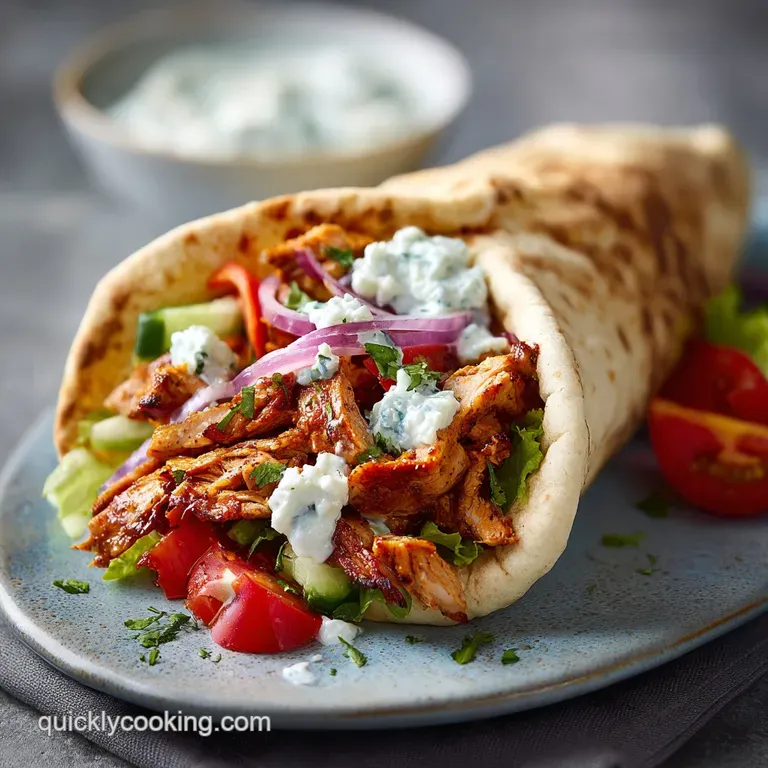
- Build the gyro. Spread a thick layer of Feta Tzatziki on a pita, pile on the chicken, and top with tomatoes, red onion, olives, and parsley.
- Serve immediately. Fold the pita tightly and enjoy while the chicken is still hot and the sauce is cold.
Solving Your Most Common Mistakes
Why Your Tzatziki Is Watery
If your sauce turns into a soup within ten minutes, it's almost always the cucumber's fault. English cucumbers are about 95% water. If you don't aggressively squeeze them, that water releases as soon as it hits the salt in the yogurt.
Another culprit is using "Greek style" yogurt instead of actual strained Greek yogurt, which has a higher liquid whey content.
| Problem | Root Cause | Solution |
|---|---|---|
| Rubbery Chicken | Overcooking or lack of acid | Slice thinner and don't exceed 4 mins per side; ensure vinegar is in marinade. |
| Bland Sauce | low-fat dairy or no zest | Always use full fat yogurt and don't skip the lemon zest; it provides the aromatic "top notes." |
| Soggy Pita | Wet toppings or too much sauce | Place the chicken on the pita first, then the sauce, or pat your tomatoes dry before adding. |
For a totally different flavor profile that also relies on a over high heat sear, try my Korean Spicy Chicken recipe. It's another great way to use those chicken strips when you're in a hurry.
Common Mistakes Checklist
- ✓ Pat the chicken strips dry before marinating to avoid diluting the flavors.
- ✓ Never crowd the pan; if the strips touch, they will steam instead of searing.
- ✓ Use a tea towel, not paper towels, to squeeze the cucumber paper will shred and stick.
- ✓ Let the Feta Tzatziki sit for at least 15 minutes before serving so the garlic "mellows" into the fat.
- ✓ Warm your pitas! A cold pita is a brittle pita that will snap when folded.
Customizing Your Perfect Gyro Bowl
If you're trying to cut down on bread, this recipe transitions perfectly into a Mediterranean chicken bowl. Just swap the pita for a base of quinoa or a Greek chicken bowl with tzatziki, chickpeas, and feta.
The feta tzatziki actually works even better as a dressing in this format because it coats the grains beautifully.
For those who want to save even more active time, you can make a Chicken gyro in the oven. Spread the marinated strips on a large baking sheet and roast at 220°C for about 12-15 minutes.
You won't get the same intense pan sear, but it's a great "hands off" method if you're multitasking.
Scaling for Families or Singles
- Scaling Down (1-2 people): Halve all ingredients. Since you're only using half a cucumber, store the other half wrapped tightly in foil. Use a smaller 20cm skillet so the marinade doesn't evaporate too quickly during the sear.
- Scaling Up (8+ people): Double the chicken and veggies, but only increase the salt and spices to 1.5x to avoid over seasoning. You must work in multiple batches for the chicken; if you dump 1.3kg of chicken into one pan, the temperature will drop, and you'll lose that crispy texture.
- The Egg Rule: If you decide to add a binder or use this chicken in a different way, remember that for half batches, you should beat one egg and only use half of the liquid.
Searing and Yogurt Realities
A common misconception is that you need to marinate the chicken overnight. In reality, with a high acid marinade (lemon and vinegar) and thin strips, anything over 2 hours will actually start to turn the chicken "mushy" as the acid denatures the proteins too much.
45 minutes to an hour is the sweet spot for maximum flavor and perfect texture.
Another myth is that you can't sear chicken that has honey in the marinade without burning it. While honey does lower the smoke point, as long as you keep the pan at medium high and move the chicken occasionally, you'll get a beautiful mahogany crust.
It’s the difference between a "dirty" char and a professional sear.
Smart Storage and Zero Waste
Storage Guidelines: Store the cooked chicken and the Feta Tzatziki in separate airtight containers in the fridge. The chicken will last for 3 to 4 days, while the sauce is best within 48 hours.
I don't recommend freezing the tzatziki, as the yogurt will separate and become grainy once thawed. However, you can freeze the marinated (uncooked) chicken for up to 2 months just thaw it in the fridge overnight before searing.
Zero Waste Tips: Don't throw away those parsley stems or the lemon peels! Toss the stems into a freezer bag for your next batch of chicken stock. If you have leftover feta brine, use it to marinate more chicken or even soak some sturdy vegetables like cauliflower before roasting.
Leftover tzatziki makes an incredible dip for raw carrots or a spread for a turkey sandwich the next day.
Serving Ideas for Full Meals
While these gyros are a meal on their own, I love serving them with a side of crispy lemon potatoes or a simple Greek salad. If you're hosting, a big platter of these components allows people to build their own, which is always a hit.
The contrast of the hot, seasoned chicken against the cold, creamy feta sauce is what makes this dish legendary.
If you find yourself with extra chicken but no pitas left, it's the perfect protein boost for a Roasted Beet Sweet recipe. The earthy beets and creamy avocado play really well with the lemon herb profile of the chicken. Whatever you do, make sure you have plenty of extra napkins a good gyro is supposed to be a little messy!
High in Sodium (⚠️)
1080 mg mg of sodium per serving (47% % of daily value)
The American Heart Association recommends limiting sodium intake to about 2,300mg per day.
Sodium Reduction Tips for this Recipe
-
Reduce Feta Cheese-15%
Feta cheese is a significant source of sodium. Try reducing the amount of feta by half, using only 0.25 cup, or substitute with a lower sodium cheese like fresh goat cheese.
-
Reduce Added Salt-25%
This recipe includes 0.5 tsp of added salt. Reduce or eliminate the added salt. Taste the dish before adding any salt, and adjust according to your preference. You can always add salt later, but you can't take it away!
-
Reduce or Omit Olives-10%
Kalamata olives contribute significantly to the overall sodium content. Reduce the amount of olives used, or consider omitting them entirely from the recipe.
-
Increase Lemon Juice
Enhance the flavor profile with additional lemon juice and zest. The acidity will brighten the dish and help compensate for the reduction in salt.
-
Flavor with Herbs & Spices
Experiment with a wider variety of fresh and dried herbs and spices to enhance the flavor of the dish without adding sodium. Consider adding fresh basil, parsley, or a pinch of red pepper flakes.
-
Ensure Chicken is Fresh-15%
Make sure to use fresh, un-injected chicken breasts. Some commercially sold chicken is 'plumped' with a sodium solution, significantly increasing its sodium content.
Recipe FAQs
Can I prepare the Feta Tzatziki sauce ahead of time?
Yes, prepare it up to 2 days ahead. Making the sauce early allows the feta cheese flavor to deepen and fully integrate into the yogurt base, enhancing the overall taste.
How to prevent the chicken from steaming instead of searing?
Heat your skillet until it shimmers slightly before adding the chicken. Ensure you cook the strips in a single layer, working in batches if necessary; overcrowding drops the pan temperature too fast.
How to stop the cucumbers from making the tzatziki watery?
Grate the cucumber and squeeze it aggressively in a clean tea towel. You must remove the excess moisture until you cannot wring any more liquid out, ensuring the sauce emulsion remains stable.
Is it true that honey in the marinade will definitely burn before the chicken cooks?
No, this is only true if the heat is too high. The honey acts as a browning catalyst, but by keeping the heat at medium high and watching carefully, you achieve a mahogany crust rather than burning.
How long is the ideal marination time for thin chicken strips?
Aim for 45 minutes to 1 hour at room temperature. Because the marinade contains strong acids like lemon juice, marinating much longer can start to excessively denature the chicken proteins, resulting in a mushy texture.
Can I substitute the Greek yogurt in the tzatziki with a low-fat version?
No, full fat yogurt is strongly recommended for the sauce. low-fat dairy often contains stabilizers that can make the final sauce develop an unpleasant, rubbery texture once chilled.
How to easily transfer this recipe flavor profile to a meal prep bowl?
Replace the pita bread with a base of quinoa or rice and add chickpeas. If you enjoyed mastering the technique of balancing acid and fat in this creamy dressing, you can see how we apply similar flavor logic in our Fast Greek Yogurt recipe, used here as a savory dressing.
Creamy Feta Chicken Gyros
Ingredients:
Instructions:
Nutrition Facts:
| Calories | 734 kcal |
|---|---|
| Protein | 66 g |
| Fat | 27 g |
| Carbs | 43 g |
| Fiber | 4 g |
| Sugar | 6 g |
| Sodium | 1080 mg |
