Beths Foolproof Macarons: Crisp Shells
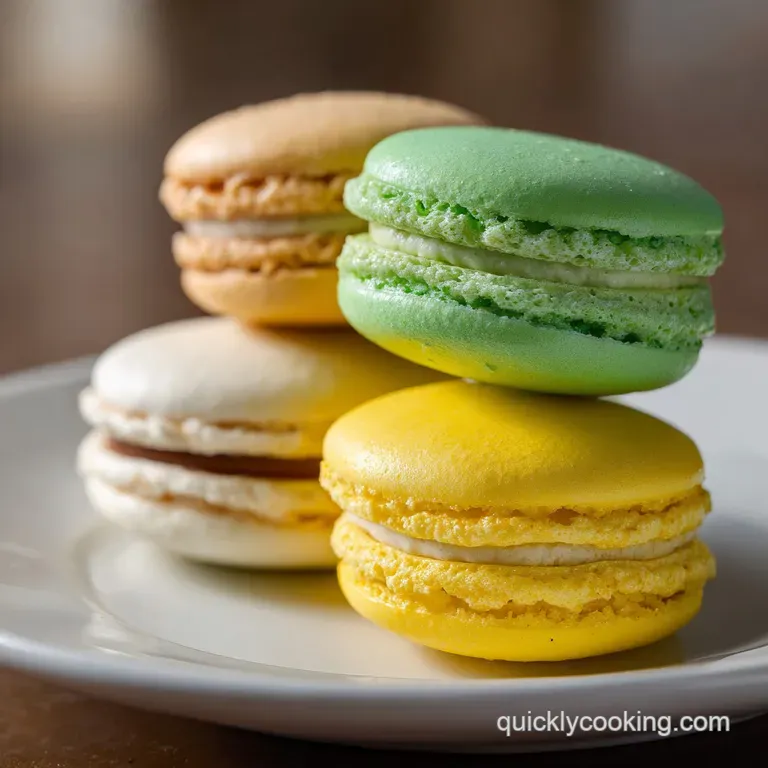
- Time: Active 45 mins, Passive 75 mins, Total 2 hrs
- Flavor/Texture Hook: Delicate, crisp shells with a tender chew and creamy vanilla bean filling.
- Perfect for: Impressing at special occasions, holiday baking, or a sophisticated afternoon treat.
- Unlocking the Secrets to beths Foolproof Macarons Recipe
- Why This French Cookie Recipe Really Works
- Recipe Specifications: Fast vs. Classic Macarons
- Key Components: A Budget Smart Ingredient Deep Dive
- What You'll Need for Beth's Macarons
- Essential Equipment for Precision Macarons
- From Prep to Plate: Crafting Your Foolproof Macarons
- Avoiding Kitchen Disasters: Troubleshooting Your Macarons
- Scaling Your Macaron Production
- Debunking Macaron Myths
- Keeping Macarons Fresh: Storage and Zero Waste Tips
- Perfect Pairing Ideas
- Recipe FAQs
- 📝 Recipe Card
Unlocking the Secrets to beths Foolproof Macarons Recipe
Let me tell you, the first time I heard the whisper of "macarons" in the kitchen, I thought, "No way." These delicate little French cookies, with their signature "feet" and impossibly smooth caps, seemed like something only professional pâtissiers could conquer.
I used to believe you needed a super dry, humidity controlled lab, egg whites aged for days, and a sprinkle of magic fairy dust just to get started.
That's the myth I want to bust right now. While precision is key, the idea that macarons are some unattainable culinary unicorn is simply not true. You don't need to turn your kitchen into a science experiment, nor do you need to wait an entire week for your egg whites to reach mythical perfection.
I've found that with the right approach and a few smart techniques, a truly stable and beautiful batch of macarons is entirely within reach, making this a genuinely foolproof macaron recipe for anyone ready to take the plunge.
This isn't about lengthy, complicated steps; it's about focused efficiency and understanding why each action matters. We'll streamline the process, highlight the exact moments that make all the difference, and get you to those elegant, melt in-your mouth shells with minimal fuss.
Why This French Cookie Recipe Really Works
You might think macarons are all about luck, but it's actually about a few clever tricks that make the proteins and sugars in the ingredients do exactly what you want. This easy macaron recipe is built on these foundational principles, ensuring consistently stunning results.
- Meringue Stability: Cream of tartar is a champion here. It stabilizes the egg whites, helping them whip into a strong, glossy meringue that can hold its shape and trap air effectively. This strong structure is what gives your shells lift and that characteristic crispness.
- Precision Dry Ingredients: Sifting the almond flour and powdered sugar isn't just a suggestion; it prevents lumps that cause cracked or bumpy shells. The fine particles create a delicate, smooth surface, essential for that coveted uniform finish.
- The "Macaronage" Flow: Achieving the perfect lava like consistency ensures the batter is neither too stiff (leading to hollow or cracked shells) nor too runny (resulting in flat, footless macarons). It's a precise balance that allows the shells to spread just enough and develop their signature "feet."
- Resting for Resilience: The resting period, often called "casing," allows a slight skin to form on the macaron shells. This skin traps steam during baking, forcing the macaron batter to lift from the base and push upwards, creating the delicate ruffled "feet" we all adore.
Recipe Specifications: Fast vs. Classic Macarons
Getting to a batch of homemade macarons can feel like a big investment of time, but this approach aims for efficiency without sacrificing quality. Here’s a quick look at how this recipe balances speed with traditional results.
| Feature | This Foolproof Macaron Recipe | Classic, Time Intensive Method |
|---|---|---|
| Egg White Prep | Aged at room temperature for a few hours (50g) | Aged for 2-3 days, sometimes dehydrated |
| Meringue Type | French meringue with cream of tartar | Often Italian or Swiss meringue |
| Total Process | Active 45 mins, Total 2 hours | Active 60+ mins, Total 3-4 hours |
| Outcome | Consistent 'feet', chewy interior, crisp shell | Very stable, dense, often drier interior |
Key Components: A Budget Smart Ingredient Deep Dive
Even with premium ingredients, you can make smart choices. This beths foolproof macarons recipe works because we understand each component's role and how to choose budget friendly options without compromising structural integrity.
| Original Ingredient | Substitute | Why It Works |
|---|---|---|
| Almond Flour (finely ground) | Almond Meal (unblanched, coarser) | Similar fat content. Note: Results in slightly chewier, less delicate shells and a darker color. Better for practice. |
| Vanilla Bean Paste | Pure Vanilla Extract | Offers vanilla flavor. Note: Lacks visual specks, and flavor might be less intense. Good for cost savings. |
| Gel Food Coloring | Liquid Food Coloring (use sparingly) | Provides color. Note: Can add unwanted moisture, potentially impacting shell stability if overused. Gel is more concentrated. |
| Unsalted Butter (for filling) | Margarine (stick, dairy-free version) | Similar fat for creaminess. Note: Flavor profile changes significantly, and texture can be less smooth. Only if dairy-free is essential. |
What You'll Need for Beth's Macarons
Precision is paramount in macaron making. Use a kitchen scale for accuracy; volumetric measurements are approximations. This macaron recipe homemade truly shines with precise measurements.
For the Macaron Shells
- 100g (1 cup) Almond Flour, finely ground, blanched Why this? Ultra fine grind prevents gritty shells and allows for a smoother macaron surface.
- 100g (3/4 cup) Powdered Sugar, also known as confectioners' sugar (for shells) Why this? Contributes to sweetness and absorbs moisture, crucial for that crisp shell.
- 50g (3 1/2 tbsp) Granulated Sugar Why this? Stabilizes the meringue, ensuring it holds its structure beautifully.
- 50g (approximately 2 large) Egg Whites, aged at room temperature Why this? Aged whites have less water, whipping into a more stable and voluminous meringue.
- 1/4 tsp Cream of Tartar Why this? An acid that helps stabilize egg whites, increasing meringue volume and strength.
- Gel Food Coloring, a few drops (optional) Why this? Provides vibrant color without adding significant moisture like liquid dyes do.
For the Classic Vanilla Bean Buttercream Filling
- 113g (1/2 cup) Unsalted Butter, softened to room temperature Why this? Essential for a smooth, rich, and pipeable buttercream texture.
- 240g (2 cups) Powdered Sugar, sifted (for filling) Why this? Dissolves easily into butter for a silky, lump free frosting.
- 1 tsp Vanilla Bean Paste or Extract Why this? Adds the signature warm, sweet vanilla flavor. Paste offers visual specks.
- 1-2 tbsp Heavy Cream Why this? Adjusts the buttercream consistency, making it wonderfully smooth and pipeable.
Essential Equipment for Precision Macarons
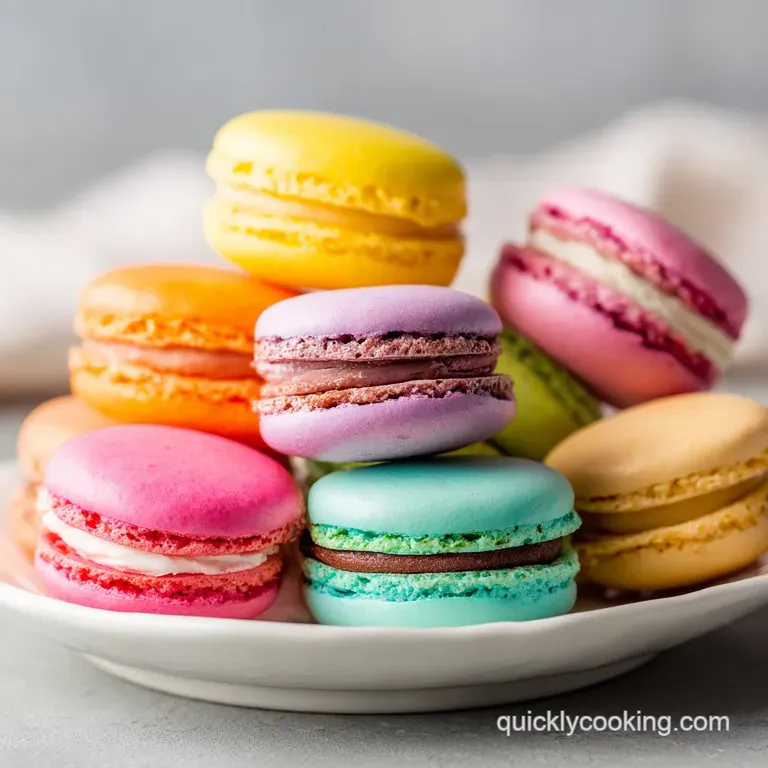
While you don't need every gadget under the sun, having the right tools for this foolproof macaron recipe can make a huge difference in your efficiency and results.
- Kitchen Scale: This is non negotiable for macarons. Measuring by weight (grams) ensures accuracy and consistency every single time.
- Stand Mixer: A stand mixer (like a KitchenAid) with a whisk attachment is ideal for whipping egg whites to stiff peaks efficiently. A hand mixer can work but requires more effort and vigilance.
- Fine Mesh Sieve: You'll need this to sift your almond flour and powdered sugar, ensuring no lumps make it into your batter.
- Large Mixing Bowls: Several for separating ingredients and for the macaronage process.
- Rubber Spatula: A flexible, sturdy spatula is crucial for proper folding during macaronage.
- Piping Bags: Disposable or reusable piping bags fitted with a round tip (like an Ateco 805 or Wilton 1A) for uniform shells.
- Baking Sheets: Sturdy, flat baking sheets are essential for even heat distribution.
- Parchment Paper or Silicone Mats: For lining baking sheets. Silicone mats (like Silpat) often lead to more consistent "feet" and release.
- Oven Thermometer: Highly recommended to verify your oven's actual temperature. Oven temperatures can fluctuate, and precision is key.
From Prep to Plate: Crafting Your Foolproof Macarons
This detailed, step-by-step guide walks you through beths foolproof macarons recipe, emphasizing precision and efficiency at every turn. Remember, macarons thrive on controlled movements and exact timing.
Prep Phase: Sifting & Weighing for Precision
- Sift dry ingredients: Sift 100g almond flour and 100g powdered sugar together into a large bowl. Use a fine mesh sieve to ensure a smooth, lump free mixture. Set aside. Note: This step is crucial for achieving smooth macaron shells without a gritty texture.
Meringue Magic: Whipping to Stiff Peaks
- Whip meringue: In the bowl of a stand mixer fitted with the whisk attachment, add 50g egg whites and 1/4 tsp cream of tartar. Whisk on medium speed until the whites become foamy. Gradually add the 50g granulated sugar, increasing the speed to high, and continue whisking until stiff, glossy peaks form. The meringue should be stable and hold its shape when the whisk is lifted. If using, add gel food coloring at this stage and whisk briefly to incorporate. Note: Stiff peaks mean when you lift the whisk, the meringue stands straight up without curling over.
Macaronage Mastery: Folding to the Perfect Lava Flow
- Fold batter: Gently fold the sifted dry almond flour mixture into the meringue in several additions using a spatula. Mix using a circular motion, scraping the sides of the bowl, until the batter reaches a 'lava like' consistency. It should flow slowly and smoothly off the spatula in a continuous ribbon, but not be too runny. Be careful not to overmix (which leads to flat macarons) or undermix (which results in bumpy shells). Note: The "ribbon test" is your precision checkpoint here. Lift the spatula; the batter should fall in a slow, continuous stream that reincorporates into the bowl in about 20-30 seconds.
Piping Perfection: Creating Uniform Shells
- Pipe shells: Transfer the macaron batter to a piping bag fitted with a round tip. Pipe uniform circles, approximately 1.5 inches in diameter, onto parchment lined baking sheets, leaving ample space between each shell. Hold the piping bag perpendicular to the baking sheet for best results. Note: Uniform size ensures even baking and makes for neat assembly later.
The Resting Ritual: Developing the Signature 'Feet'
- Tap and rest: Firmly tap the baking sheets on the counter a few times to release any trapped air bubbles from the piped shells. Let the piped macarons rest at room temperature for 60 minutes, or until a slight skin forms on top and they are no longer sticky to the touch. This resting period is crucial for the development of their signature 'feet'. Note: The shells should feel dry to the touch when gently poked.
The Bake: Achieving Crispy Shells
- Bake: Preheat your oven to 300°F (150°C). Bake the macarons for 12-15 minutes, or until they have developed visible 'feet' and are firm on their bases. The shells should not wobble when gently touched. Let them cool completely on the baking sheet before attempting to remove them. Note: An oven thermometer can help verify the accurate temperature, as oven fluctuations can ruin a batch.
Assembly & Pairing: Uniting Shells and Filling
- Prepare filling: While the macaron shells cool, prepare the buttercream. In a large mixing bowl, beat the 113g softened unsalted butter until it is light and fluffy. Gradually add the 240g sifted powdered sugar, then mix in the 1 tsp vanilla bean paste or extract. Add heavy cream, 1 tablespoon at a time, until the buttercream reaches a smooth, pipeable consistency. Note: Adjust heavy cream carefully; you want it creamy but firm enough to hold shape.
- Assemble: Once the macaron shells are completely cool, transfer the buttercream filling to a piping bag. Pipe a generous dollop of filling onto the flat side of one macaron shell, then gently top with another shell to create a sandwich. Repeat with the remaining shells and filling. Note: Completely cool shells prevent the filling from melting and the shells from breaking.
Avoiding Kitchen Disasters: Troubleshooting Your Macarons
Even with a foolproof macaron recipe, sometimes things don't quite go as planned. Here are some common hiccups and how to fix them efficiently.
Why Your Macarons Have No 'Feet'
This is one of the most frustrating problems, seeing those beautiful piped circles bake flat. It's usually a sign that something went wrong with the meringue or the crucial resting period. Efficiency in prep means understanding these points.
| Problem | Root Cause | Solution |
|---|---|---|
| No 'feet' | Undermixed meringue | Whip egg whites to truly stiff peaks; they should hold shape without drooping. |
| No 'feet' | Overmixed macaronage | Stop folding when batter flows like a slow ribbon, not too liquidy. |
| No 'feet' | Insufficient resting time | Ensure shells are completely dry to the touch (approx. 60 minutes) before baking. |
Cracked Shells Conundrum
Cracked shells often indicate trapped air or improper drying, leading to pressure buildup during baking. This can be fixed with quick adjustments.
| Problem | Root Cause | Solution |
|---|---|---|
| Cracked Shells | Trapped air bubbles | Tap baking sheets firmly on the counter (4-5 times) immediately after piping. |
| Cracked Shells | Oven too hot | Use an oven thermometer to verify temperature is accurate at 300°F (150°C). |
| Cracked Shells | Insufficient resting time | Extend rest time until a proper skin has formed. |
Hollow Macaron Heartbreak
Hollow macarons means the interior of the shell is empty, rather than a dense, chewy crumb. This can stem from overwhipping or incorrect oven temperature.
| Problem | Root Cause | Solution |
|---|---|---|
| Hollow Shells | Overwhipped meringue | Stop whisking egg whites as soon as stiff peaks are achieved; avoid dry, granular meringue. |
| Hollow Shells | Oven too hot, baking too fast | Lower oven temperature slightly (e.g., to 285°F/140°C) or shorten bake time by 1-2 minutes. |
| Hollow Shells | Uneven macaronage (over/undermixed) | Master the lava like consistency, ensuring even air distribution throughout the batter. |
Common Mistakes Checklist for Perfect Macarons:
- ✓ Weigh all ingredients precisely using a kitchen scale - don't eyeball.
- ✓ Whip meringue to truly stiff, glossy peaks; it should be firm when the whisk is lifted.
- ✓ Don't overmix the macaronage; stop folding as soon as the batter creates a slow, continuous ribbon off the spatula.
- ✓ Tap baking sheets aggressively on the counter 4-5 times to release trapped air bubbles immediately after piping.
- ✓ Allow piped shells to fully rest at room temperature until a non sticky skin forms (at least 60 minutes).
- ✓ Ensure your oven temperature is stable and accurate by using a separate oven thermometer set to 300°F (150°C).
Scaling Your Macaron Production
This beths foolproof macarons recipe is great for a standard batch, but if you need more or less, here’s how to efficiently scale.
Downsizing for a Smaller Batch (e.g., ½ batch)
- Ingredients: Halve all ingredient quantities precisely. This means 50g almond flour, 50g powdered sugar (shells), 25g granulated sugar, 25g egg whites (approx. 1 large egg white), 1/8 tsp cream of tartar, etc.
- Equipment: You might be able to use a smaller stand mixer bowl or a hand mixer with more control.
- Pan Size: You’ll likely only need one baking sheet.
- Cook Time: Reduce baking time by about 2-3 minutes. Start checking at 10 minutes.
- Note: Smaller batches can be trickier for meringues due to minimal egg white volume; be extra diligent with whipping.
Upsizing for More Macarons (e.g., 2x batch)
- Ingredients: Double all ingredient quantities accurately. For butter and cream, measure exactly. For spices like cream of tartar, sometimes just 1.5x is sufficient, but for macarons, stick to doubling the cream of tartar for meringue stability.
- Equipment: You'll definitely need a powerful stand mixer, larger bowls, and multiple piping bags.
- Working in Batches: It's often more efficient to make two separate full batches rather than one giant double batch, especially for the macaronage step. Overmixing a large quantity is easy. If you do a single double batch, consider working with half the meringue and half the dry ingredients at a time, then combining them carefully.
- Cook Time: Bake multiple trays one at a time, or rotate if your oven has very even heating. Baking time should remain similar per tray (12-15 minutes).
Ingredient Shortcuts for Efficient Baking
Sometimes, you need to make smart choices to get a batch of macarons done quickly, or to simply reduce the budget impact. This table offers practical options.
| Shortcut Ingredient | Original Ingredient | Benefit | Trade Off |
|---|---|---|---|
| store-bought Almond Flour (extra fine) | Self ground Almond Flour | Saves time and effort of processing. Consistent texture. | May be slightly pricier than bulk almonds you grind yourself. |
| Pre sifted Powdered Sugar | Standard Powdered Sugar | Saves a sifting step. Reduces lumps. | Often slightly more expensive per pound. Still recommend a quick re sift to be safe. |
| Vanilla Extract | Vanilla Bean Paste | Significantly more budget friendly and widely available. | Lacks the visual black specks and the deep, complex aroma of vanilla beans. |
Debunking Macaron Myths
Macarons are notorious for being finicky, leading to a host of myths. Let's bust a few common ones associated with any easy macaron recipe.
- "You must age your egg whites for days": While aging can help, it's not strictly necessary for a successful batch, especially with a good recipe like this. The key is to separate them carefully, ensuring no yolk contamination, and let them sit at room temperature for a few hours. This allows some moisture to evaporate and proteins to relax, creating a more stable meringue. Our recipe calls for 50g of egg whites aged at room temperature, which is a practical and efficient approach.
- "Humidity is the absolute macaron killer; never bake on a rainy day": High humidity can make macarons trickier, but it's not a death sentence. The crucial part is the resting phase. On humid days, you might just need to extend the resting time for your piped shells to ensure a proper skin forms. A small dehumidifier in the kitchen can also help, but don't let the weather stop you from trying this foolproof macaron recipe.
- "You need super expensive, fancy almond flour": While high-quality, finely ground blanched almond flour is ideal, you don't need a specific "macaron flour." The critical element is the fineness of the grind. As long as it's blanched (skinless) and super fine, it will work. Sifting is your ultimate defense against lumps, regardless of the brand.
Keeping Macarons Fresh: Storage and Zero Waste Tips
These delicate cookies are at their best after they've had a chance to "mature" a bit in the fridge, allowing the filling's moisture to soften the shells slightly.
For Extended Freshness
- Storage (Fridge): Once assembled, macarons are best stored in an airtight container in the refrigerator for up to 5-7 days. They often taste even better after 24 hours, as the flavors meld and the shell softens slightly.
- Freezing for Future Enjoyment: You can freeze assembled macarons in an airtight container for up to 1 month. Layer them with parchment paper to prevent sticking. Thaw them in the refrigerator overnight before serving.
- Freezing Shells Only: Unfilled macaron shells can be frozen in an airtight container for up to 2 months. Thaw at room temperature and fill just before serving.
Zero Waste in the Macaron Kitchen
- Leftover Egg Yolks: Don't toss them! Use them for a rich crème brûlée, homemade ice cream base, or a silky hollandaise sauce. They're too good to waste.
- Scraps of Buttercream: If you have any leftover vanilla bean buttercream, it's fantastic on cupcakes, a simple vanilla cake, or even spread on toast for a decadent breakfast treat. You can also freeze it for up to a month for future use.
Perfect Pairing Ideas
Macarons are elegant on their own, but pairing them thoughtfully can elevate the experience even further. This beths foolproof macarons recipe creates a versatile base.
For an Elegant Afternoon Treat
Pair these delicate French cookies with a classic cup of Earl Grey tea or a light floral herbal infusion. The subtle flavors won't overwhelm the macaron, letting its texture and filling shine.
For a more robust beverage, try it with a perfectly pulled espresso; the slight bitterness can beautifully complement the sweetness of the macaron.
For a Dessert Platter Statement
If you're making a larger dessert spread, these vanilla bean macarons are stunning alongside contrasting textures and flavors. Consider serving them with a vibrant fresh fruit tart or a simple bowl of mixed berries. For a chocolate lover, our Chocolate Chip Cookies would offer a wonderfully different, comforting chew. The delicate crunch of the macaron provides a lovely counterpoint to a richer, softer dessert.
Recipe FAQs
Why are my macaron shells flat and cracked after baking?
You likely overmixed the batter or skipped tapping the trays. Overmixing deflates the air, causing flatness; skipping the tapping releases trapped air that causes cracks. Be careful not to overmix during the macaronage step.
How long must the piped macarons rest before they go into the oven?
Rest for a full 60 minutes, minimum. They need to develop a stable skin that isn't sticky to the touch, which is crucial for forming the signature 'feet.' This resting period cannot be rushed.
Is it true I must use aged egg whites for this recipe?
No, but room temperature whites are required. While aging dries them slightly, ensuring the egg whites are at room temperature helps them whip up into stiff, glossy peaks much faster and more reliably.
What is the oven temperature for baking the macaron shells?
Preheat your oven to 300°F (150°C). Bake for 12 to 15 minutes until the shells don't wobble when gently touched. Mastering temperature control is key, similar to getting the perfect internal temperature when cooking proteins.
How do I know when the meringue has reached stiff peaks?
Whisk until the peaks are glossy and hold their shape firmly when the whisk is lifted. The meringue should not droop or curl over at the tip when you stop the mixer.
Can I substitute almond flour with regular all-purpose flour?
No, you must use almond flour for the shells. Almond flour provides the essential fat and protein structure that allows macarons to form feet; using regular flour will result in a chewy, non-macaron cookie.
How should I store assembled macaron sandwiches?
Store assembled cookies in an airtight container in the refrigerator for up to five days. For the absolute best texture, let them sit at room temperature for 30 minutes before serving to soften the filling.
Foolproof Macarons Recipe

Ingredients:
Instructions:
Nutrition Facts:
| Calories | 200 kcal |
|---|---|
| Protein | 1.9 g |
| Fat | 9.9 g |
| Carbs | 27.6 g |
