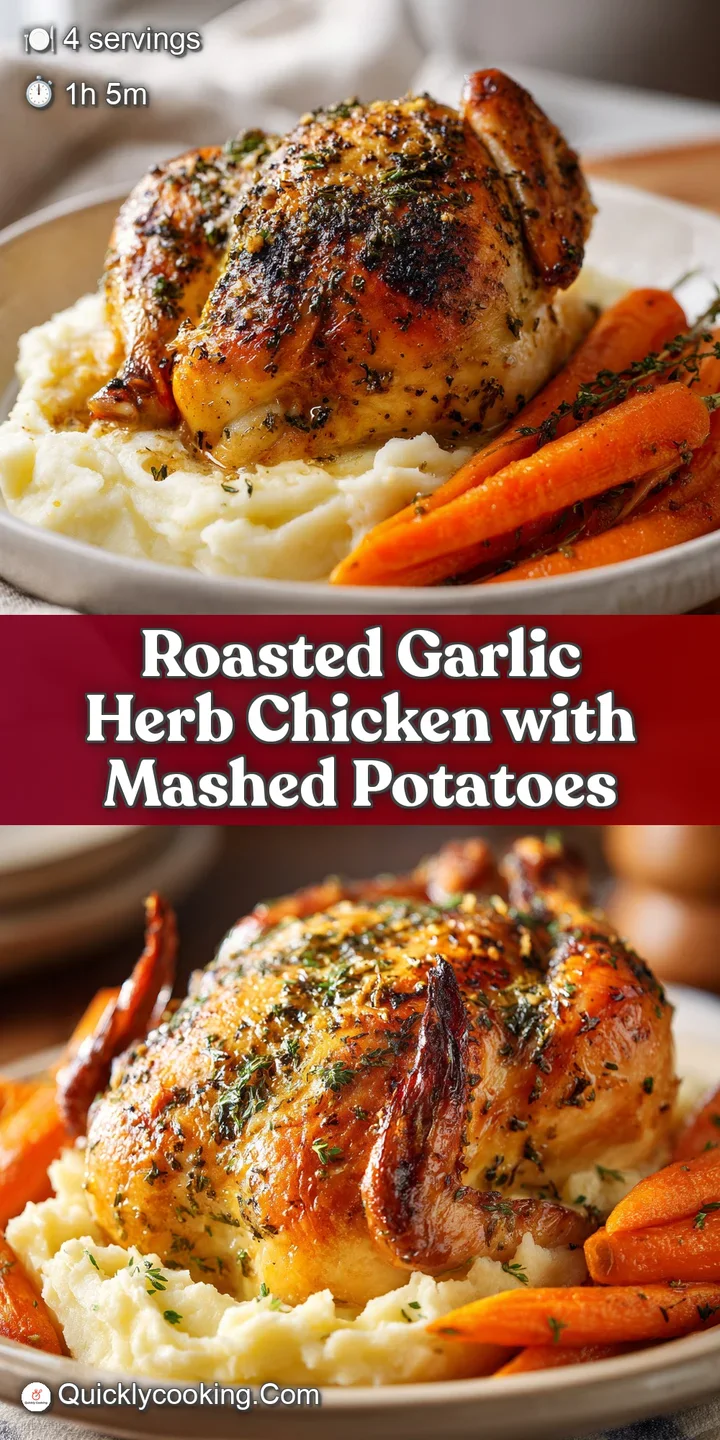
Roasted Garlic Herb Chicken with Mashed Potatoes
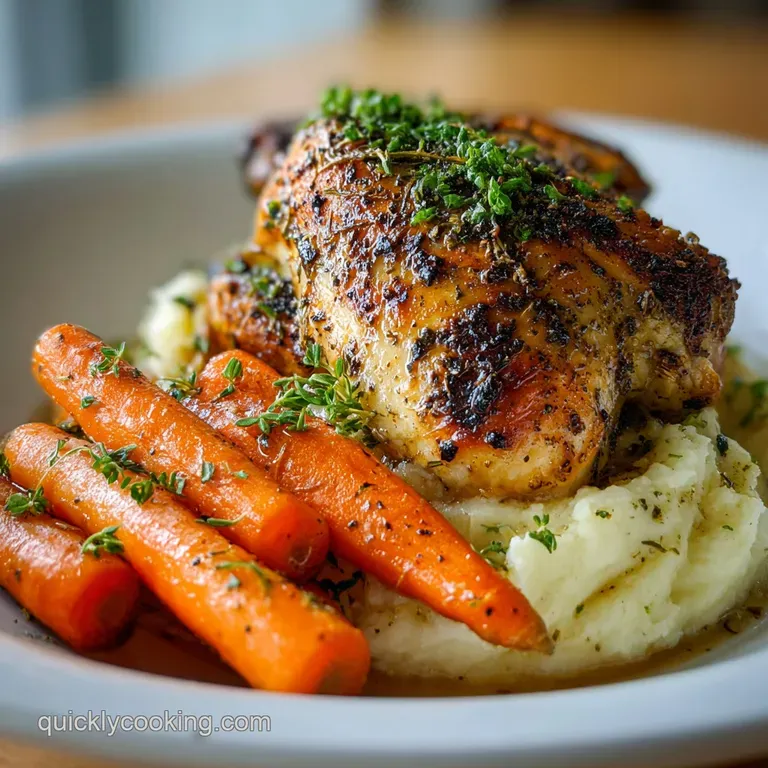
- Time: Active 20 minutes, Passive 45 minutes, Total 1 hours 5 mins
- Flavor/Texture Hook: Shatter crisp skin against buttery, honey sweetened carrots
- Perfect for: High efficiency weeknight dinners or a minimal cleanup Sunday roast
- A Complete Comfort Meal for Busy Weeknights
- Why This Roasted Garlic Herb Chicken Dinner Works
- The Core Elements of This Meal
- Essential Tools for Streamlined Success
- Simple Steps to a Cohesive Dinner
- Avoiding Mistakes and Maximizing Flavor
- Choosing Your Path: Fresh vs. Shortcut
- Creative Twists for Next Time
- Debunking Kitchen Myths
- Storing and Reheating for Maximum Freshness
- Completing the Plate with Style
- Recipe FAQs
- 📝 Recipe Card
A Complete Comfort Meal for Busy Weeknights
The first time I nailed this Roasted Garlic Herb Chicken with Mashed Potatoes and Glazed Carrots, the aroma of sizzling rosemary and garlic literally pulled my neighbor over to "borrow" some salt.
There is something about the way chicken fat renders into a hot pan, creating that specific, rhythmic crackle, that makes a house feel like a home. I used to struggle with timing everything, ending up with cold spuds and burnt carrots, but I’ve streamlined this into a workflow that just clicks.
You are going to love how the honey glaze on the carrots catches the light, looking like stained glass next to the rustic, skin on chicken. This Roasted Garlic Herb Chicken with Mashed Potatoes and Glazed Carrots recipe creates a comforting and complete meal without requiring a mountain of pots.
We are focusing on high impact flavors like smoked paprika and fresh herbs that do the heavy lifting for us.
We’ve all been there, staring at a pack of chicken thighs wondering how to make them interesting again. This is the answer. It is a foolproof sequence that guarantees a silky mash and chicken so succulent it practically falls off the bone.
No fancy tricks, just solid technique and a few efficiency hacks I’ve picked up along the way.
Why This Roasted Garlic Herb Chicken Dinner Works
- Maillard Management: Searing the chicken skin side down first triggers the Maillard reaction, developing deep savory notes before it ever hits the oven.
- Starch Gelatinization: Yukon Gold potatoes have the ideal starch to sugar ratio, ensuring the mash stays creamy rather than turning into a gluey paste.
- Acid Balance: The apple cider vinegar in the glazed carrots cuts through the sugar of the honey, preventing the side dish from being cloyingly sweet.
- Fat Emulsification: Using Greek yogurt in the potatoes adds a tang that brightens the heavy fats, creating a more complex flavor profile than butter alone.
| Thickness of Thigh | Internal Temp | Rest Time | Visual Cue |
|---|---|---|---|
| Standard (approx 150g) | 74°C (165°F) | 5 minutes | Juices run clear when pierced |
| Large (approx 200g) | 74°C (165°F) | 7 minutes | Bone pulls away slightly from meat |
| Small (approx 100g) | 74°C (165°F) | 3 minutes | Skin is mahogany and firm |
When you are aiming for that restaurant quality finish, the rest time is non negotiable. If you cut into that chicken the second it leaves the oven, all those hard earned juices will end up on your cutting board instead of in your mouth. Much like my Sheet Pan Chicken recipe, this dish relies on the carryover heat to finish the internal cooking perfectly.
The Core Elements of This Meal
| Ingredient | Science Role | Pro Secret |
|---|---|---|
| Chicken Thighs | High fat content | Always start in a cold ish pan to render fat slowly. |
| Yukon Gold Potatoes | Medium starch | Don't overwork them; use a ricer for the smoothest texture. |
| Honey | Hygroscopic glaze | Adds shine and sticks to the carrots better than sugar. |
| Greek Yogurt | Protein/Acid | Adds creamy body with fewer calories than heavy cream. |
For the best results, stick to the ingredients listed below. If you need to swap something out, check the substitution table later in this post. The harmony of this Roasted Garlic Herb Chicken with Mashed Potatoes and Glazed Carrots depends on the balance of these specific fats and acids.
- 4 bone in, skin on chicken thighs (approx. 680g): Why this? The bone provides flavor and prevents the meat from drying out.
- 4 cloves garlic: Mince these into a fine paste to ensure they distribute evenly across the skin.
- 1 tbsp fresh rosemary and thyme: Finely chopped. Fresh is king here; dried herbs can sometimes feel woody in a short roast.
- 1 tbsp avocado oil: Why this? High smoke point means no burnt oil smell in your kitchen.
- 0.5 tsp sea salt & 0.25 tsp cracked black pepper: Essential for drawing out the natural juices.
- 900g Yukon Gold potatoes: Peeled and chopped into 2cm cubes for even cooking.
- 120ml low sodium chicken broth: Use this for the mash to add depth without excess salt.
- 60g plain Greek yogurt: This is my secret weapon for a "tangy creamy" mash.
- 2 tbsp grass fed butter: For that classic, silky mouthfeel.
- 450g rainbow carrots: Peeled and sliced on a bias for more surface area to catch the glaze.
- 1 tbsp honey: Why this? Provides a floral sweetness that pairs beautifully with smoked paprika.
- 1 tsp apple cider vinegar: The "pop" of acidity that wakes up the whole plate.
- 0.5 tsp smoked paprika: Adds a subtle "grilled" flavor without a BBQ.
Essential Tools for Streamlined Success
To keep things efficient, I suggest using a large cast iron skillet for the chicken and a medium heavy bottomed pot for the potatoes. A cast iron skillet is a powerhouse because it can go from the stove to the oven without a second thought.
If you don't have one, any oven safe heavy pan will do, but you might miss out on some of that superior heat retention.
For the carrots, a simple wide sauté pan works best. You want enough room so the carrots aren't crowded; otherwise, they will steam instead of glazing. If you are looking to expand your poultry repertoire, the same tools are used in my Spicy Chicken Wings Recipe, making them great investments for your kitchen.
Simple Steps to a Cohesive Dinner
Phase 1: The Chicken Prep and Sear
- Dry the chicken. Use paper towels to pat the 680g of chicken thighs until they are completely moisture free. Note: Moisture is the enemy of crispy skin.
- Apply the rub. Mix the garlic paste, chopped rosemary, thyme, avocado oil, salt, and pepper. Rub this mixture under the skin and all over the thighs.
- Sear skin side down. Place the thighs in a cold skillet, then turn the heat to medium high. Cook for 6-8 minutes until the skin is golden and releases easily from the pan.
Phase 2: The Potato Foundation
- Boil the potatoes. Place the 900g of chopped Yukon Golds in a pot of salted water. Boil for 15-18 minutes until a fork slides through with zero resistance.
- Drain and steam dry. Drain the potatoes and let them sit in the hot pot for 2 minutes to let excess moisture evaporate. Note: This prevents watery mash.
- Mash and mix. Add the chicken broth, Greek yogurt, and butter. Mash vigorously until velvety and free of large lumps.
Phase 3: Glazing the Carrots
- Sauté the carrots. In a separate pan, add the sliced carrots with a splash of water and a lid. Steam for 5 minutes, then remove the lid.
- Add the glaze. Stir in the honey, apple cider vinegar, and smoked paprika. Cook for 4-5 minutes until the liquid reduces to a sticky, glossy coating.
Phase 4: The Finishing Touch
- Roast the chicken. Flip the seared thighs and move the skillet to a 200°C (400°F) oven. Roast for 20-25 minutes until the internal temperature hits 74°C (165°F).
- Assemble. Plate a generous mound of potatoes, top with a chicken thigh, and nestle the carrots alongside. Pour any pan juices over the meat.
Avoiding Mistakes and Maximizing Flavor
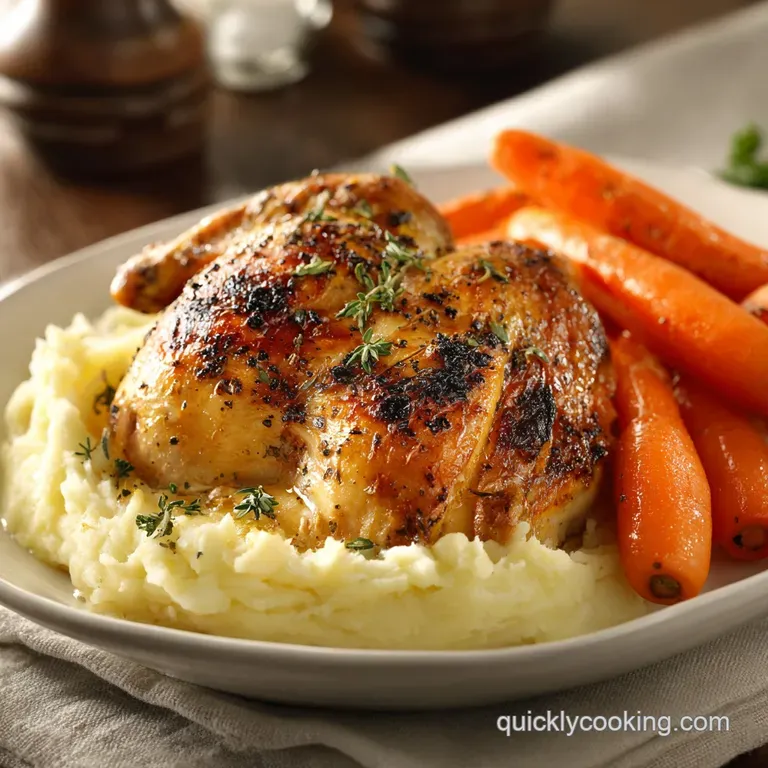
The biggest pitfall with a dish like this is the "soggy skin syndrome." This usually happens because the pan was overcrowded or the chicken wasn't dried properly. If you put too many thighs in a small pan, the steam released from the meat has nowhere to go, so it ends up "stewing" the skin instead of frying it.
Why Your Potatoes Are Gummy
Overworking the potatoes releases too much starch. If you use a food processor or blender, you'll end up with something resembling wallpaper paste. Stick to a hand masher or a ricer. If the potatoes feel too stiff, add a splash more chicken broth rather than more yogurt, which can make them too tart if overdone.
| Problem | Root Cause | Solution |
|---|---|---|
| Burnt Garlic | Heat was too high during the initial sear. | Start with a cold pan or tuck garlic under the skin. |
| Dull Carrots | Glaze didn't reduce enough. | Simmer uncovered for 2 extra minutes on high heat. |
| Dry Chicken | Internal temp exceeded 82°C. | Use a meat thermometer and pull at 74°C. |
Common Mistakes Checklist
- ✓ Pat chicken completely dry before searing (prevents steaming)
- ✓ Let the chicken rest for 5 minutes before serving (retains juices)
- ✓ Don't boil the potatoes too fast; a gentle boil prevents them from breaking apart
- ✓ Slice carrots on a bias to maximize the surface area for the honey glaze
- ✓ Use a heavy bottomed pan to ensure even heat distribution for the chicken
Choosing Your Path: Fresh vs. Shortcut
| Component | Fresh Method | Shortcut Method | Flavor Impact |
|---|---|---|---|
| Garlic | Freshly pasted cloves | Jarred minced garlic | Fresh has a punchier, less metallic bite. |
| Broth | Homemade stock | Low sodium boxed broth | Boxed is efficient; homemade is richer. |
| Herbs | Fresh rosemary/thyme | Dried Italian seasoning | Dried is more muted; fresh is vibrant. |
If you are in a massive rush, the shortcut methods still produce a great meal, but that fresh garlic paste is the one thing I wouldn't compromise on if you can help it. The way fresh garlic mellows out during the roast is what defines the "Roasted Garlic" part of this recipe.
Creative Twists for Next Time
- If you want a citrus kick, add lemon zest to the herb rub and a squeeze of lemon juice to the carrots at the very end.
- If you want a spicy version, swap the smoked paprika for chipotle powder and add a pinch of chili flakes to the chicken rub.
- If you want it dairy-free, substitute the butter with more avocado oil and use a splash of almond milk or extra broth instead of the Greek yogurt.
Scaling this recipe up for a dinner party is relatively simple. For 8 servings, use two skillets for the chicken to avoid overcrowding. You can double the potatoes and carrots easily in larger pots, but keep the salt and spices to about 1.5x the original amount first, then taste and adjust.
It is much easier to add more salt than to fix a salt lick!
Debunking Kitchen Myths
A common misconception is that you must wash your chicken before cooking. Please, don't do this. It doesn't kill bacteria; it just splashes them all over your sink and counters. The heat of the oven is what makes the chicken safe to eat.
Another myth is that you need heavy cream for "perfect" mashed potatoes. While cream is great, the Greek yogurt in this recipe provides a much needed acidic counterpoint to the fatty chicken. It’s a trick I learned when I ran out of milk one night, and honestly, I’ve never gone back.
Storing and Reheating for Maximum Freshness
Storage: This meal keeps beautifully in the fridge for up to 3 days. Store the chicken, potatoes, and carrots in separate airtight containers if possible to keep the textures distinct. The chicken skin will lose its crunch in the fridge, but the flavor remains top tier.
Freezing: You can freeze the chicken and potatoes for up to 2 months. I don't recommend freezing the glazed carrots as they tend to become mushy upon thawing. To freeze the mash, let it cool completely and store it in a freezer safe bag, pressing it flat to save space.
Zero Waste: Don't throw away those potato peels! Toss them with a little oil and salt, then bake them at 200°C for 10 minutes for a crispy kitchen snack.
Any leftover chicken bones can be thrown into a pot with water and veggie scraps to make a quick stock for your next soup.
Completing the Plate with Style
This Roasted Garlic Herb Chicken with Mashed Potatoes and Glazed Carrots is a powerhouse on its own, but if you want to round it out further, a crisp green salad with a light vinaigrette is the way to go. The acidity of a salad cleanses the palate between bites of the rich chicken and buttery mash.
If you find yourself with extra honey glazed carrots, they make a fantastic addition to a cold grain bowl the next day. This recipe is designed to be high efficiency, so use those leftovers wisely! Whether it is a quick Monday night or a slow Sunday, this trio of flavors never fails to hit the spot.
Now, go get that skillet screaming hot and let's get cooking!
Recipe FAQs
What is the critical step to ensure the chicken skin turns out crispy?
Pat the chicken completely dry before applying the herb paste. Any surface moisture will generate steam when it hits the hot pan, preventing the Maillard reaction needed for crisp, mahogany skin.
How can I prevent the mashed potatoes from becoming gluey or overly sticky?
Use a ricer or hand masher, and avoid overworking the starches. Yukon Gold potatoes are ideal; if you mash them too vigorously after adding liquid, the starch structure breaks down, leading to a gummy texture.
Can I use dried herbs instead of fresh rosemary and thyme for the chicken rub?
Yes, but adjust the quantity significantly. Use only one-third the amount of dried herbs compared to fresh, as dried herbs are more potent; for a more vibrant flavor profile, consider checking out the technique balancing acid and sweet in our Roasted Beet Sweet recipe.
How to tell when the chicken thighs have reached the safe internal temperature without overcooking?
Insert a thermometer into the thickest part of the thigh, avoiding the bone, aiming for 74°C (165°F). Pull the chicken out of the oven right at this temperature, as carryover heat will continue to cook it during the necessary 5-minute rest period.
Is it true that searing the chicken in a cold pan guarantees a better crust?
No, this is a common misconception. Starting the chicken skin side down in a cold pan, then slowly bringing the heat up, allows the fat to render gradually, which is essential for achieving a shatteringly crisp skin while keeping the meat moist, much like the controlled heat application needed for Honey Sesame Chicken recipe.
What is the technique to get the glazed carrots sticky and shiny instead of watery?
Simmer the honey, vinegar, and paprika uncovered until the liquid reduces substantially. You need to evaporate the water content from the honey and carrots, allowing the sugars to form a thick, viscous coating that clings to the vegetable surfaces.
How far ahead of time can I prepare the herb and garlic paste for the chicken?
Yes, you can prepare the paste up to 2 days in advance. Store the mixture tightly covered in the refrigerator; the flavors meld nicely overnight, but ensure you rub it onto the chicken about 30 minutes before searing to let it come slightly closer to room temperature.
Garlic Herb Chicken Dinner
Ingredients:
Instructions:
Nutrition Facts:
| Calories | 624 kcal |
|---|---|
| Protein | 38g |
| Fat | 29g |
| Carbs | 54g |
| Fiber | 7g |
| Sugar | 12g |
| Sodium | 685mg |
