Healthy Mason Jar Salads for Work
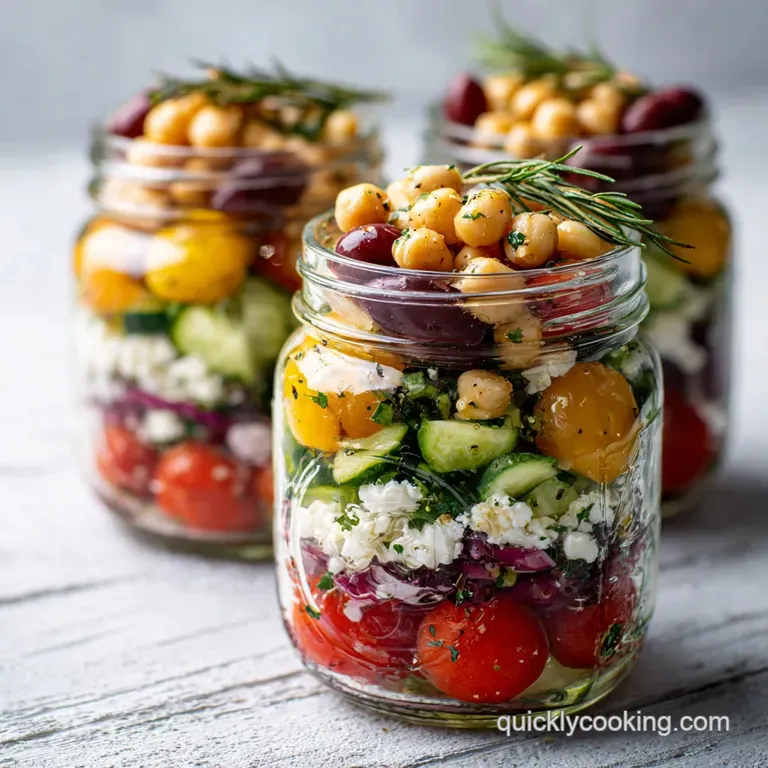
- Time: Active 20 mins, Passive 0 mins, Total 20 mins
- Flavor/Texture Hook: Zesty lemon herb punch with a shatter crisp Romaine crunch
- Perfect for: High efficiency professionals needing a grab-and-go nutritional reset
- Stay Fresh With These Healthy Mason Jar Salads For Work
- The Logic Of Gravity And Moisture Control In Jars
- Breaking Down The Nutrition And Flavor Of Every Layer
- Tools For High Efficiency Bulk Meal Prep
- Mastering The Five Minute Vertical Assembly Flow
- Professional Strategies To Avoid Common Lunch Prep Failures
- Expanding Your Palate With Creative Protein Swaps
- Maximizing Longevity And Reducing Kitchen Food Waste
- The Final Shake And Serve Desk Lunch Ritual
- High in Sodium
- Recipe FAQs
- 📝 Recipe Card
Stay Fresh With These Healthy Mason Jar Salads For Work
The clink of glass jars on my counter is the sound of a successful week ahead. I remember the dark days of office lunches those sad, plastic wrapped containers where the balsamic dressing had already turned the spinach into a translucent, slimy mess by 10:00 AM.
It was depressing, expensive, and honestly, a waste of good produce. I almost gave up on the whole "healthy lunch" thing until I realized that gravity could be my best friend if I just changed the orientation of my ingredients.
Now, when I pop the seal on one of these healthy mason jar salads for work, the aroma of fresh lemon and dried oregano hits me instantly. There’s something incredibly satisfying about watching the chickpeas and feta tumble over the crisp romaine as I pour it into a bowl.
The textures are distinct: the cucumbers are still snappy, the chicken is succulent rather than dry, and the sunflower seeds provide that essential nutty shatter.
We are going to streamline your entire Sunday prep routine with this Mediterranean inspired build. It’s not just about throwing things in a jar; it’s about a calculated assembly line that respects the physics of moisture. You won't find any limp greens here.
Instead, you'll get a high protein, fiber rich fuel source that keeps you focused through that 3:00 PM slump without the heavy bloat of a takeout sandwich.
The Logic Of Gravity And Moisture Control In Jars
- Hydrophobic Barriers: Placing oil heavy vinaigrette at the bottom and dense, non porous legumes (chickpeas) directly above it prevents the liquid from wicking upward into the delicate leaves.
- Atmospheric Seal: The rubber gasket of a wide mouth mason jar creates a near airtight environment, significantly slowing down the oxidation of sliced cucumbers and onions compared to standard snap top bins.
- Thermal Mass Efficiency: Glass holds a colder temperature than plastic, meaning your salad stays at a food safe "crisping" temp longer during your commute.
| Prep Method | Fridge Life | Texture Quality | Cleanup Speed |
|---|---|---|---|
| Mason Jar (Vertical) | 4-5 Days | Shatter crisp greens | Fast (Dishwasher safe) |
| Plastic Bin (Mixed) | 1 Day | Soggy/Wilting | Moderate (Oily residue) |
| Bowl (Separate Dressing) | 2-3 Days | Fresh but bulky | Slow (Multiple lids/parts) |
The real secret to making these healthy mason jar salads for work is ensuring every single piece of Romaine is bone dry. If you have a salad spinner, use it twice. Moisture on the leaves is the enemy of longevity; it creates a micro climate of humidity that triggers rapid decay.
Trust me, I’ve tried skipping the spinning step when I was in a rush, and by Wednesday, I was eating compost.
Breaking Down The Nutrition And Flavor Of Every Layer
| Component | Science Role | Pro Secret |
|---|---|---|
| Lemon Vinaigrette | Acidic Preservative | Emulsify with Dijon to keep the oil and lemon from separating. |
| Canned Chickpeas | Structural Foundation | Pat them dry after rinsing so they absorb the dressing’s flavor like a sponge. |
| English Cucumber | Moisture Buffer | Use English or Persian varieties for thinner skins and less watery seeds. |
| Chicken Breast | Protein Density | Cube it into 1/2 inch bites to ensure even distribution and easier fork loading. |
For this specific build, we are using 300g of English cucumber and 250g of cherry tomatoes. The English cucumber is vital because it has fewer seeds, meaning it won't weep as much water into your jar as a standard field cucumber might. When you're batching for the week, efficiency is king.
Use a sharp chef's knife to sliver the 60g of red onion into almost translucent threads; you want that sharp bite, but you don't want a massive hunk of raw onion ruining your afternoon meeting breath.
Tools For High Efficiency Bulk Meal Prep
To get these healthy mason jar salads for work done in under 20 minutes, you need a clear workspace and the right vessels. I swear by the 32 ounce (quart) wide mouth glass jars.
The "wide mouth" part isn't just a suggestion it’s the difference between easily pouring your salad out and having to dig chicken chunks out of the corners with a coat hanger.
- Wide Mouth Mason Jars (4): The 32 ounce size provides enough "headroom" for the leaves to stay un crushed.
- Salad Spinner: Absolute non negotiable for the 150g of Romaine hearts.
- Whisk or Small Blender: For the 120ml olive oil and 60ml lemon juice emulsion.
- Digital Scale: For precise portioning of the 300g chicken breast across four jars.
If you find yourself needing a protein boost that's even faster than cubing chicken, you could easily pivot. For a different texture profile, you might enjoy the flakes in my Air Fryer Salmon recipe as a top layer addition on the day of eating. However, for the true "make-ahead" jar, the cubed chicken breast remains the most stable protein choice.
Mastering The Five Minute Vertical Assembly Flow
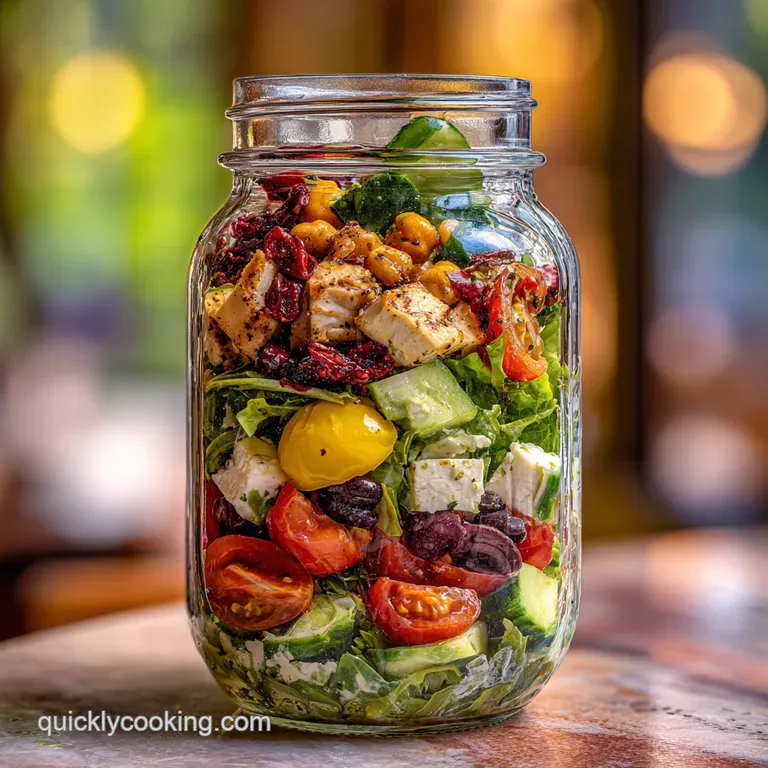
1. Emulsifying the Golden Dressing
In a small bowl, whisk together the 120ml extra virgin olive oil, 60ml fresh lemon juice, 15ml Dijon mustard, 2 cloves minced garlic, 5ml dried oregano, and 2.5ml sea salt and black pepper. Whisk vigorously until the mixture looks creamy and unified. Divide this equally among the four jars (roughly 50ml per jar).
2. Constructing the Moisture Barrier
Drop 100g of the rinsed and dried chickpeas into each jar. These are your "soldiers" they sit in the dressing and marinate, becoming more flavorful over time while preventing the dressing from touching anything else.
3. Engineering the Crisp Layers
Add the 300g of diced English cucumber and 250g of halved cherry tomatoes. These "wet" vegetables are perfectly fine touching the chickpeas, but they must stay below the protein and greens.
Note: Halving the tomatoes allows them to release just enough juice to mingle with the dressing without turning the jar into soup.
4. Adding the Hearty Core
Layer in the 300g of cubed chicken breast, followed by 150g of crumbled Feta cheese. The Feta acts as a secondary barrier; its fat content helps shield the upper layers from any stray moisture.
5. Applying the Flavor Accents
Drop in the 60g of finely slivered red onion and the 100g of halved Kalamata olives. These are the "punch" ingredients that will season the rest of the jar as it sits.
6. Securing the Leafy Crown
Stuff 150g of chopped Romaine hearts into the remaining space. Pack them in tightly but don't pulverize them. They should feel like a fluffy pillow at the top of the jar.
7. The Final Crunch Element
Sprinkle 30g of toasted sunflower seeds on the very top. Note: Keeping the seeds at the peak ensures they stay crunchy and don't get softened by the humidity of the vegetables below.
8. Sealing for Longevity
Wipe the rims of the jars to ensure no oil interferes with the seal. Screw the lids on firmly and move them immediately to the back of the fridge, which is usually the coldest spot.
Chef's Tip: If you're prepping these for a full 5 day work week, leave the sunflower seeds in a separate small container or drawer at work and add them right before eating for that maximum "shatter" effect.
Professional Strategies To Avoid Common Lunch Prep Failures
The most frequent complaint with healthy mason jar salads for work is the dreaded "soggy bottom" or the "stale top." These issues are almost always caused by improper cooling or wet greens. If your chicken breast is still warm when you put it in the jar, it will create steam.
Steam equals condensation, and condensation is the fast track to a wilted salad.
Why Your Greens Are Limp
Even a teaspoon of water left on the Romaine will travel down the jar via gravity, bringing the dressing's salt with it. This creates an osmotic effect that draws moisture out of the leaves, leaving them flaccid. Ensure the lettuce is bone dry before it touches the jar.
Why Your Dressing Separated
If you don't use the 15ml of Dijon mustard, the oil and lemon juice will split within an hour. The mustard acts as an emulsifier, binding the fat and acid together so they coat the ingredients evenly when you eventually flip the jar.
| Problem | Root Cause | Solution |
|---|---|---|
| Cloudy Dressing | Cold fridge temps solidifying oil | Let the jar sit at room temp for 10 mins before shaking. |
| Bitter Onion Taste | Oxidation of red onion | Slice onions thinner and keep them away from the lemon juice until eating. |
| Mushy Chickpeas | Over soaking in acid | Use larger, firmer chickpeas or replace with white beans. |
Common Mistakes Checklist: ✓ Never add the dressing last; it must always be the first thing in the jar. ✓ Don't use soft greens like spinach or spring mix for a 5 day prep; they lack the cell wall strength of Romaine.
✓ Ensure the chicken is completely chilled (below 40°F) before assembly to prevent steam. ✓ Avoid over packing the very top; leaves need a tiny bit of "breathing room" to stay crisp. ✓ Use wide mouth jars only your fork will thank you during the lunch hour.
Expanding Your Palate With Creative Protein Swaps
While this Mediterranean version is my "ol' reliable," you can easily scale or swap the components based on what’s in your pantry. If you are cooking for a larger family, you might need to double the quantities.
Scaling Your Batch Prep
When doubling this recipe for 8 servings, don't just double the salt and garlic. Stick to 1.5x the salt (about 3.5ml total) and 3 cloves of garlic to avoid an overpowering jar. You'll need about 2.5 lbs of chicken breast to reach the 600g required for a double batch.
If you're scaling down for just two days, use a smaller whisk for the dressing to ensure you get a proper emulsion with the smaller volume of 60ml oil.
| Original Ingredient | Substitute | Why It Works |
|---|---|---|
| Chicken Breast (300g) | Hard Boiled Eggs (4) | Provides similar protein density; slice and add to the Feta layer. |
| Feta Cheese (150g) | Chickpeas (Extra 200g) | For a vegan version, the extra beans add creaminess and fiber. |
| Romaine Hearts | Kale (Massaged) | Kale is even sturdier and can last up to 6 or 7 days in a jar. |
If you find yourself still hungry after these salads, I often pack a few of my No Bake Protein recipe for a mid afternoon energy boost. They fit perfectly in the side pocket of a lunch bag and satisfy that post salad sweet tooth without a sugar crash.
Maximizing Longevity And Reducing Kitchen Food Waste
- Fridge Life: These jars are optimal for 4 days. By day 5, the cucumbers may start to lose their snap, but they are still perfectly safe to eat.
- Zero Waste Tip: Don't toss the lemon rinds! After juicing your 60ml of lemon, throw the rinds into a jar of white vinegar. After two weeks, you'll have a citrus scented, all natural cleaner for your kitchen counters.
- The "Stem" Strategy: Use the crunchy stems of the Romaine hearts. They have the most water content and structural integrity, making them the best candidates for the layers closest to the "wet" ingredients.
The Myth of Air Circulation
A common misconception is that salad needs "air" to stay fresh. In reality, oxygen is the enemy. It turns the edges of your lettuce brown and makes your avocados (if you use them) grey. The vacuum like seal of a mason jar lid is exactly why this method works better than a ventilated plastic container.
Another myth is that you can't use dressing with dairy; as long as the jar is refrigerated and the Feta is high-quality, it stays fresh for the duration of the work week.
The Final Shake And Serve Desk Lunch Ritual
When the clock strikes noon and you're ready to dive into your healthy mason jar salads for work, there are two schools of thought on the "finish." You can either shake the jar vigorously to coat everything and eat it straight out of the glass, or you can pour it into a wide bowl.
I strongly recommend the bowl method. There’s something psychological about seeing the volume of food you’re about to eat. When you flip the jar over a bowl, the ingredients land in the reverse order of how you packed them.
The Romaine forms a crisp bed, the chicken and feta fall into the middle, and the dressing soaked chickpeas and vinaigrette pour over the top like a built in sauce. It’s a 10 second transformation from a "science project" to a restaurant quality meal.
If you love this high efficiency meal prep style, you've got to try my Breakfast Burritos for recipe which follow a similar "prep once, eat all week" philosophy. Between the jars for lunch and the burritos for breakfast, you'll have your entire work week on autopilot, leaving you more time to actually enjoy your coffee instead of scrambling to find something healthy to eat.
Right then, go get those jars clinking. Your future, well fed self will thank you.
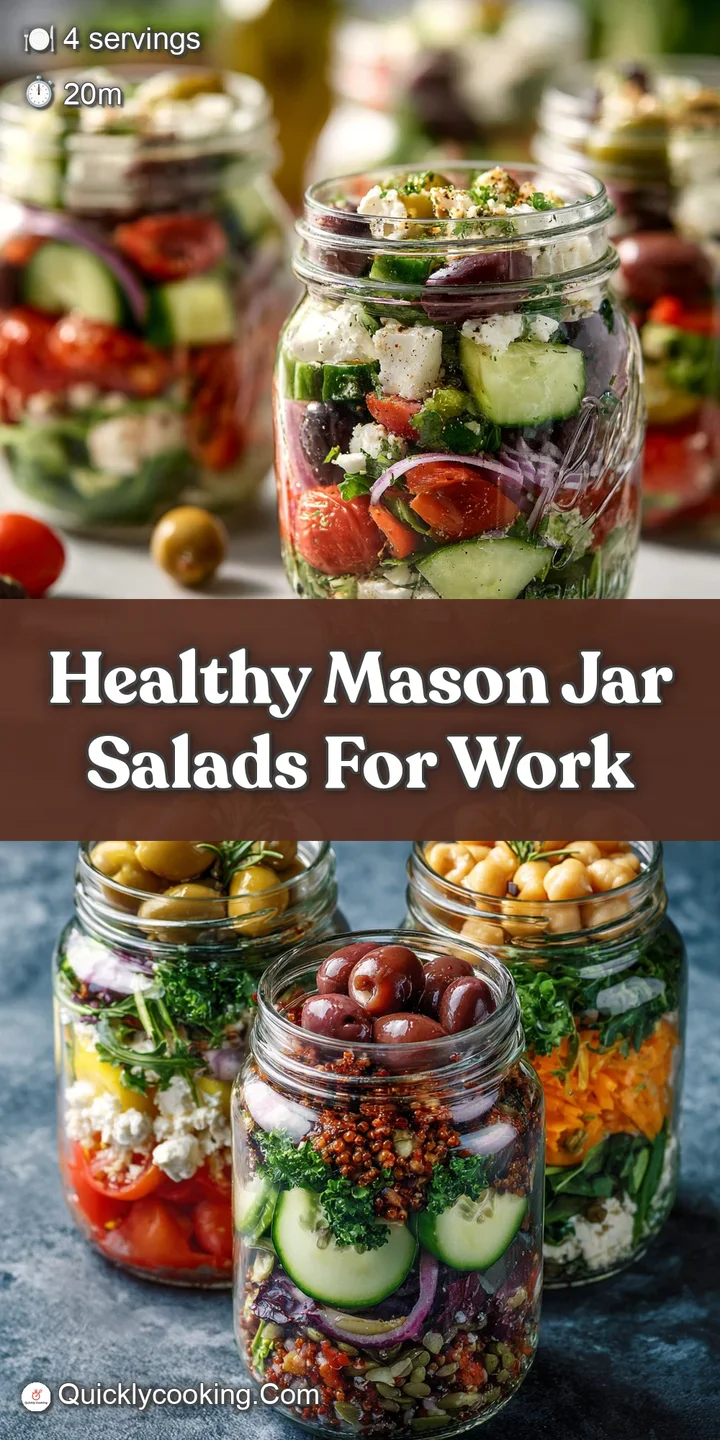
High in Sodium
812 mg mg of sodium per serving (35% % of daily value)
The American Heart Association recommends limiting sodium intake to about 2,300mg per day.
Tips to Reduce Sodium
-
Reduce Feta-15%
Use half the amount of feta cheese (75g) or substitute with a low-sodium cheese like fresh mozzarella. Feta is a significant source of sodium in this recipe.
-
Low-Sodium Chickpeas-20%
Opt for canned chickpeas labeled 'low sodium' or 'no salt added'. Alternatively, use dried chickpeas and cook them yourself, skipping the salt.
-
Skip Olives-10%
Omit the Kalamata olives entirely or reduce the quantity significantly. They contribute a considerable amount of sodium due to the brining process. You can add bell peppers for additional flavor and texture.
-
Reduce Added Salt-25%
Reduce the amount of sea salt by half (1.25ml) or eliminate it completely and adjust to taste after combining all ingredients. Remember that other ingredients already contain sodium.
-
Homemade Dressing-10%
Make a new batch of dressing and eliminate the Dijon mustard. Substitute with more lemon juice, garlic, oregano, and pepper.
-
Flavor Boost
Enhance the flavor of your salad with a variety of fresh herbs like parsley, basil, or dill. These additions add depth and complexity without any sodium.
Recipe FAQs
What is the best way to layer ingredients in a mason jar salad for work?
Start with the dressing at the bottom. Layer dressing, then dense, non-porous ingredients like chickpeas, followed by wet vegetables, protein, cheese, aromatics, and finally greens and crunchy toppings.
How long do mason jar salads typically last in the refrigerator?
Up to 4-5 days for peak freshness. The sealed jar and careful layering prevent moisture transfer, keeping greens crisp and ingredients preserved.
Can I use frozen vegetables or fruits in my mason jar salads?
No, stick with fresh. Frozen items release excess moisture as they thaw, which will make your salad soggy and bleed color into other ingredients.
How do I prevent my greens from wilting in a mason jar salad?
Ensure greens are thoroughly dry before adding them. Any residual water on the leaves can create humidity, leading to rapid wilting and decay.
What's the best type of jar to use for making salads?
Wide mouth mason jars are ideal. The wider opening makes it much easier to add ingredients and to pour the salad out for serving without food getting stuck in corners.
Can I prepare mason jar salads with dairy, like feta cheese?
Yes, dairy is fine as long as the jar is refrigerated. high-quality feta cheese, when kept chilled in the sealed jar, remains fresh for the entire work week.
How do I serve a mason jar salad?
Shake the jar vigorously and pour into a bowl. This technique reverses the layering, creating a nicely presented salad with dressing coating everything evenly.
Mason Jar Salads For Work
Ingredients:
Instructions:
Nutrition Facts:
| Calories | 749 kcal |
|---|---|
| Protein | 39.3 g |
| Fat | 50.9 g |
| Carbs | 36.5 g |
| Fiber | 8.5 g |
| Sugar | 5.5 g |
| Sodium | 812 mg |
