Microwave Mug Mac and Cheese with Sharp Cheddar
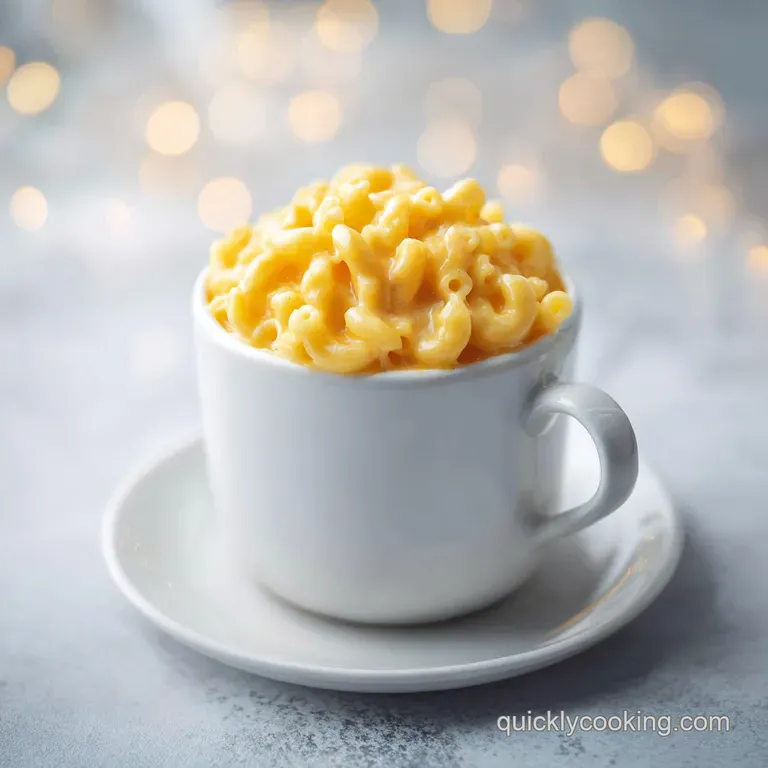
- Time: Active 1 min, Passive 5 mins, Total 6 mins
- Flavor/Texture Hook: Silky, molten cheddar coating tender macaroni
- Perfect for: Dorm life, late night cravings, or a solo desk lunch
- Microwave Mug Mac and Cheese
- Why This Method Actually Works
- Component Analysis
- Essential Ingredients and Smart Swaps
- Tools for the Job
- Simple Step-by-Step Instructions
- Solving Common Texture Issues
- Adjusting for Different Needs
- Kitchen Myths Debunked
- Storage and Waste Prevention
- Best Ways to Serve
- High in Sodium
- Recipe FAQs
- 📝 Recipe Card
Microwave Mug Mac and Cheese
Picture this: it’s 11 PM, your brain is fried from a long shift, and the thought of waiting for a massive pot of water to boil feels like a personal insult. You crave that sharp, salty tang of cheddar, but you don't want the orange powder from a blue box.
You hear the rhythmic thrum of the microwave and catch the first whiff of toasted garlic powder it’s the scent of a 5 minute victory. This recipe delivers a quick and easy 5 Minute Microwave Mug Mac and Cheese with Sharp Cheddar for a single serving.
I remember the first time I tried this. I used a mug that was too small, and my microwave looked like a starch water explosion happened inside. I spent more time cleaning than eating. But after a dozen tries, I figured out the secret isn't just the power setting; it’s the hydration ratio.
We aren't just boiling pasta; we’re creating a concentrated starch slurry that acts as the "glue" for our sauce.
Forget the idea that "real" pasta requires a stovetop. When you're cooking for one, the microwave is a precision tool, not a compromise. By the time you’ve grabbed a fork and a napkin, the macaroni has absorbed the water, softened perfectly, and is ready to embrace a handful of sharp cheese.
Trust me, once you nail this ratio, you’ll never look at a saucepan the same way again during the work week.
Why This Method Actually Works
Rapid Starch Gelatinization Science
The physics of this mug meal is actually quite clever. Because we use a small, contained environment, the heat is focused directly on the water molecules surrounding the pasta, leading to a faster breakdown of the starch.
- Starch Concentration: Using just enough water (1/2 cup) ensures that as the pasta cooks, the water becomes thick with starch rather than being drained away.
- Thermal Agitation: The microwave creates localized "hot spots" that keep the macaroni moving, preventing it from fusing into a single block of dough.
- Fat Emulsification: The residual starchy liquid acts as a natural bridge, allowing the fat from the sharp cheddar to bind with the whole milk without breaking into a greasy mess.
| Cooking Method | Prep + Cook Time | Cleanup Level | Resulting Texture |
|---|---|---|---|
| Microwave Mug | 6 minutes | Single Mug | Silky, thick, and velvety |
| Stovetop Classic | 20 minutes | Pot, Strainer, Spoon | Light and saucy |
| Baked Version | 45 minutes | Casserole Dish | Crispy top, dense middle |
The biggest difference you'll notice between this and the stovetop is the "cling" factor. Because we don't rinse the pasta, every millimeter of that macaroni is coated in a concentrated cheese emulsion that feels much richer than it actually is. If you’re in the mood for more cheesy comfort but have a bit more time, my Beef Rigatoni Cheese recipe is a stellar weekend alternative for when you need to feed more than just yourself.
Component Analysis
| Ingredient | Science Role | Pro Secret |
|---|---|---|
| Elbow Macaroni | Structural Base | Small shapes with holes (elbows) trap the sauce inside for better flavor delivery. |
| Sharp Cheddar | Flavor & Fat | Aged cheddar has less moisture, providing a punchier flavor that doesn't water down the sauce. |
| Whole Milk | Emulsifier | The proteins in milk help stabilize the melted cheese, preventing it from becoming "stringy." |
Essential Ingredients and Smart Swaps
Getting the right ingredients makes the difference between a sad mug of noodles and a gourmet snack. I always reach for a block of cheese rather than the pre shredded stuff because the starch coating on bagged cheese can make the microwave version feel a bit grainy.
- 1/2 cup elbow macaroni: Why this? The hollow center captures the cheese sauce perfectly.
- Substitute: Small shells or ditalini. (Note: These may require 1 extra minute of cooking).
- 1/2 cup filtered water: Why this? Exact 1:1 ratio with pasta ensures full absorption.
- Substitute: Chicken or vegetable broth for extra savory depth.
- 1/4 teaspoon fine sea salt: Why this? Essential for seasoning the pasta from the inside out.
- Substitute: Kosher salt (use 1/2 teaspoon as it's less dense).
- 1/2 cup sharp cheddar cheese, shredded: Why this? Provides the "bite" that balances the creamy milk.
- Substitute: Gruyère or Fontina for a nuttier, meltier profile.
- 3 tablespoons whole milk: Why this? Adds the necessary liquid for a velvety mouthfeel.
- Substitute: Heavy cream for an ultra indulgent version, or unsweetened soy milk.
- 0.5 grams garlic powder: Why this? Adds an aromatic "cooked" flavor in seconds.
- Substitute: Onion powder or a tiny dash of hot sauce.
- 1 pinch smoked paprika: Why this? The smokiness mimics the flavor of a baked mac and cheese.
- Substitute: Nutmeg (the classic French secret for cheese sauces).
Tools for the Job
You don't need a pantry full of gadgets, but the vessel you choose is your most important piece of equipment here.
- Large Ceramic Mug (at least 450ml): The water will bubble up aggressively, and a standard small coffee cup will overflow.
- Small Microwave Safe Plate: Place this under your mug to catch any rogue splashes it saves a lot of cleaning later.
- Box Grater: For the best melt, grate your cheddar fresh just before adding it to the hot pasta.
- Fork or Small Whisk: Necessary for vigorous stirring to ensure the cheese and milk emulsify correctly.
Simple step-by-step Instructions
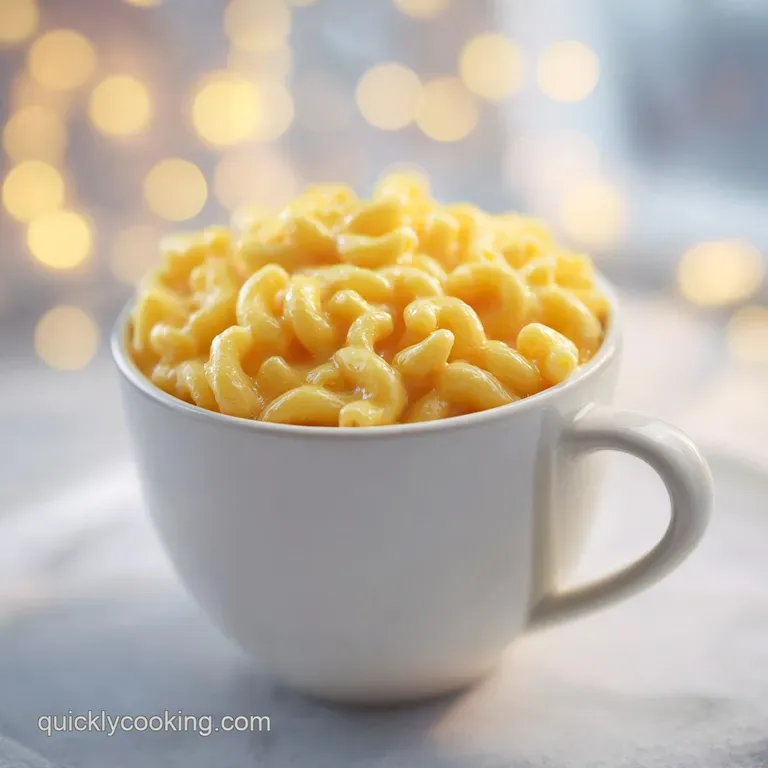
- Combine pasta and water. Place 1/2 cup elbow macaroni and 1/2 cup filtered water into your large mug. Note: The water should just barely cover the pasta.
- Add the seasoning. Stir in 1/4 teaspoon fine sea salt. Note: Salting the water now is the only way to ensure the pasta isn't bland.
- Initial microwave blast. Heat on high for 2 minutes until the water starts to bubble vigorously.
- The first stir. Carefully remove the mug (it will be hot!) and stir the pasta well to break up any clumps.
- Finish the cook. Microwave in 30 second intervals for another 2 to 3 minutes until the pasta is tender and the water has mostly vanished.
- Add the creamy base. Pour in 3 tablespoons whole milk and stir to coat the hot noodles.
- Fold in the cheese. Add 1/2 cup shredded sharp cheddar, 0.5 grams garlic powder, and a pinch of smoked paprika.
- The final melt. Microwave for 30 to 45 seconds until the cheese is a molten, silky pool.
- The emulsification stir. Whisk the mixture with a fork for 30 seconds. Note: This step is crucial to turn the melted cheese and milk into a smooth sauce.
- Rest and thicken. Let the mug sit for 1 minute before eating. The sauce will thicken and cling as it cools slightly.
Solving Common Texture Issues
Why Your Macaroni Is Hard
If your pasta is still crunchy, it usually means the water evaporated too quickly before the starch could fully hydrate. This often happens in high wattage microwaves.
Why Your Sauce Is Greasy
A greasy sauce happens when the cheese gets too hot too fast, causing the fat to separate from the protein. Stirring vigorously and using whole milk helps keep everything "together."
| Problem | Root Cause | Solution |
|---|---|---|
| Pasta is gummy | Too much residual water | Microwave for 30s more before adding cheese. |
| Cheese is clumpy | Using pre shredded cheese | Switch to fresh grated block cheddar. |
| Water overflowed | Mug was too narrow | Use a wide mouth soup mug or a bowl. |
Common Mistakes Checklist
- ✓ Always place a plate under the mug; starch water is a nightmare to scrub off a microwave turntable.
- ✓ Stir at the halfway point; otherwise, the top layer of pasta will stay hard while the bottom gets mushy.
- ✓ Don't skip the resting time; those 60 seconds are when the sauce actually becomes velvety.
- ✓ Use a mug twice as large as you think you need to accommodate the "bubble up" phase.
- ✓ Avoid low-fat milk; you need the fat content to create a stable emulsion with the cheese.
Adjusting for Different Needs
Cooking for One or Two
If you want to make two servings, I strongly suggest using two separate mugs rather than doubling the ingredients in one large bowl. Microwaves cook by vibrating water molecules, and doubling the mass often leads to "cold spots" where some pasta remains raw while others turn to mush.
If you must use one bowl, increase the cook time by 50% and stir every 60 seconds.
High Power Microwaves
If you have a 1200W microwave, reduce the power to 70% during the pasta cooking phase. This mimics a gentle simmer rather than a violent boil, preventing the water from spraying everywhere. For a more sophisticated twist, you could even toss in some ingredients from my Sun Dried Tomato recipe to brighten the bowl with a little acidity.
Kitchen Myths Debunked
One common misconception is that you must rinse the pasta after cooking in the microwave. This is actually the worst thing you could do! That cloudy water at the bottom of your mug is pure liquid gold it's concentrated starch that allows the cheese to turn into a sauce instead of just a glob of oil.
Another myth is that mug meals are "unhealthy." While this is comfort food, you are in total control of the ingredients. By using real sharp cheddar and whole milk, you're getting a decent hit of protein and calcium without the preservatives found in instant packets.
"Minute Microwave Mug Mac and Cheese with Sharp Cheddar" isn't a shortcut on quality; it's just a shortcut on time.
Storage and Waste Prevention
Storage: This is best eaten immediately, but if you have leftovers, they will keep in the fridge for up to 2 days. Reheating: To revive it, add a teaspoon of milk and microwave for 30 seconds. Stir well to bring the emulsion back to life.
I don't recommend freezing this, as the pasta texture becomes quite grainy once thawed.
Zero Waste Tip: Don't toss those tiny ends of cheese blocks! I keep a "cheese bag" in the freezer with all my leftover scraps of Gruyère, Gouda, or Parmesan.
They are the perfect size to grate into your next Minute Microwave Mug Mac and Cheese with Sharp Cheddar for a complex, multi layered flavor profile.
Best Ways to Serve
To make this feel like a "real" meal, I like to top it with something crunchy. A handful of crushed Ritz crackers or some toasted Panko breadcrumbs adds that "shatter" texture that usually only comes from a baked dish.
If you want to make it a bit more substantial, stir in some frozen peas (they’ll cook in the final 30 second cheese melt) or some chopped ham. The contrast of the velvety cheese against a crisp topping or a pop of green veg makes it feel less like a "hack" and more like a gourmet 5 Minute Microwave Mug Mac and Cheese with Sharp Cheddar.
It's brilliant in its simplicity, proving that you don't need a professional kitchen to make something that satisfies the soul.

High in Sodium
878 mg mg of sodium per serving (38% % of daily value)
The American Heart Association recommends limiting sodium intake to about 2,300mg per day for most adults.
Tips to Reduce Sodium in Your Mac and Cheese
-
Lower Sodium Cheese-15%
Opt for a lower sodium cheese like Swiss or Monterey Jack instead of sharp cheddar. This can significantly reduce the sodium content while still providing a cheesy flavor. Aim for a cheese with less than 100mg of sodium per serving.
-
Reduce Sea Salt-12%
Reduce the amount of sea salt by half, or eliminate it altogether. Taste the dish after cooking and add a tiny pinch of salt only if absolutely necessary. Salt can be omitted entirely depending on your preference.
-
Unsalted Milk-3%
Ensure you are using unsalted milk. The label should clearly state that it is unsalted. Although milk doesn't generally have high sodium content, it's good practice to check.
-
Flavor Boost
Enhance the flavor with sodium free herbs and spices like black pepper, onion powder, or a dash of nutmeg. Experiment to find your favorite combination. Use of herbs and spices adds flavor dimension without increasing sodium.
Recipe FAQs
Is sharp cheddar good for macaroni and cheese?
Yes, sharp cheddar is excellent. Its aged flavor provides the necessary "bite" to cut through the creaminess of the milk and butter without needing heavy seasoning.
How to make 5 minute mac and cheese in the microwave?
Combine macaroni, water, and salt in a large mug, then microwave for 2 minutes until boiling vigorously. Stir well, then continue microwaving in 30-second bursts until the pasta is tender and most water is absorbed.
Can you microwave sharp cheddar cheese?
Yes, sharp cheddar melts well in the microwave. Ensure you microwave it briefly at the end with milk or cream, stirring vigorously to create a stable emulsion rather than separating the fat.
How to melt sharp cheddar cheese for mac and cheese?
Shred the cheese fresh and add it to the very hot, cooked pasta along with a splash of milk. Microwave for only 30 45 seconds, then stir immediately and vigorously to combine the fat and liquid into a smooth sauce.
Is it true you must use an extra large mug for this recipe?
Yes, an oversized mug is crucial for safety. The water and pasta boil aggressively in the microwave, and using a mug that is too small will cause overflow and significant cleanup.
Why is my microwave mac and cheese sauce greasy instead of creamy?
The cheese was overheated, causing the fat to separate from the milk solids. Next time, use whole milk, add the cheese after the initial cook cycle, and stir vigorously to achieve a stable emulsion; this technique is similar to building stable sauces in recipes like our Frosted Red Velvet recipe.
What is the key difference between microwave and stovetop mac and cheese?
The microwave traps starch from the cooking water, creating a naturally thick, clingy sauce. Stovetop versions typically drain this starchy water, requiring added flour or butter (a roux) for thickness.
Microwave Mug Mac And Cheese
Ingredients:
Instructions:
Nutrition Facts:
| Calories | 396 kcal |
|---|---|
| Protein | 18.4 g |
| Fat | 17.1 g |
| Carbs | 41.6 g |
| Fiber | 1.6 g |
| Sugar | 2.3 g |
| Sodium | 878 mg |
