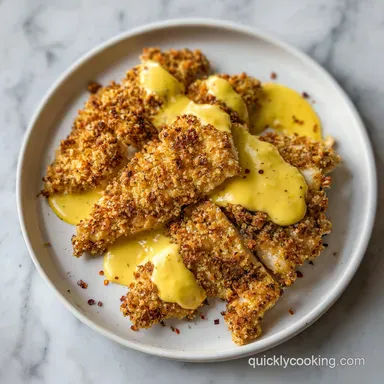
Pretzel Chicken: Ultra-Crispy with Mustard Cheddar Sauce
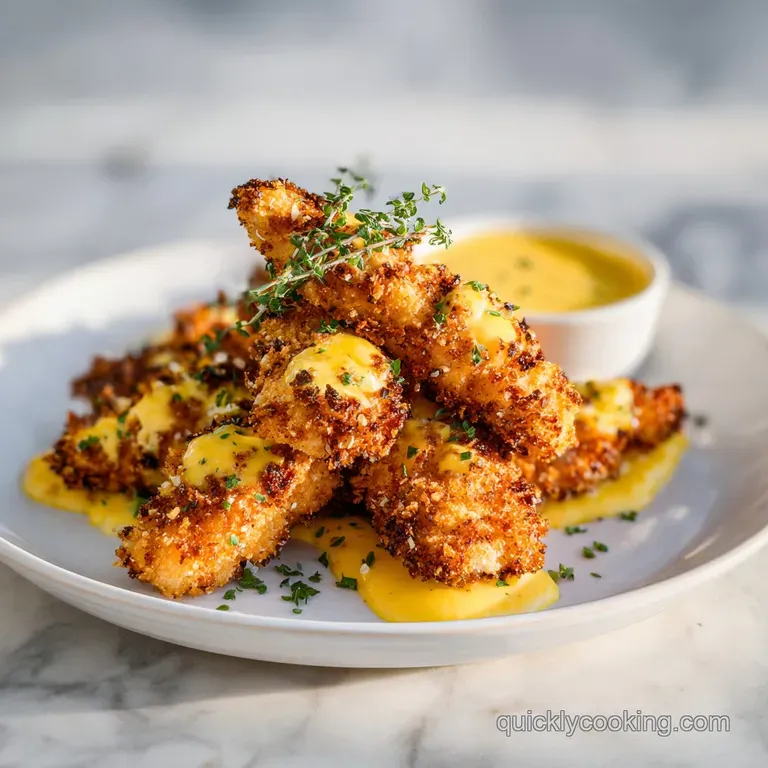
- Time:15 minutes active + 25 minutes cook = 40 minutes total
- Flavor/Texture Hook: Salty, mahogany gold crunch paired with a glossy, sharp cheddar dip
- Perfect for: Game day crowds, kid friendly dinners, or high speed weeknight meals
- Savor the Crunch of Pretzel Chicken
- Secrets to a Shatter Crisp Crust
- Component Analysis for Better Flavor
- The Essential Ingredient List
- From Prep to Plate
- Solving Common Texture Issues
- Troubleshooting Common Issues
- Adjusting the Recipe for Any Crowd
- Debunking Kitchen Folklore
- Storage and Zero Waste Guidelines
- Visualizing the Final Plate
- High in Sodium
- Recipe FAQs
- 📝 Recipe Card
Savor the Crunch of Pretzel Chicken
That sound. You know the one. It is that distinct, sharp crack when your fork hits the crust, followed by the scent of toasted malt and melted cheddar hitting the air. I first stumbled onto this combo during a chaotic Sunday football game a few years back.
I had a crowd of hungry friends, a fridge full of chicken, but I realized I was completely out of panko. I looked at the snack table, saw a giant bag of hard pretzels, and figured, why not?
It turns out, the saltiness of the pretzel is exactly what the chicken needs. Most breaded meats rely on a heavy hand of salt in the seasoning, but here, the crust does the heavy lifting. The result is this deeply savory, almost nutty exterior that makes standard breading feel boring.
This Pretzel Chicken is the kind of meal that makes people stop talking the moment it hits the table.
You can expect a dish that balances the sharp tang of Dijon with a rich, velvety cheese sauce. It is high efficiency cooking at its best, using a over high heat bake to get that mahogany color without the mess of deep frying.
We are talking about a meal that looks like it took hours of effort but actually comes together in under an hour.
Secrets to a Shatter Crisp Crust
Getting the texture right isn't about luck, it's about how the ingredients interact under heat. I've spent a lot of time figuring out why some versions turn out mushy while others stay crisp.
Pre Baked Structure: Pretzels are already dehydrated and baked, meaning they don't absorb moisture from the meat as quickly as fresh breadcrumbs.
Protein Bonding: The egg wash acts as a glue, creating a tight seal that prevents the chicken juices from leaking into the crust.
Over High heat Set: Cooking at 200°C ensures the exterior fats crisp up instantly, locking in the moisture of the breast meat.
Roux Stabilization: Using a butter and flour base for the sauce prevents the cheese from "breaking" or becoming oily.
| Thickness | Internal Temp | Rest Time | Visual Cue |
|---|---|---|---|
| 1 inch | 165°F (74°C) | 5 mins | Deep mahogany gold |
| 0.5 inch | 165°F (74°C) | 3 mins | Golden brown |
| 1.5 inch | 165°F (74°C) | 7 mins | Dark gold edges |
Component Analysis for Better Flavor
Understanding what each part of this recipe does helps you tweak it without ruining the result. If you are used to more traditional creamy dishes, you might find this approach similar to the base of my Butter Chicken recipe, where fat and acidity are balanced to create a smooth finish.
| Ingredient | Science Role | Pro Secret |
|---|---|---|
| Hard Pretzels | Structural Crunch | Crush coarsely; too fine and it loses the "shatter" |
| Dijon Mustard | Acidic Balance | Whisk in at the end to keep the tang sharp |
| Sharp Cheddar | Emulsified Fat | Grate it yourself to avoid cornstarch clumps |
| Egg Wash | Adhesion Agent | Beat until completely smooth for even coating |
The Essential Ingredient List
Keep your station organized. I like to set up my three bowl system before I even touch the meat. This prevents the "messy finger" syndrome where you accidentally dip your flour covered hand back into the egg.
For the Pretzel Chicken:
- 1.5 lbs chicken breastsWhy this? Lean protein that holds the crust well
- 1/2 cup all purpose flourWhy this? Creates a dry surface for the egg to grip
- 2 large eggsWhy this? The essential binder for the pretzels
- 2 cups hard pretzels, coarsely crushedWhy this? Provides the signature salt and crunch
- 1 tsp garlic powderWhy this? Adds depth to the pretzel base
- 1/2 tsp black pepperWhy this? Subtle warmth
- 1/4 tsp saltWhy this? Use sparingly since pretzels are salty
For the Mustard Cheddar Sauce:
- 2 tbsp unsalted butterWhy this? Fat base for the roux
- 2 tbsp all purpose flourWhy this? Thickening agent
- 1 cup whole milkWhy this? Creates a creamy, opaque sauce
- 1 1/2 cups sharp cheddar cheese, freshly shreddedWhy this? High flavor impact
- 1 tbsp Dijon mustardWhy this? Cuts through the richness of the cheese
- 1/2 tsp paprikaWhy this? Adds a golden hue and earthiness
- 1/8 tsp cayenne pepperWhy this? A tiny spark of heat
| Original Ingredient | Substitute | Why It Works |
|---|---|---|
| Hard Pretzels | Corn Chex | Similar crunch. Note: Lacks the malt flavor and salt |
| Whole Milk | Heavy Cream | Richer texture. Note: Sauce will be thicker and heavier |
| Sharp Cheddar | Gruyère | Nutty profile. Note: Melts more smoothly but costs more |
| All purpose Flour | Almond Flour | Low carb option. Note: Crust may be slightly more fragile |
From Prep to Plate
Let's get moving. The key to efficiency here is the flow. Do not start the sauce until the chicken is in the oven; otherwise, the cheese will seize up while you're waiting for the meat to cook.
Phase 1: Setting the Station & Coating
First, get your breading station ready. Place your flour, salt, and pepper in the first bowl. Beaten eggs go in the second. In the third, mix your coarsely crushed pretzels with the garlic powder.
Dredge each piece of chicken in the flour, shaking off any excess. You want a thin veil, not a cake. Dip the floured chicken into the egg wash, ensuring every nook and cranny is covered. Finally, press the chicken firmly into the pretzel crumbs. Trust me on this: press hard.
You want the crumbs embedded into the egg, not just sitting on top.
Place the coated pieces on a parchment lined baking sheet. Leave about an inch of space between them. If they touch, the sides will steam instead of crisping, and you'll lose that signature shatter.
Phase 2: The over High heat Bake
Slide the tray into the oven at 400°F (200°C). Bake for 15–20 minutes. You are looking for a deep mahogany gold color.
To be absolutely sure, use a meat thermometer to check that the internal temperature has reached 165°F (74°C).
While the chicken is finishing up, you can start the sauce. This timing is crucial. You want the sauce to be glossy and hot the moment the chicken comes out of the oven.
Phase 3: Whisking the Velvety Sauce
Melt the butter in a saucepan over medium heat. Whisk in the flour and let it bubble for about 1 minute. This removes the raw flour taste. Slowly pour in the milk, whisking constantly. Let it simmer for 3–5 minutes. You'll know it's ready when it's thick enough to coat the back of a spoon.
Turn the heat down to low and stir in your shredded cheddar, Dijon mustard, paprika, and cayenne. Whisk until the sauce is completely smooth and glossy. If it looks too thick, add a splash of milk. If it's too thin, let it simmer for another minute.
Chef's Note: To get a truly professional finish, grate your own cheese. Pre shredded bags are coated in potato starch to prevent clumping, which can make your mustard cheddar sauce feel grainy rather than velvety.
Solving Common Texture Issues
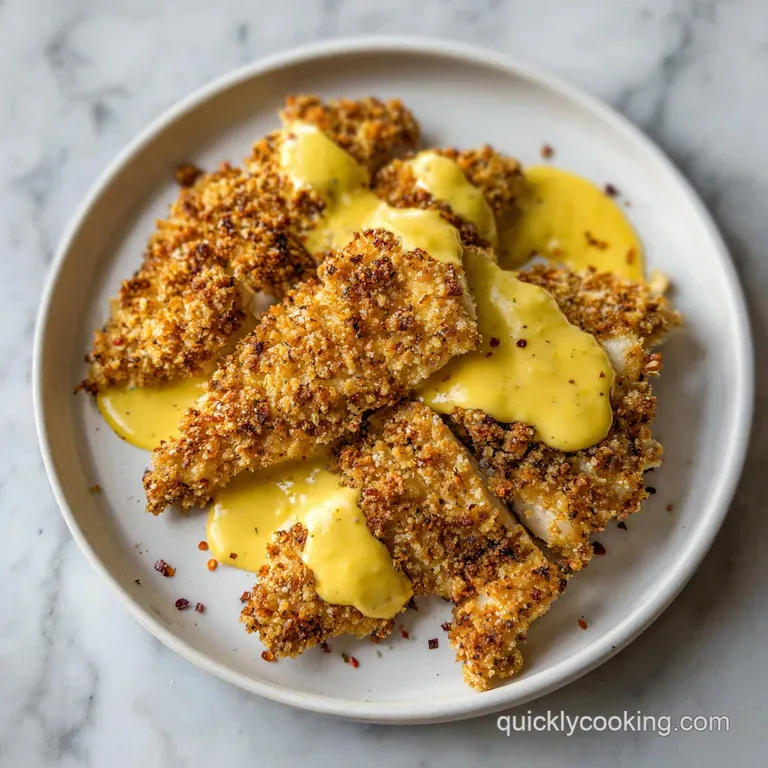
Even the best home cooks run into a few snags. Usually, it comes down to temperature or moisture management. If you find your meals are a bit too heavy, you might enjoy the lighter, zestier profile of a Street Corn Chicken Bowl, but for this Pretzel Chicken, we want that rich, indulgent feel.
Troubleshooting Common Issues
| Issue | Solution |
|---|---|
| Why Your Crust Is Falling Off | If the pretzels are sliding off the meat, it's usually a bonding issue. This happens if the flour layer is too thick or if the chicken was too wet when it hit the flour. The flour should be a light du |
| Why Your Cheese Sauce Is Grainy | Grainy sauce is almost always caused by overheating the cheese. Once the roux and milk are thickened, the heat should be low. If the cheese boils, the proteins tighten and squeeze out the fat, leaving |
| Why the Bottom Is Soggy | This is the classic baking struggle. If you place the chicken directly on a pan, the bottom doesn't breathe. Using parchment is a start, but for a truly professional result, a wire rack set over a bak |
Adjusting the Recipe for Any Crowd
Depending on who you're feeding, you might need to pivot the quantities. This Pretzel Chicken is surprisingly flexible, but the ratios for the sauce need to stay tight to maintain that velvety consistency.
Scaling Down (for 2 people): Use 0.75 lbs of chicken. For the eggs, beat two eggs in a bowl and use only half of the mixture. Reduce the sauce ingredients by half, but keep the heat low, as smaller amounts of sauce thicken much faster and can burn easily.
Scaling Up (for a party): When doubling the recipe, do not double the salt or cayenne; go with 1.5x instead. Spices can become overwhelming in larger batches. Work in batches for the breading station to keep the egg wash from getting too diluted with flour.
Baking Adjustments: If you are baking a massive batch on two trays, rotate the pans halfway through the cook time. The bottom rack usually runs hotter, and you want every piece of Pretzel Chicken to have that uniform mahogany gold finish.
Debunking Kitchen Folklore
There are a few myths about breaded chicken that I see everywhere. Let's clear those up so you can cook with confidence.
The "Seal In" Myth: You'll often hear that the crust "seals in the juices." That's not actually how it works. Moisture loss happens regardless of the crust. The breading is there for flavor and texture, and the high heat is what prevents the meat from drying out by cooking it quickly.
The Flourless Lie: Some people claim you can skip the flour and go straight to the egg. Trust me, don't do it. Without the flour, the egg has nothing to grip onto, and your pretzel crust will likely slide off in one big piece the moment you take a bite.
The over Low heat Delusion: Some suggest baking at a lower temperature for longer to "ensure" doneness. This is a mistake for Pretzel Chicken. Low heat leads to steaming, which ruins the crunch. High heat is your friend here.
Storage and Zero Waste Guidelines
Don't let the leftovers go to waste. While this dish is best fresh, there are ways to keep the soul of the recipe alive for a few days.
Storage: Store the leftover chicken and sauce in separate airtight containers. If you store them together, the crust will absorb the sauce and turn into mush. The chicken stays good in the fridge for 3 days, and the mustard cheddar sauce lasts for 4 days.
Freezing: You can freeze the breaded (but uncooked) chicken for up to 2 months. Just freeze them on a tray first so they don't stick together, then toss them into a freezer bag. Bake from frozen, adding about 5-10 minutes to the cook time.
Zero Waste Tips: If you have leftover "pretzel dust" at the bottom of your bowl, don't throw it away. Mix it into your next batch of homemade meatballs or use it as a crunchy topper for a macaroni and cheese. If you have leftover sauce, it makes a killer dip for roasted cauliflower or sliced apples.
Visualizing the Final Plate
The way you serve Pretzel Chicken determines whether it stays crispy or goes soggy. Presentation is about more than just looks; it's about preserving the textures we worked so hard to achieve.
Instead of pouring the sauce over the chicken, serve it in a separate bowl. This allows the diner to dip each piece, ensuring that the crust maintains its shatter crisp quality until the very last bite. Place the chicken on a wooden board or a platter lined with parchment for a rustic, game day vibe.
Pair this with something bright to cut through the richness. A crisp apple slaw or a side of roasted green beans works wonders. According to Bon Appétit, pairing a rich, cheesy dish with a refreshing side salad or roasted vegetables helps round out the meal and keeps your taste buds from getting overwhelmed by the fat.
For those who love the crunch, you can even sprinkle a few whole pretzels and some fresh parsley around the platter. It signals exactly what's inside the crust and adds a pop of color to the mahogany tones of the meat. If you're feeling inspired, this dish is not only a feast for the taste buds but also a wonderful way to impress friends at your next gathering, according to here.
When choosing your pretzels, always opt for the hard, crunchy variety. As suggested by Serious Eats, using quality, crunchy pretzels rather than soft ones and crushing them into a fine but textured crumb ensures the best possible coating and a consistent bake.
This Pretzel Chicken is all about that contrast: the salt of the pretzel, the tang of the mustard, and the velvety luxury of the cheese. It's fast, efficient, and honestly, a bit of a showstopper. Now, get your station set up and let's get cracking.
High in Sodium
1120 mg 1120 mg of sodium per serving (49% 49% of daily value)
The American Heart Association recommends a daily sodium limit of no more than 2,300 mg for most adults to maintain heart health.
Tips to Reduce Sodium
-
Swap the Pretzels-30%
Replace crushed hard pretzels with Panko breadcrumbs or unsalted crushed cornflakes to eliminate a major source of processed salt.
-
Modify the Cheese-15%
Use a reduced-sodium sharp cheddar or reduce the amount of cheese by half and add a pinch of nutritional yeast for a similar savory taste.
-
Omit Added Salt-10%
Remove the 1/4 tsp of salt entirely; the cheese and mustard already provide sufficient sodium to season the chicken.
-
Adjust the Mustard-10%
Substitute Dijon mustard with lemon juice or a low-sodium mustard alternative to cut down on condiment-based sodium.
-
Boost Aromatics
Increase the garlic powder or add fresh herbs like parsley and thyme to enhance the flavor profile without adding sodium.
Recipe FAQs
Why is my pretzel crust falling off the chicken?
Keep the flour layer thin. Too much flour or damp chicken prevents the egg wash and pretzels from bonding securely to the meat.
Why did my cheese sauce turn out grainy?
Avoid overheating the cheese. If the sauce boils after adding the cheddar, the proteins tighten and separate from the fat, creating a gritty texture.
How to freeze the pretzel chicken for later?
Freeze breaded, uncooked pieces on a tray first. Once frozen solid, transfer them to a bag for up to two months to prevent them from sticking together.
How to store leftovers without losing the crunch?
Store the chicken and sauce in separate airtight containers. Keeping them together causes the crust to absorb moisture and turn mushy.
Is it true that baking doesn't provide enough crunch compared to frying?
No, this is a common misconception. Baking at 400°F (200°C) creates a deep mahogany-gold crust that is just as satisfying as fried versions.
How to tell when the chicken is fully cooked?
Use a meat thermometer to reach 165°F (74°C). This ensures the chicken is safe to eat without overcooking the breast and drying it out.
Can I use an air fryer instead of the oven?
Yes, an air fryer works well for a faster finish. If you enjoyed the breading technique here, you can use the same method for crispy air fryer nuggets.
Pretzel Chicken in 35 Minutes