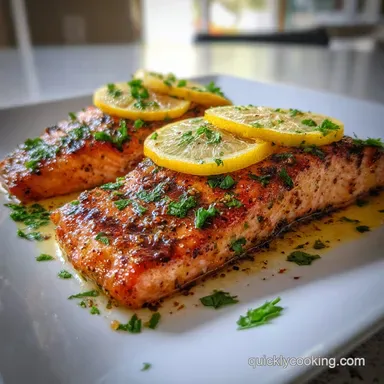
Grilled Salmon Lemon Sauce in 22 Minutes

- Total22 Mins
- Servings4
- Calories385 kcal
Grilled Salmon Lemon Sauce is quick because the fish cooks in one pass over direct heat, and the sauce takes about 5 minutes after that. You only need one small pan, so cleanup stays easy.
- Time: 10 min active + 10 min cooking + 2 min resting
- Skill level: Beginner. The only real risk is sticking, and the first 5 minutes of grilling handle that.
- Great for: Weeknight dinners when you want salmon on the table in under half an hour.
Ingredients and Swaps
Everything here makes four servings of grilled salmon lemon sauce, and the quantities match the steps exactly.
- 4 skin-on salmon fillets, about 1 inch thick (5 oz / 140 g each) Why this? The skin protects the flesh and crisps on the grate.
- ¾ tsp kosher salt (or ½ tsp fine table salt)
- ¼ tsp black pepper, freshly ground (0.6 g)
- 1 tsp olive oil, for the fish and grates
- 3 tbsp unsalted butter (43 g), cut into 4 pieces, divided Why this? Cold butter whisked in off the heat gives the sauce its body.
- 2 cloves garlic (6 g), finely minced
- ¼ cup low-sodium chicken or vegetable broth (60 ml)
- 3 tbsp fresh lemon juice, from about 1 large lemon
- 1 tsp lemon zest (2 g)
- 1 tbsp chopped fresh parsley (4 g)
Butter has a structural job in this sauce, so you can't swap it for oil and expect the same result. The other swaps are simpler:
| Original Ingredient | Substitute | Why It Works |
|---|---|---|
| Kosher salt, ¾ tsp | Fine table salt, ½ tsp | Fine salt packs denser, so the smaller amount seasons about the same. Taste before adding more. |
| Parsley, 1 tbsp | Fresh dill, 1 tbsp | Sharper, grassier flavor. It suits salmon but tastes noticeably different. |
| Olive oil, 1 tsp | Avocado oil, 1 tsp | Higher smoke point and a neutral taste. Works well on hot grates. |
| Lemon juice, 3 tbsp | Bottled lemon juice, 3 tbsp | Easy to find, but the sauce tastes flatter. Keep the zest fresh. |
Kitchen Tools
You need a grill with a lid, a wire brush, a fish spatula, tongs, a small saucepan, and paper towels. A heavy-bottomed pan keeps the butter from scorching at the edges.
Foil is optional. Use heavy-duty foil brushed with oil if your grates are old or the fillets are delicate. Lemon slices underneath add aroma but won't stop sticking. Foil adds a minute or two, so go by the flake test rather than the clock.
From Prep to Plate
Step 1: Prep the Salmon
- Pat the fillets dry with paper towels. Dry skin sears and releases from the grate much more easily.
- Season both sides with the kosher salt and black pepper. Let the fillets sit at room temperature for 10 minutes while the grill heats.
- Brush the skin side of each fillet with the olive oil.
Step 2: Heat the Grill
- Preheat the grill to medium-high, 400–450°F (200–230°C). Scrape the grates clean with a brush, then oil them lightly with a folded paper towel held in tongs.
Step 3: Grill the Salmon
- Place the fillets skin side down, close the lid, and cook 5–6 minutes until the sides turn opaque about two-thirds of the way up and the fillets release easily when nudged.
- Slide a fish spatula under each fillet and turn it gently. Cook 3–4 minutes more until the thickest part reads 165°F (74°C) and the flesh flakes easily.
- Move the fish to a plate and rest for 2 minutes.
Chef's note: Start the sauce the moment the fish comes off the grill. The 2 minutes of rest is exactly the time the butter needs to come together.
Step 4: Build the Sauce
- Melt 1 tbsp of the butter in a small saucepan over medium-low heat. Add the garlic and stir for 30–60 seconds until fragrant and pale gold. Do not let it brown.
- Pour in the broth and simmer about 2 minutes until it reduces by about a third and looks slightly syrupy.
- Remove the pan from the burner. Whisk in the remaining 2 tbsp butter one piece at a time until the sauce is glossy and thick.
- Stir in the lemon juice, lemon zest, and parsley. Taste and add a pinch of salt only if needed.
- Spoon the warm sauce over the rested salmon and serve right away while the skin is still crisp.
Pro Tips & Pitfalls

Many grilled salmon lemon sauce mishaps begin on the grill, so start by solving these common issues.
Stopping Fillets from Sticking or Tearing
Salmon often bonds to grates that are cold or dirty. Scrape the bars while they are hot, oil them well, and leave the fish untouched for 5 minutes. Place skin side down first to ensure it crisps and releases. If a piece resists, wait another minute; it is ready to flip only when it lets go easily.
Preventing Dry, Chalky Texture
A chalky consistency usually means the salmon spent too much time on the heat. Remove it when the thickest part hits 165°F (74°C), then allow it to rest. The fish continues cooking as it sits, so avoid waiting until it appears fully done on the grill.
Keeping the Sauce from Breaking
Butter separates if the pan is too hot. Shift the pan off the burner before adding the butter, whisking each piece until fully melted. If the sauce still splits, whisk in 1 tsp of warm broth.
Baking in the Oven
This is a viable alternative if you don't have a grill, albeit with less char. Bake at 400°F (200°C) using a foil-lined sheet pan, and cook until the internal temperature is 165°F (74°C). Since thickness varies, begin checking for doneness early.
Make It Your Own
Grilled Salmon Lemon Sauce bends well toward a dill and sour cream version. It's a different sauce, not a drop-in. Skip the butter, reduce the broth as in the sauce step, then take the pan off the heat and stir in about ¼ cup sour cream with a spoonful of chopped dill.
Don't let it boil, or the sour cream will split, and finish with the lemon zest.
How to Store and Keep Fresh
- Cooked salmon: Refrigerate it in a sealed container and eat it cold over salads within a few days, or warm it gently.
- Sauce: Keep it in a sealed jar in the fridge. It firms when cold, so warm it over very low heat with 1 tsp broth, whisking until smooth.
- Reheating salmon: Warm the fish in a 275°F (140°C) oven until the thickest part reaches 165°F (74°C), following USDA guidance on reheating leftovers.
- Freezing: Cooked salmon and the sauce don't freeze well. Raw fillets wrapped tightly do freeze, and they thaw in the refrigerator overnight before grilling.
The Trick Behind the Texture
- Dry skin on a hot grate: Moisture on the skin has to boil off before the skin can brown, so a dry fillet crisps and lifts off the bars sooner.
- Butter off the heat: Cold butter whisked into warm broth melts into a thick, silky sauce instead of breaking into greasy pools.
- Salmon keeps cooking while it rests: The fish finishes gently during the 2-minute rest, so you don't need to push it on the grill.
Common Questions
Why does lemon juice go on grilled salmon?
The lemon acidity offsets the butter and the fish's natural oils, resulting in a brighter-tasting sauce.
Tip: stir the juice in after removing the pan from the heat to maintain its fresh, sharp quality.
How do I grill salmon without the skin sticking?
Pat the fillets dry, oil the grates, and cook them skin side down on medium-high heat, 400–450°F (200–230°C), for 5–6 minutes.
Tip: leave the fillets alone until the sides turn opaque two-thirds of the way up and they release easily when nudged.
Should I place the salmon skin side down on the grill?
Yes, lay the fillets skin side down and close the lid so the skin crisps against the grate.
Tip: brush the skin side with olive oil first, since that's the side that needs to get crisp.
Grilled Salmon Lemon
Ingredients:
Instructions:
More to Cook

Cheddar Cheese Sauce Recipe
Ready in 20 minutes, this Cheddar Cheese Sauce Recipe is rich and smooth.

Vegetarian Swedish Meatball Sauce: Creamy
Vegetarian Swedish Meatball Sauce with a rich, savory flavor.

Potsticker Sauce Recipe
Master this potsticker sauce recipe for a zesty dumpling dipping sauce.

German Hunters Sauce
Searing smoked turkey and mushrooms builds this German Hunters Sauce.

Lemon Herb Salmon Rice Bowl
Master this Lemon Herb Salmon Rice Bowl using thin salmon strips for maximum crispness.

Baked Salmon: Lemon Garlic
Achieve tender Baked Salmon using this quick, high-efficiency recipe.
