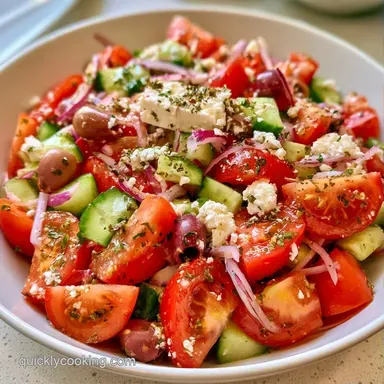
Traditional Greek Salad in 15 Minutes
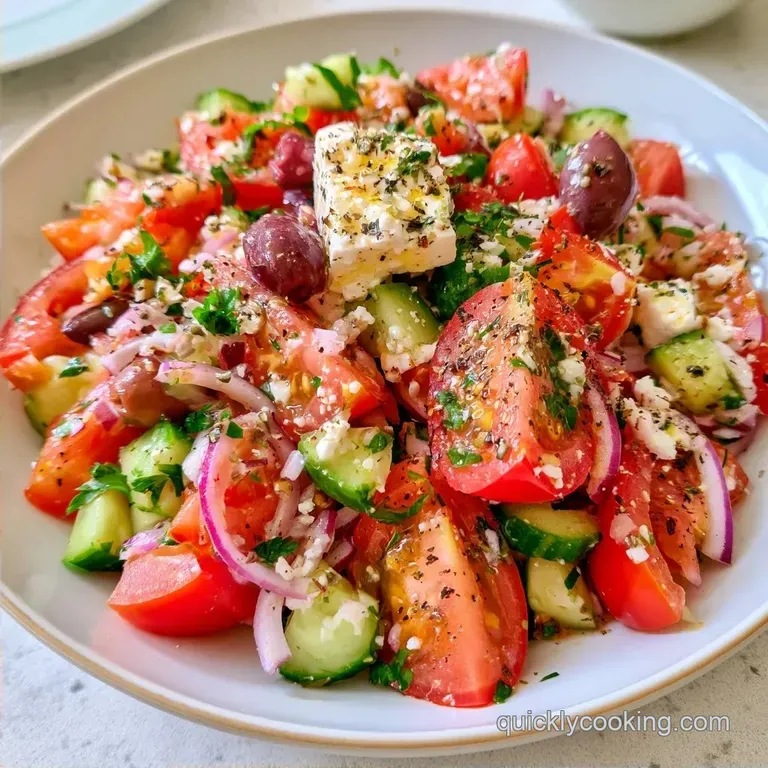
- Time:15 minutes active
- Flavor/Texture Hook: Salty feta and crisp cucumber with a zesty punch
- Perfect for: Fast weeknight sides or a light lunch
That loud, wet snap of a fresh cucumber is the only sound you need in your kitchen for this one. I used to think any salad needed a bed of greens to feel like a meal, but that's a mistake. The real win here is the chunky, rustic feel that makes a Greek Salad feel more like a platter than a bowl of leaves.
You can pull this together in about 15 minutes. It's all about the quality of the produce and not overworking the ingredients. You want big, bold chunks that hold their own against the saltiness of the feta and the bite of the red onion.
This recipe focuses on speed and minimal tools. No fancy equipment, just a knife, a bowl, and a jar for the dressing. Here is how to get that authentic taste without spending an hour chopping.
Quick Greek Salad Specs
Since we are aiming for efficiency, the goal is to spend less time prepping and more time eating. This is a "no cook" win that relies on the natural chemistry of the vegetables.
The timing is tight: 15 minutes from the first slice to the final sprinkle of oregano. It's a high impact dish that requires almost zero cleanup if you use a single large mixing bowl.
| Prep Style | Time | Texture | Best For |
|---|---|---|---|
| Rustic Chunks | 15 min | Hearty & Juicy | Traditional Dinner |
| Finely Diced | 25 min | Uniform & Light | Meal Prep Jars |
What Makes This Taste Great
The magic here isn't in a complex technique, but in how the ingredients react to each other.
- The Brine Effect: Salt draws water out of the tomatoes. This juice mixes with the olive oil and vinegar to create a second, thicker dressing right in the bowl.
- Fat Balance: The heavy fat from the feta and olive oil coats the tongue, which keeps the sharp acidity of the red wine vinegar from feeling too harsh.
For more on how to get a similar emulsification in other sauces, check out this homemade Caesar dressing guide.
Gathering Your Essentials
Stick to these specific amounts to keep the balance of salt and acid correct. If you go too heavy on the vinegar, you'll drown out the sweetness of the vine ripened tomatoes.
- 3 large (450g) vine ripened tomatoes Why this? More juice and deeper flavor than hothouse versions
- 1 large (300g) English cucumber Why this? Thinner skin and fewer seeds
- 1 medium (100g) red onion Why this? Provides a sharp, colorful contrast
- 1 medium (150g) green bell pepper Why this? Adds a grassy, crisp note
- 1/2 cup (85g) Kalamata olives, pitted Why this? The essential salty, briny punch
- 7 oz (200g) block feta cheese Why this? Block feta is creamier than pre crumbled
- 1 tbsp (4g) dried Greek oregano
- 1/4 cup (60ml) extra virgin olive oil
- 2 tbsp (30ml) red wine vinegar
- 1 clove (5g) garlic, minced
- 1/2 tsp (3g) sea salt
- 1/4 tsp (1g) black pepper
| Component | Purpose | Substitute Notes |
|---|---|---|
| Red Wine Vinegar | Sharp Acid | Apple cider vinegar: Milder, slightly sweeter |
| Feta Cheese | Salt/Cream | Halloumi: Firmer, needs searing for best taste |
| Kalamata Olives | Brine | Green olives: Saltier, less fruity |
Equipment Needed
Making a Greek Salad requires very little equipment. A few standard tools are all you need to finish the preparation quickly.
The most critical item is a sharp chef's knife. A dull blade tends to crush the tomatoes rather than slice them, resulting in a mushy texture. Additionally, use a wide mixing bowl so you can toss the ingredients freely without spilling.
When preparing the dressing, opt for a small mason jar over a bowl. Shaking the mixture creates a more stable emulsion than whisking, preventing the oil and vinegar from separating as soon as they touch the vegetables.
The Cooking Process
Let's get started. Aim for uneven cuts to achieve a traditional, rustic appearance.
Preparing the Vegetables
- Thoroughly rinse and dry all produce.
- Chop the tomatoes into rough wedges. Note: Avoid cutting them too small so they don't break apart.
- Cut the cucumber into chunky half moons.
- Thinly slice the red onion into slivers until they are translucent.
- Dice the green pepper into small, bite sized squares.
Mixing the Dressing
- In a jar, combine the olive oil, red wine vinegar, minced garlic, salt, and pepper.
- Shake well for 30 seconds until the mixture looks opaque and thickened.
Putting it All Together
- Add the tomatoes, cucumbers, peppers, and onions to a large mixing bowl.
- Drizzle the dressing over the top and fold everything together gently.
- Stir in the Kalamata olives and sprinkle with dried oregano.
- Place the block of feta on top or gently mix in cubes.
Chef's Note: To reduce the sharpness of the red onions, soak the slices in ice water for 5 minutes, then pat them dry before adding them to the Greek Salad.
Troubleshooting Guide
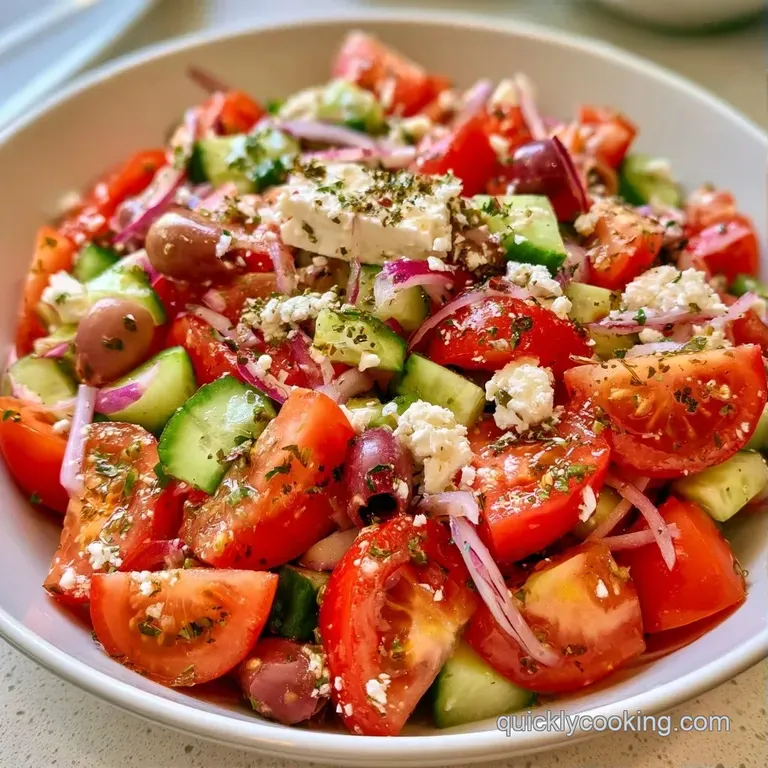
Even a simple Greek Salad can have a few hiccups. Usually, it's a matter of timing or temperature.
Preventing Watery Vegetables
If you salt your tomatoes too early, they release all their liquid too fast. This makes the bottom of the bowl a swamp. The fix is to dress the salad immediately before you plan to eat it.
Reducing Onion Intensity
Sometimes a red onion can be overwhelmingly pungent. If the flavor is too sharp, soak the slices in cold water or toss them in the vinegar for a few minutes before adding the oil.
Stopping Feta Crumble
If you stir too aggressively, the feta breaks down into tiny grains. This makes the Greek Salad look milky and cloudy. Use a folding motion or simply leave the feta as a whole block on top.
| Problem | Fix |
|---|---|
| Too much liquid | Seed the tomatoes before cutting |
| Bland flavor | Add a pinch more sea salt to the dressing |
| Feta is too salty | Rinse the feta block under cold water |
Creative Twists and Swaps
Although the classic recipe is hard to beat, you can customize this Greek Salad to suit your diet or the ingredients you have on hand.
Adding Lettuce
To make the meal feel more filling, some prefer a "Greek Salad with Lettuce." Chopped Romaine provides the best crunch. Keep in mind that you may need extra dressing, as lettuce absorbs more liquid than cucumbers.
Vegan Alternative
Substitute the feta for firm tofu. Press the tofu to drain the water, cube it, and marinate in salt and lemon juice for 10 minutes. This closely replicates the salty flavor of the cheese.
Boosting Protein
Turn this into a dinner salad by adding 150g of chilled chickpeas or grilled chicken breast. The chickpeas offer a nutty texture that complements the olives.
If you want another crisp and refreshing choice, my West Coast Salad is a wonderful option for those who love a heavy crunch.
Citrus Variation
Use fresh lemon juice instead of red wine vinegar. This gives the Greek Salad a brighter, summery vibe that pairs perfectly with grilled fish.
| Goal | Exact Change |
|---|---|
| Zesty Kick | Stir in 1 tsp lemon zest |
| More Earthiness | Add 1/2 tsp dried sumac |
| Lower Salt | Use low sodium feta and omit added salt |
Storage Guidelines
A Greek Salad is best eaten immediately, but you can plan ahead if you're meal prepping.
Fridge Life: Keep the vegetables and dressing separate. Store the chopped veggies in a container for up to 3 days. If you mix them, the salt will break down the cell walls, and the salad will become soggy within a few hours.
Freezing: Do not freeze this. The water content in the cucumbers and tomatoes will expand, destroying the texture and leaving you with a watery mush.
Zero Waste: Don't toss the onion skins or pepper seeds. You can throw them into a freezer bag with other veggie scraps to make a quick vegetable stock later. Also, any leftover dressing is great as a marinade for shrimp or chicken.
Presentation Tips
The look of the dish is half the battle. Since this is a rustic salad, you don't want it to look too "perfect" or manicured.
Use a wide, shallow platter instead of a deep bowl. This prevents the ingredients at the bottom from being crushed under the weight of the rest. Arrange the vegetables in a colorful heap and place the feta block right in the center.
Drizzle a bit of extra virgin olive oil over the feta and sprinkle one last pinch of oregano on top. The contrast of the white cheese against the red tomatoes and green peppers makes the Greek Salad look professional without any real effort.
The Logic Behind the Crunch
It's a simple dish, but there's some basic chemistry happening in that bowl.
The Osmosis Effect: When you add salt to the vegetables, it creates an osmotic pressure that pulls water out of the plant cells. This is why the tomatoes "bleed" juice, which actually improves the dressing.
Acid Fat Equilibrium: The red wine vinegar cuts through the richness of the olive oil. This creates a balance that prevents the salad from feeling too greasy or too sour.
Structural Contrast: Combining the snap of the cucumber with the softness of the tomato and the creaminess of the feta creates a sensory variety. This is why the Greek Salad feels satisfying even without a heavy protein.
Kitchen Truths
Here are a few clarifications regarding this approach to eating.
Searing the feta isn't about "sealing" it. While frying the cheese beforehand is often recommended, it's done solely for flavor and doesn't alter the cheese's structural integrity.
Skip the pre-packaged "salad mix." These pre-cut options are often stored in ways that destroy their crunch. Taking 10 minutes to chop your own vine tomatoes and English cucumber is the best way to keep the texture crisp.
Also, you don't need a high priced imported oil. A standard extra virgin olive oil from the grocery store is perfectly fine, provided it isn't refined. The taste relies on the fresh produce, not the cost of the oil.
Recipe FAQs
What ingredients comprise a Greek salad?
It includes vine ripened tomatoes, English cucumber, red onion, green bell pepper, Kalamata olives, feta cheese, and dried Greek oregano with a garlic vinegar dressing.
Tip: Use an English cucumber to avoid peeling and seeding.
Which components make the dressing?
The dressing is a mixture of extra virgin olive oil, red wine vinegar, minced garlic, sea salt, and black pepper.
Tip: Shake the ingredients in a jar until the mixture is opaque.
Are the ingredients for a side salad different?
A side salad typically uses the same base of cucumbers, tomatoes, and onions but in smaller portions.
Tip: This salad pairs perfectly with a fast tuna melt for a light lunch.
Is it true that lettuce is required?
Not true. Traditional Greek salads rely on crisp cucumber and tomato for bulk rather than leafy greens.
Tip: Stick to the original vegetables to keep the flavor profile authentic.
How to make the dressing?
Combine the olive oil, red wine vinegar, minced garlic, salt, and pepper in a small jar or bowl.
Tip: Whisk vigorously to ensure the oil and vinegar emulsify.
Do I mix the feta into the salad first?
No, this is a common misconception. Place the block of feta on top or fold it in gently at the end to prevent it from breaking apart.
Tip: Use a high-quality block feta rather than pre-crumbled versions.