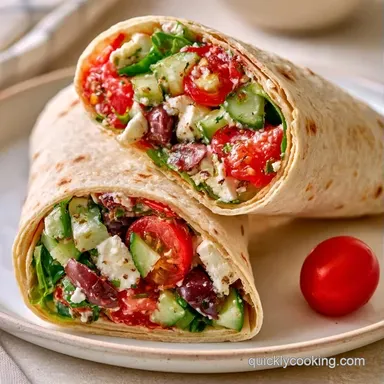
Greek Salad Wrap: Fresh and Crisp
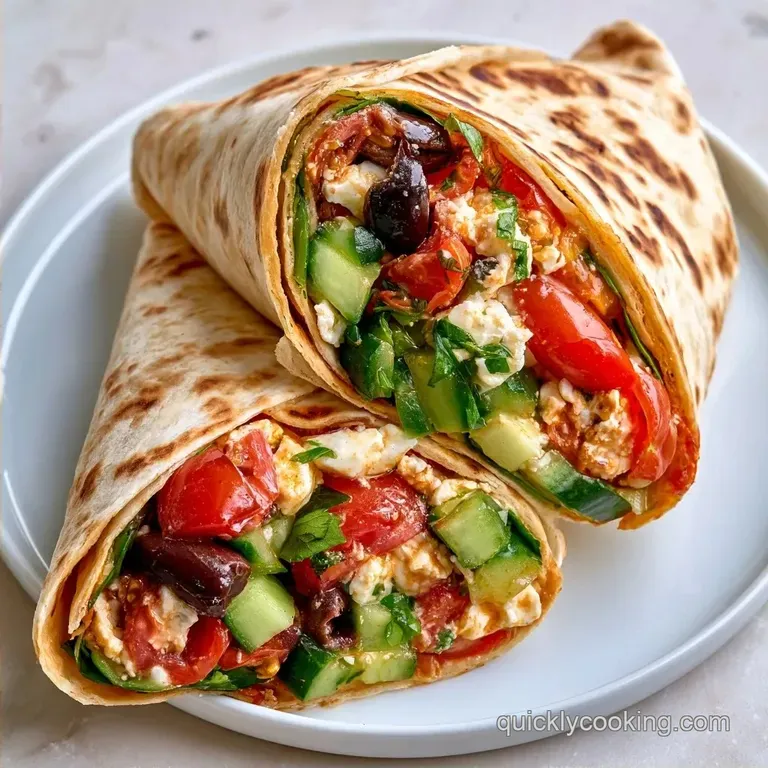
- Time:12 minutes active
- Flavor/Texture Hook: Briny, crunchy and tangy
- Perfect for: Quick weekday lunches or meal prep
The crunch of chilled cucumber and the salty kick of Kalamata olives are what make this dish stand out. I remember prepping these for a group of friends a few years ago, but I mistakenly combined the dressing and veggies inside the wraps an hour before serving.
By the time we ate, the tortillas had turned into wet napkins. It was a mess, and I learned a hard lesson about managing moisture.
You don't have to hunt for expensive, specialty wraps to make a Greek Salad Wrap taste authentic. A basic flour tortilla works perfectly, as long as you handle the wet components the right way. You can achieve that fresh, salty profile without spending much time or effort.
This recipe focuses on efficiency and affordability without sacrificing the bold flavors of the Mediterranean. We're talking about a Greek Salad Wrap that stays intact and tastes like a fresh garden in every mouthful.
Greek Salad Wrap Specs
| Goal | What to change |
|---|---|
| Extra Protein | Add grilled chicken or chickpeas |
| Lower Sodium | Use half the feta and skip added salt |
| Extra Crunch | Swap romaine for shredded kale |
What Makes This Good
The Barrier: Spreading hummus or tzatziki first creates a fat based seal. This stops the vinegar and vegetable juices from soaking into the flour tortilla.
Vinegar Choice: Red wine vinegar has a sharper, more distinct tang than lemon juice. It cuts through the richness of the feta and olive oil better. If you enjoy a similar tangy profile in other meals, you might like my Homemade Caesar Dressing which uses a similar acidic balance.
The Building Blocks
The ingredients here are mostly raw, so the quality of your produce matters. Since we aren't cooking anything, the "flavor" comes from the salt, acid, and fat.
For the base, we use English cucumbers because they have thinner skins and fewer seeds, which means less water leaking into your Greek Salad Wrap. The cherry tomatoes provide little bursts of sweetness that balance the salty olives.
Red onion adds a sharp bite, but if you find them too strong, you can soak the diced pieces in cold water for 10 minutes first.
The romaine lettuce is our bulk filler. It provides that essential watery crunch. Then we have the feta, which should be crumbled by hand for a more natural texture.
Ingredients & Substitutes
- 1 cup (150g) English cucumber, diced Why this? Less seeds, meaning less sogginess
- ½ cup (75g) cherry tomatoes, quartered Why this? Sweetness to balance the salt
- ¼ cup (40g) red onion, finely diced Why this? Sharp, aromatic punch
- ¼ cup (35g) Kalamata olives, pitted and sliced Why this? Traditional briny flavor
- ½ cup (60g) feta cheese, crumbled Why this? Creamy, salty finish
- 1 cup (30g) chopped romaine lettuce Why this? Fresh, watery crunch
- 2 tbsp (30ml) extra virgin olive oil Why this? Rich, fruity base
- 1 tbsp (15ml) red wine vinegar Why this? Sharp, Mediterranean tang
- 1 tsp (1g) dried oregano Why this? Earthy, herbal note
- ¼ tsp (1.5g) salt Why this? Enhances all flavors
- ¼ tsp (1.5g) black pepper Why this? Mild woody heat
- 2 large (10 inch) flour tortillas Why this? Flexible and budget friendly
- ¼ cup (60g) hummus or Greek tzatziki Why this? The essential moisture barrier
Substitute Options:
- English cucumber → Persian cucumber (use 3-4 small ones)
- Red wine vinegar → Lemon juice (adds a brighter, citrus note)
- Feta → Goat cheese (creamier, less salty)
- Flour tortilla → Large collard green leaf (for a low carb option)
- Hummus → Mashed avocado (adds richness but less tang)
Equipment Needed
No specialized equipment is required; a few basic tools will suffice.
- Large mixing bowl: For tossing the salad.
- Small whisk or fork: To mix the dressing.
- Chef's knife and cutting board: For precise dicing.
- Paper towels: To dry the cucumbers.
Chef's Tip: If you're preparing this for a crowd, use a mandoline for the onions to ensure they are perfectly thin and consistent.
From Prep to Plate
The key here is controlling the moisture. If you don't take the time to dry the ingredients, your Greek Salad Wrap will become soggy during assembly.
Preparing the Salad
- Combine the diced cucumber, quartered tomatoes, red onion, and olives in a large bowl. Note: Pat cucumbers dry with a paper towel first to prevent excess liquid from pooling.
- Mix in the chopped romaine lettuce.
Mixing the Dressing
- Whisk the olive oil, red wine vinegar, dried oregano, salt, and pepper together in a small bowl.
- Pour this mixture over the vegetables and toss gently to coat.
- Stir in the crumbled feta cheese last until just combined to keep the cheese in pieces and prevent the dressing from becoming cloudy.
Assembling the Wrap
- Place the tortillas flat on a clean countertop. Note: Microwave them for 10 seconds to ensure they fold easily without ripping.
- Apply a thick, even layer of hummus or tzatziki to the center of the tortilla, leaving a 1 inch border around the perimeter.
- Spoon the Greek salad mixture over the spread, spreading it evenly.
- Fold the left and right sides inward, then roll from the bottom up, tucking the ends securely.
Avoiding Kitchen Disasters
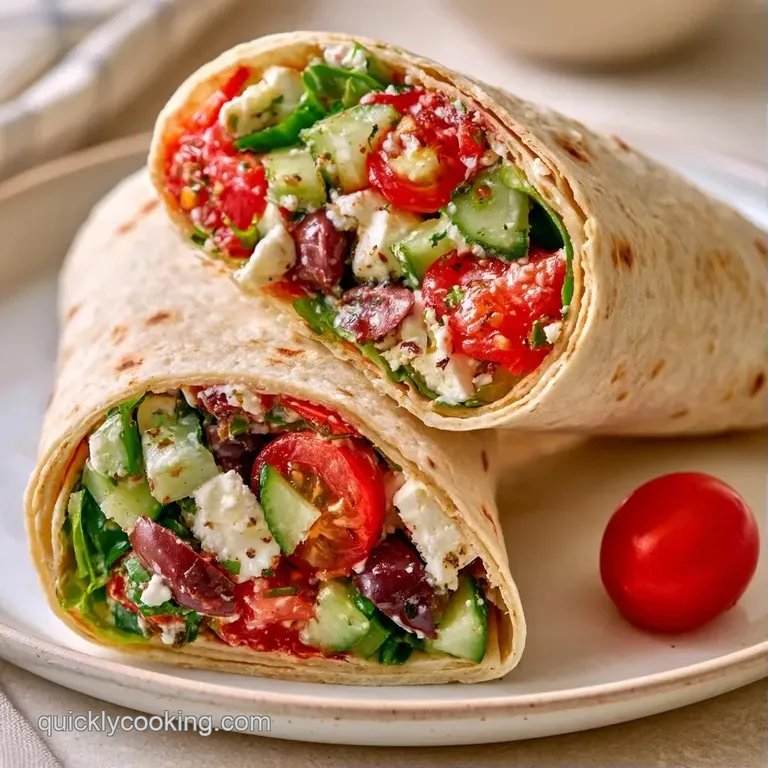
Most issues with a Greek Salad Wrap come down to the ratio of filling to tortilla. If you overstuff it, the structural integrity vanishes.
Wrap is Falling Apart
This usually happens when there's too much filling. Use only about 3/4 of the tortilla's surface area. If the wrap looks like it's bursting, remove a spoonful of salad and eat it on the side.
Tortilla is Tearing
Cold tortillas are brittle. Warming them for a few seconds softens the starches and makes them pliable. If you're still seeing rips, you might be rolling too tightly.
Salad is Too Watery
This happens if the cucumbers weren't dried properly or if the salad sat in the dressing for hours. Always toss the salad right before you assemble the wrap.
| Problem | Fix |
|---|---|
| Soggy Bottom | Increase the thickness of the hummus barrier |
| Feta Disappearing | Fold cheese in at the very last second |
| Tearing Tortilla | Microwave for 10 seconds before filling |
| Filling Sliding Out | Tuck the bottom fold tighter before rolling |
Make It Your Own
The beauty of the Greek Salad Wrap is how easily you can swap ingredients to fit your diet or budget.
Adding Protein
For a Greek salad wrap with chicken, use grilled breast or thighs seasoned with lemon and garlic. If you want a vegetarian Greek salad wrap, double the amount of chickpeas or add some grilled halloumi. Both keep the Mediterranean vibe while adding more satiety.
Vegan Adjustments
To make a vegan Greek salad wrap, swap the feta for a tofu based feta alternative or omit it entirely and add extra olives for that salty hit. Use a vegan friendly hummus as your barrier.
Dietary Swaps
If you're avoiding gluten, swap the flour tortilla for a large collard green leaf or a certified gluten-free wrap. For a healthy Greek salad wrap, use a whole grain tortilla and increase the ratio of romaine to feta.
If you're looking for other easy lunch ideas, you can try a Classic Egg Salad Recipe for a different kind of handheld meal.
How to Store and Keep Fresh
I advise against storing the completed Greek Salad Wraps for extended periods. Due to the moisture in the vegetables, the tortilla will eventually become soggy.
For the Salad: You can chop the vegetables (excluding the lettuce and dressing) and keep them in a container for 3 days. Store the feta separately in a small bag. When you are ready to serve, mix in the dressing and assemble.
For the Wrap: If you need to prepare them in advance, wrap each Greek Salad Wrap securely in foil. They will hold up for about 4-6 hours in a chilled lunch bag, although the texture will be softer than a freshly prepared wrap.
Zero Waste Tips: Instead of discarding onion skins or cucumber ends, place them in a freezer bag with other vegetable scraps. When the bag is full, boil these scraps in water to create a simple vegetable stock for soups.
Presentation Tips
A Greek Salad Wrap looks great when you can see the colorful interior. Instead of serving it whole, slice it on a sharp diagonal. This exposes the bright reds of the tomatoes and the whites of the feta.
Serve it with a side of extra tzatziki for dipping. It adds a cool, creamy element to the experience. If you're plating this for a guest, place a few sprigs of fresh parsley or a wedge of lemon on the side for a pop of color.
| Premium Ingredient | Budget Alternative | Impact |
|---|---|---|
| Kalamata Olives | Canned Black Olives | Less briny, slightly milder |
| Extra Virgin Olive Oil | Light Olive Oil | Less fruity, more neutral |
| Imported Feta | Store Brand Crumbled Feta | Very similar taste, much cheaper |
What Makes This Good
The reason this recipe works so well is the balance of textures. You have the crunch of the romaine and cucumber, the softness of the feta, and the creaminess of the hummus. It's a full spectrum mouthfeel in one bite.
The salt from the olives and feta is balanced by the acidity of the red wine vinegar. This prevents the wrap from feeling too heavy or greasy. It's a fast, budget friendly meal that doesn't feel like "cheap" food because the flavors are so distinct and bright.
Common Myths
Myth: You must use a pita for a Greek wrap. While pita is traditional, flour tortillas are more flexible and hold the filling better without cracking. They're also cheaper and easier to find in most grocery stores.
Myth: Adding feta first helps it stick. Actually, adding feta at the end prevents the cheese from breaking down and mixing with the dressing. This keeps the cubes intact, which is much more satisfying to eat.
Myth: More dressing equals more flavor. Too much olive oil and vinegar will just turn your Greek Salad Wrap into a soggy mess. The goal is to coat the vegetables, not drown them. Trust the measurements for the best result.
High in Sodium
1040 mg 1040 mg of sodium per serving (45% 45% of daily value)
The American Heart Association recommends that most adults limit their sodium intake to no more than 2,300 mg per day to reduce the risk of cardiovascular disease.
Tips to Reduce Sodium
-
Omit Added Salt-25%
Skip the 1/4 tsp of added salt entirely; the feta and olives already provide significant saltiness.
-
Rinse the Olives-20%
Thoroughly rinse the Kalamata olives under cold water to remove excess brine before adding them to the mix.
-
Low-Sodium Dip-15%
Swap commercial hummus or tzatziki for a low-sodium version or make your own at home to control the salt content.
-
Limit Feta Cheese-15%
Use half the amount of feta cheese or substitute with a lower sodium crumbly cheese alternative.
-
Swap Tortillas-15%
Replace the flour tortillas with large Romaine lettuce leaves or low-sodium corn tortillas.
-
Enhance with Aromatics
Increase the dried oregano or add fresh lemon juice and zest to provide a bright flavor boost without adding sodium.
Recipe FAQs
What do you put in a Greek wrap?
Fill it with diced cucumber, tomatoes, red onion, olives, feta, and romaine lettuce.
Tip: pat cucumbers dry with a paper towel to reduce extra moisture.
Which salad ingredients are used in a Greek wrap?
Use a mix of English cucumber, cherry tomatoes, red onion, Kalamata olives, and feta cheese.
Tip: fold in the feta last to keep the cubes intact.
What is typically in a Mediterranean wrap?
These wraps generally feature fresh garden vegetables, salty cheese, and a creamy spread.
Tip: use hummus or tzatziki as a base to add creaminess.
How to assemble a Greek salad wrap?
Spread hummus or tzatziki in a thick, even layer across the center of the tortilla.
Tip: leave a 1 inch border around the edges to act as a moisture barrier.
Is it true that specialty wraps are required for authentic flavor?
No, this is a common misconception. Standard flour tortillas work perfectly well for this recipe.
Tip: warm the tortilla in the microwave for 10 seconds for better pliability.
Why does the tortilla sometimes get soggy?
A lack of a fat-based barrier allows vinegar and vegetable juices to soak into the flour.
Tip: if you enjoyed mastering this texture control, see how a similar approach to consistency works in our dense oats.
Can the salad be prepped in advance?
Combine the vegetables and dressing just before adding them to the wrap.
Tip: store the dressing separately if prepping for later to maintain the crunch.