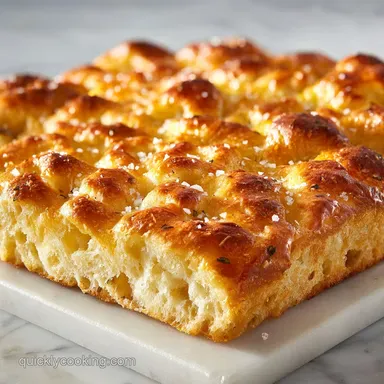
Same Day Sourdough Focaccia Bread with a Crisp Crust

- Time: 45 min active + 30 min baking + 12 hours resting/proofing
- Flavor & Texture: Tangy, airy interior with a salty, crisp crust
- Perfect for: A dinner party side or a weekend brunch treat
Same Day Sourdough Focaccia Bread
Imagine a bread that acts like a sponge for olive oil, with a crust that cracks when you bite into it. It's the kind of side dish that usually requires a complex schedule, but this version streamlines everything.
You don't need a multi-day timeline to get those iconic holes. This same day sourdough focaccia bread hits the right balance of tang and air in about 13 hours, making it a great option for when you want something homemade but can't wait until next week.
It's a low-effort process. Most of your time is just waiting for the wild yeast to work while you go about your day. You'll spend very little time actually kneading or mixing.
The Logic Behind the Bubbles
- High Water Content: More water makes the dough slack. This allows carbon dioxide bubbles to expand easily, creating the open, holey structure.
- Controlled Warmth: Keeping the dough between 75°F and 80°F speeds up the fermentation, which makes this one day sourdough focaccia recipe possible.
| Method | Time | Texture | Best For |
|---|---|---|---|
| Same Day | 13 hours | Airy & Crisp | Quick cravings |
| Cold Ferment | 48 hours | Tangier & Chewier | Deep flavor |
The Essential Ingredient List
| Ingredient | Role | If You Don't Have It |
|---|---|---|
| Bread Flour | Provides structure | All-purpose (denser crumb) |
| Active Starter | Leavening agent | No swap (core to sourdough) |
| Olive Oil | Tenderizes & browns | Avocado oil (neutral taste) |
| Honey | Feeds yeast | Maple syrup (slight flavor shift) |
- 120g active sourdough starter
- 315ml warm water
- 12g honey Why this? Feeds the yeast for a faster rise
- 375g bread flour Why this? Higher protein for better structure
- 9g fine sea salt
- 28g extra virgin olive oil
- 42g extra virgin olive oil for the pan
- 42g extra virgin olive oil for the topping
- 4g flaky sea salt
- 6g fresh rosemary leaves
Recipe Specs
This recipe is designed for efficiency. You'll use a standard 9x13 inch metal pan, which conducts heat better than glass and helps the bottom crisp up.
For the best results, ensure your starter is peaked and bubbly before you start. If it's sluggish, the 13-hour timeline will slide. I like using a digital scale for everything here, as bread flour is too variable for measuring cups.
Minimal Tools Needed
You only need a few basic tools to get started. A sturdy spatula, a large mixing bowl, and a 9x13 inch metal baking pan are the only necessities. If a digital thermometer is available, use it to confirm your water and resting spot are within the 75°F-80°F range.
The Baking Process
1. Mixing and Bulk Fermentation
In a large bowl, whisk together 120g active sourdough starter, 315ml warm water, and 12g honey until the starter is mostly broken down. Stir in 375g bread flour and 9g fine sea salt with a spatula, mixing until no dry patches remain. Incorporate 28g extra virgin olive oil.
Cover the bowl with a damp cloth and set it in a warm spot (75°F-80°F) for 6 to 8 hours. Every 2 hours, perform a stretch and fold by pulling the edge of the dough upward and folding it over itself 4 times around the perimeter.
Repeat this until the dough increases in volume by 50% and looks jiggly.

2. Pan Proofing and Dimpling
Coat a 9x13 inch metal baking pan with 42g extra virgin olive oil, ensuring the sides and bottom are fully covered. Carefully transfer the dough into the pan and let it rest for 30 minutes to relax.
Gently stretch the dough toward the edges of the pan and let it proof for 2 hours until it is bubbly and fills the pan. Drizzle 42g extra virgin olive oil over the surface. Use your fingertips to press straight down into the dough, creating deep dimples that reach the bottom of the pan.
Finish by evenly sprinkling 4g flaky sea salt and 6g fresh rosemary leaves over the top.

3. Baking to Golden Perfection
Bake in an oven preheated to 425°F (220°C) for 25 to 30 minutes until the top is a rich brown-brown and the edges are pulling away slightly from the pan. Let the bread sit in the pan for 5 minutes, then shift it to a wire rack.

Troubleshooting
When Dough Won't Stretch
If the dough snaps back immediately when you try to push it to the pan edges, it's usually because the gluten is too tight. Give it another 15 to 20 minutes to relax.
Fixing a Flat Loaf
A lack of bubbles usually means the starter wasn't active enough or the room was too cold. You can't fix it once it's baking, but next time, try warming your bowl in the oven for a few minutes first.
Preventing a Gummy Bottom
This happens if there isn't enough oil in the pan or if the oven temperature is too low. Ensure you use a metal pan and hit exactly 425°F.
| Problem | Fix |
|---|---|
| Dough snaps back | Let it rest 20 more mins |
| No bubbles/Flat | Use a more active starter |
| Gummy bottom | Increase pan oil or oven temp |
Sourdough Truths

Many people think sourdough requires a three-day process to be authentic. That's not true for focaccia. Because it's a high-hydration dough and doesn't need to hold a tall, vertical shape like a boule, we can use warmth to speed up the rise without losing the character of the bread.
Storage and Leftovers
Keep the bread wrapped in a linen towel at room temperature for up to 24 hours. For longer storage, use an airtight container in the fridge for 4 days.
This Homemade Sourdough Focaccia freezes well. Slice it first, then freeze with parchment paper between slices for up to 3 months. To get that shattering crust back, reheat slices in a 350°F (175°C) oven for 5 minutes or in a dry skillet over medium heat.
Perfect Complements
I like serving this with a side of balsamic vinegar and extra olive oil for dipping. It also works as a base for a fancy sandwich or alongside a bowl of tomato soup.
Tasty Flavor Variations
Roasted Garlic and Parmesan
Press thinly sliced roasted garlic cloves into the dimples along with a handful of grated Parmesan cheese before baking.
Sun-Dried Tomato and Basil
Tuck pieces of oil-packed sun-dried tomatoes into the dough and top with fresh basil leaves immediately after the bread comes out of the oven.
Same Day Sourdough Discard Focaccia
Discard is not a direct swap for the active starter in this recipe; a discard version would need a pinch of commercial yeast to stay on a same-day schedule. If you prefer other sourdough treats, you could try a pumpkin sourdough bread for something sweeter.
Good to Know
How do I make same day sourdough focaccia bread?
Mix active starter, water, honey, flour, and salt, then perform stretch and folds every 2 hours before baking at 425°F.
Tip: Use a metal pan for the best heat conduction and crispier edges.
Can I make this focaccia without commercial yeast?
Yes, the active sourdough starter provides all the natural leavening needed for this bread.
Tip: Ensure your starter is bubbly and active before mixing to avoid a flat loaf.
What ingredients are needed for sourdough focaccia?
You need active sourdough starter, warm water, honey, bread flour, sea salt, olive oil, and fresh rosemary.
Tip: Bread flour is preferred over all-purpose for a better chew and structure.
Is sourdough discard suitable for this bread?
This specific recipe requires active starter to ensure the dough rises within a single day.
Tip: Feed your discard and let it peak before using it in this recipe.
How can I speed up the sourdough focaccia process?
Keep the dough in a warm spot between 75°F and 80°F to encourage faster fermentation.
Tip: If you enjoyed managing a fast fermentation here, see how we adapt a similar approach for our pumpkin spice bread.
Can this sourdough focaccia be made overnight?
Yes, you can extend the first rise by placing the covered bowl in the refrigerator overnight.
Tip: Allow the dough to come back to room temperature before stretching it into the pan.
How should I store leftover focaccia?
Keep it wrapped in a linen towel at room temperature for 24 hours or use a sealed container in the refrigerator for 4 days.
Tip: Reheat slices in a dry skillet over medium heat to restore the crust.
Why is my focaccia not bubbly enough?
Insufficient warmth or an inactive starter often prevents the dough from developing those characteristic air bubbles.
Tip: Press your fingertips deep into the dough to create dimples that hold the olive oil.
Same Day Sourdough Focaccia Bread