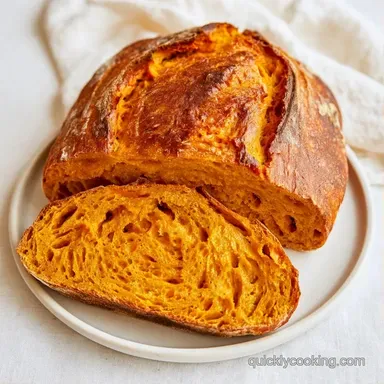
Caramelized Pumpkin Sourdough Bread
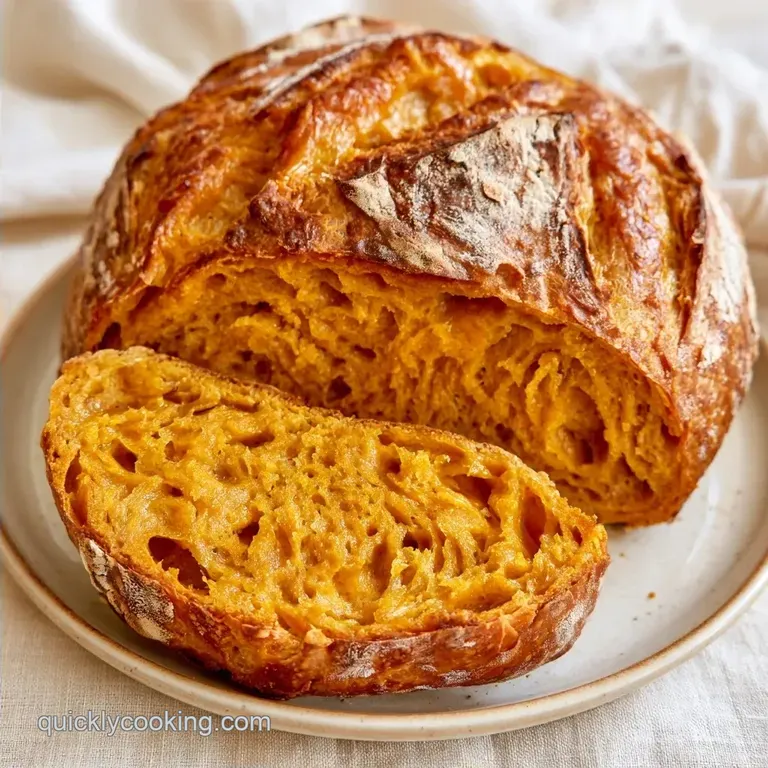
- Time:12 hours prep + 45 minutes baking
- Flavor/Texture Hook: Warm cinnamon aroma with a shattering crust
- Perfect for: Fall brunch or a cozy weekend project
The scent of toasted cinnamon and pumpkin wafts through the kitchen as soon as the loaf emerges. There is something special about the "singing" of a sourdough crust that faint, crackling sound as it settles that makes the slow fermentation worth it.
After my first attempt, my home smelled like a professional bakery for several days.
Rather than spending hours kneading, this recipe relies on brief bursts of activity to build the dough's strength. You'll produce a loaf with a rich mahogany color and a tender crumb that feels like a warm embrace.
Baking Pumpkin Sourdough Bread is a lesson in patience, but the outcome is well worth the wait. The objective is a harmonious balance between the signature sourdough tang and the seasonal sweetness of autumn.
Making Pumpkin Sourdough Bread
The trick to this loaf is managing the weight of the pumpkin. Because pumpkin purée is denser than water, it can make the dough feel sluggish.
Pumpkin Density: The purée adds solids that can weigh down the rise, so we use a high protein bread flour to keep the structure strong. Butter and Sugar: These ingredients soften the crumb, making it less like a traditional baguette and more like a rich, seasonal loaf.
For those who want a different rhythm, you can compare the approach here:
| Feature | Fast Method | Classic Method |
|---|---|---|
| Rise Time | 4-6 hours | 12-24 hours |
| Flavor | Mild | Deeply Tangy |
| Texture | Softer | More Open Crumb |
But for the best depth of flavor, the 12 hour timeline is the way to go. If you have leftover starter and want something faster, my Sourdough Discard Garlic Knots are a great way to use it up without the overnight wait.
What Every Ingredient Does
The combination of maple syrup and brown sugar creates a specific type of browning that you just can't get with white sugar.
| Component | Purpose | Substitute Notes |
|---|---|---|
| Pumpkin Purée | Moisture and Color | Butternut squash purée; slightly sweeter but works |
| Bread Flour | Structure | All purpose; results in a softer, less chewy loaf |
| Maple Syrup | Sweetness/Browning | Honey; similar result but adds a floral note |
| Sourdough Starter | Leavening | Commercial yeast; removes tang, speeds up rise |
Ingredients
These amounts are for one standard loaf. Ensure your starter is active and bubbly before you start.
- 1 cup (240g) active sourdough starter Why this? Provides the lift and signature tang
- 1 cup (240g) warm filtered water Why this? Activates the yeast without shocking it
- 1/2 cup (120g) pumpkin purée Why this? Adds color and seasonal flavor
- 4 cups (500g) bread flour Why this? High protein for a better rise
- 2 tsp (12g) fine sea salt Why this? Controls fermentation and adds flavor
- 1 tbsp (12g) maple syrup Why this? Helps with crust caramelization
- 3 tbsp (42g) melted butter Why this? Keeps the interior tender
- 1/4 cup (50g) brown sugar Why this? Deepens the sweetness
- 1 tbsp (8g) ground cinnamon Why this? Essential autumn warmth
The Essential Gear
You don't need a bakery full of tools. A few basics will do the job.
- Large mixing bowl
- Digital kitchen scale (for accuracy)
- Dutch oven (cast iron is best for steam)
- Parchment paper
- Bench scraper or a sturdy spatula
- Damp kitchen towel
Steps to Bake It
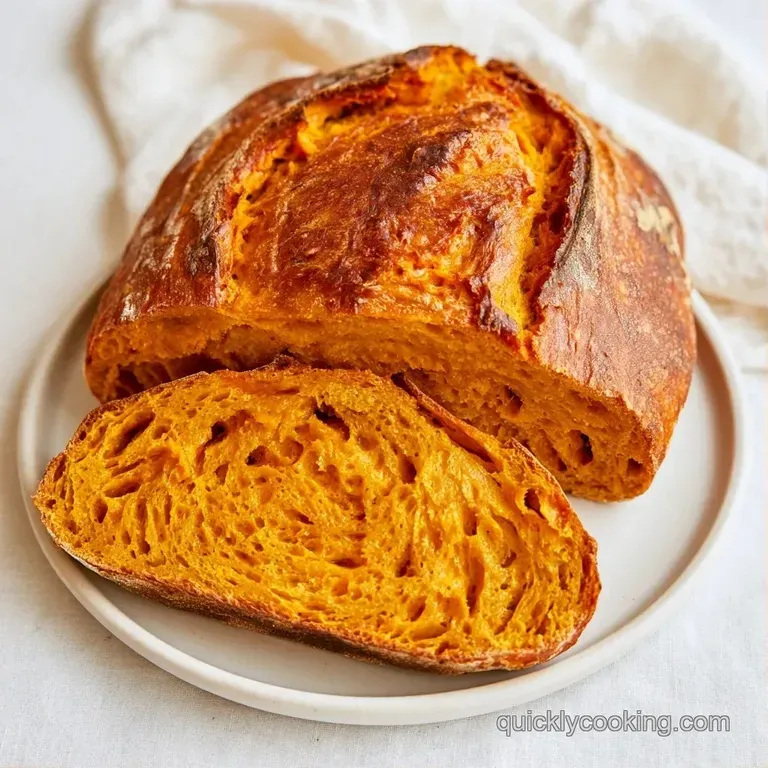
Follow these steps carefully. The sensory cues are more important than the timer.
- Combine the active sourdough starter, warm water, and pumpkin purée in a large bowl. Stir until the mixture is smooth and orange.
- Fold in the bread flour and salt until a shaggy dough forms. Ensure there is no dry flour left, then cover with a damp cloth and let it rest for 30 minutes. Note: This allows the flour to hydrate fully.
- Perform the first set of stretch and folds. Pull the edge of the dough up and fold it over the center, rotating the bowl four times.
- Repeat the stretch and fold process three more times, every 30 minutes. You'll notice the dough becomes smooth and holds its shape better each time.
- Cover the bowl and leave it in a warm spot. Let it rise until it has grown by 50% in size and looks bubbly.
- Turn the dough onto a lightly floured surface. Fold the edges toward the center to create a round boule, then use your palms to tension the surface.
- Place the shaped loaf upside down on parchment paper inside a Dutch oven.
- Preheat your oven to 450°F (230°C).
- Cover the pot and bake for 45 minutes until the crust is a deep mahogany brown and sounds hollow when tapped.
Fixing Common Dough Issues
Pumpkin dough behaves differently than plain dough. It's stickier and heavier, which can be intimidating.
Sticky Dough Fix
Pumpkin Sourdough Bread texture can be quite tacky. Instead of dumping in more flour, which makes the bread dense, wet your hands with water. This prevents the dough from sticking to your skin during the stretch and fold process. If it's still too wild, a bench scraper is your best friend here.
Preventing Flat Loaves
If your loaf doesn't spring upward, it's often due to under proofing or weak gluten. Make sure the dough actually grows by 50% during the bulk rise. If you're struggling with strength, you might enjoy the higher hydration style of a Same Day Sourdough Focaccia, which doesn't require as much tension.
Rescuing Gummy Crumbs
A gummy interior usually means the bread was sliced too early. The internal temperature needs to settle. Let the loaf cool for at least 2 hours on a wire rack. This allows the steam to finish cooking the center.
Flavor Twists and Changes
Feel free to customize your loaf once you have mastered the basic method.
Creating Cinnamon Swirls
For a pastry style Pumpkin Sourdough Bread, combine brown sugar and cinnamon. Roll the dough into a rectangle, sprinkle the mix across the surface, and roll it up before final shaping.
Incorporating Sourdough Discard
To minimize waste, you can swap a portion of the flour and water for discard. Be sure to monitor the hydration, as discard adds additional moisture and acidity.
Adding Hearty Grains
During the last set of stretch and folds, fold in 1/2 cup of chopped walnuts or toasted pepitas. This provides a crunchy contrast to the soft interior.
Chef's Note: For a softer crust, brush the hot loaf with melted butter immediately after removing it from the oven.
Decision Shortcut:
- For a softer crust: apply butter immediately after baking.
- For more tang: increase the bulk rise by 2 hours in a cooler spot.
- For a tighter crumb: incorporate 20g more bread flour during shaping.
Storage and Leftovers
Proper storage helps your Homemade Pumpkin Sourdough Bread stay fresh.
Room Temperature: Store in a paper or linen bag for 2-3 days. Plastic bags should be avoided, as they make the crust soft and chewy.
Freezing: Slice the loaf first, then keep the pieces in a freezer bag with parchment paper between them for 3 months.
Zero Waste: If the bread becomes too hard for sandwiches, cut it into cubes and toss with cinnamon and butter. Bake at 350°F (180°C) for 10 minutes for sweet croutons.
Best Ways to Serve
This loaf is quite adaptable. Though it has a sweet profile, it doesn't quite cross over into dessert territory.
Pumpkin Sourdough Bread pairs wonderfully with salted butter or a generous spread of cream cheese. For a brunch inspired option, toast a piece and top it with ricotta, a drizzle of honey, and a sprinkle of flaky sea salt.
It also makes an excellent accompaniment to savory fall soups, such as roasted butternut squash or a creamy wild mushroom blend. The sourdough's characteristic tang cuts through the richness of the soup perfectly.
With roughly 16 slices per loaf, you'll have plenty to share. To keep the delicate crumb intact, remember to slice it using a serrated knife.
Recipe FAQs
Is it true that pumpkin puree prevents sourdough from rising?
False. Pumpkin puree adds moisture and nutrients that support fermentation while adding a rich color.
Tip: avoid using canned pumpkin with added sugars to keep the fermentation predictable.
How long should the dough bulk ferment?
Wait until the dough has grown by approximately 50% in size and appears bubbly.
Tip: keep the bowl in a warm spot to speed up this process during colder months.
Why does this pumpkin bread stay so moist?
The combination of pumpkin puree and melted butter keeps the crumb tender.
Tip: if you enjoyed working with high hydration dough here, see how we adapt it for rustic Italian crusty bread.
Could I use all-purpose flour instead of bread flour?
You can, but the loaf will have less structure and a lower rise.
Tip: bread flour provides the gluten necessary to support the heavy pumpkin puree.
What is the best way to store the loaf?
Store the bread in a linen or paper bag at room temperature for 2-3 days.
Tip: avoid plastic bags as they soften the crust and ruin the texture.
Pumpkin Sourdough Bread