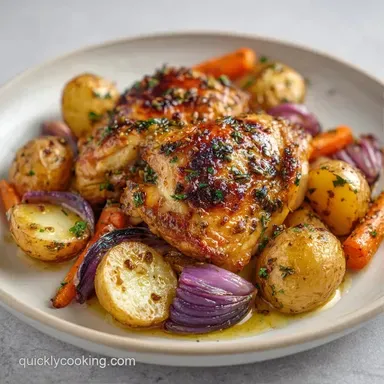
Chicken Thigh Sheet Pan: Smoky and Charred
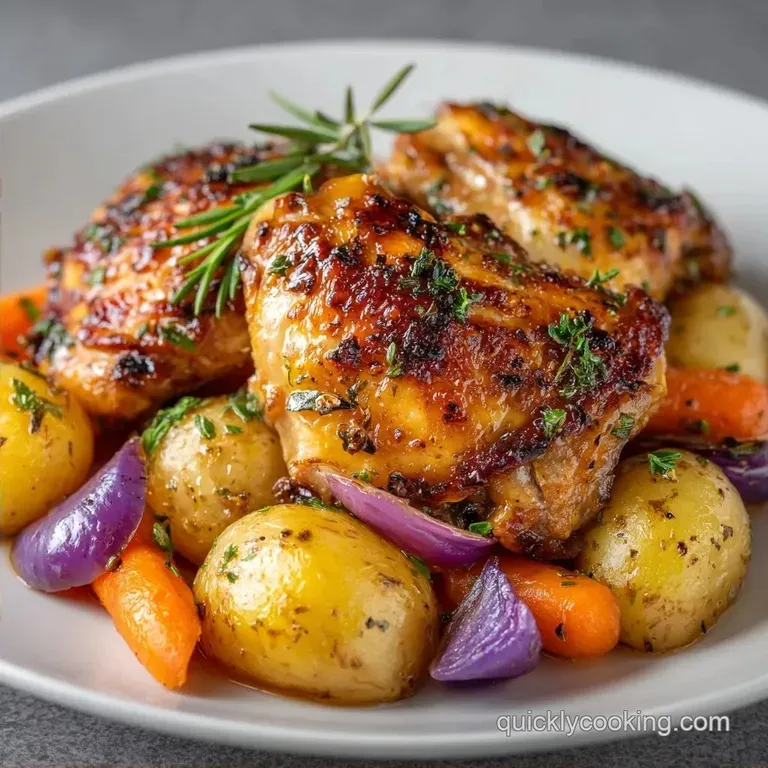
- Time: 15 min active + 35 min roasting
- Flavor/Texture Hook: Smoky, charred edges with velvety chicken
- Perfect for: Stressful weeknights or budget-friendly meal prep
- Tips for the Best Chicken Thigh Sheet Pan
- Timing and Budget Breakdown
- The Ingredients You'll Need
- Gear for a Single Pan
- Step by Step Roasting Guide
- Fixing Common Roasting Issues
- Flavor Variations and Substitutes
- Saving and Warming Leftovers
- Making the Pan Look Great
- High in Sodium
- Recipe FAQs
- 📝 Recipe Card
The smell of smoked paprika and roasting garlic hitting a hot oven is one of those scents that just feels like home. For me, it reminds me of the "tray bakes" my grandmother used to make, though she didn't call them that.
Back then, it was just "everything in the oven," a tradition born from European cottage cooking where saving fuel was more important than fancy presentation. You just tossed what you had into a heavy pan and let the heat do the work.
That's the beauty of the Chicken Thigh Sheet Pan. It takes that old school, peasant style efficiency and brings it into a modern kitchen. You aren't standing over a stove for an hour stirring a pot.
Instead, you're spending 15 minutes prepping and then relaxing while the oven transforms raw ingredients into something that tastes like you spent all afternoon on it.
Expect a meal where the chicken stays juicy and the potatoes get those crisp, golden edges. We are going for a over high heat approach here, which means we get a nice sear without needing to brown the meat in a skillet first. It's fast, it's cheap, and it actually works every single time.
Tips for the Best Chicken Thigh Sheet Pan
To get this right, you have to understand that a sheet pan is basically a giant convection chamber. If you crowd the pan, you aren't roasting, you're steaming. When the ingredients are too close, they release moisture that gets trapped, leaving you with pale chicken and mushy carrots.
Give your thighs a bit of breathing room, and let the vegetables fill the gaps.
Another trick is the "fat buffer." By greasing the pan first and then tossing the ingredients in olive oil, you create a barrier that prevents the chicken from sticking and helps the potatoes shatter when you bite into them.
It's a small step, but it's the difference between a sticky mess and a professional looking roast.
Chef Note: If you have a meat thermometer, use it. Chicken thighs are forgiving, but hitting that exact 165°F (74°C) mark ensures they aren't rubbery. According to USDA Food Safety guidelines, this is the safe internal temperature for poultry to ensure all bacteria are destroyed.
The Surface Area Secret
The more surface area of the chicken that touches the hot pan, the more browning you get. Don't overlap the thighs. If you have to, use two pans. Overcrowding is the number one reason why a Thigh Sheet Pan fails to get that charred, smoky finish.
Staggered Cutting
I slice the carrots into rounds and halve the baby potatoes so they have similar cooking times. If you use huge chunks of potato and thin slivers of carrot, the carrots will turn to mush before the potatoes are even soft. Keep your cuts consistent.
Timing and Budget Breakdown
Since we are using boneless skinless thighs, this recipe stays very affordable. Thighs are significantly cheaper than breasts and, honestly, they taste better because the higher fat content prevents them from drying out at 425°F (220°C).
| Method | Prep Time | Cook Time | Texture | Best For |
|---|---|---|---|---|
| Oven Roast | 15 mins | 35 mins | Charred & Juicy | Hands off dinners |
| Stovetop | 10 mins | 20 mins | Seared & Soft | Fast turnaround |
You'll notice the oven takes longer, but the effort is way lower. You aren't flipping meat every two minutes. This is a high efficiency meal designed for people who want a "set it and forget it" experience without sacrificing the deep flavor you get from a roast.
The Ingredients You'll Need
I've kept this list lean to keep the budget low. Most of these are pantry staples, but the smoked paprika is non negotiable for that outdoor grill taste.
The Main Components
- 1.5 lb boneless skinless chicken thighsWhy this? More flavor and moisture than breasts
- 1 lb baby potatoes, halvedWhy this? Skin on baby potatoes roast faster
- 2 cups carrots, sliced into 1 inch roundsWhy this? Maintains structure at high heat
- 1 cup red onion, cut into thick wedgesWhy this? Adds sweetness and color
The Seasoning Blend
- 3 tbsp extra virgin olive oilWhy this? High smoke point for roasting
- 1 tsp garlic powderWhy this? Doesn't burn as fast as fresh garlic
- 1 tsp smoked paprikaWhy this? Gives a deep, charred aroma
- 1 tsp kosher saltWhy this? Coarser grains for better distribution
- 1/2 tsp cracked black pepperWhy this? Adds a sharp, woody heat
- 1/2 tsp dried oreganoWhy this? Earthy contrast to the paprika
For the Pan - 1 tbsp olive oil Why this? Prevents sticking
Gear for a Single Pan
You don't need a fancy kitchen for this, but the right pan matters. Use a rimmed baking sheet. The rim is there for a reason - it keeps the chicken juices from leaking all over your oven floor, which would cause a smoke alarm nightmare.
Avoid using thin, cheap pans that warp in the heat. A heavy duty aluminum or steel pan distributes the heat more evenly. If you're looking for something even crispier, you can use a cast iron skillet if it fits in your oven, but a standard sheet pan is the most efficient for a Chicken Thigh Sheet Pan.
If you enjoy the over high heat browning of this method, you might also like my Air Fryer Chicken Nuggets for a faster, snack sized version of a crispy roast.
Step by step Roasting Guide
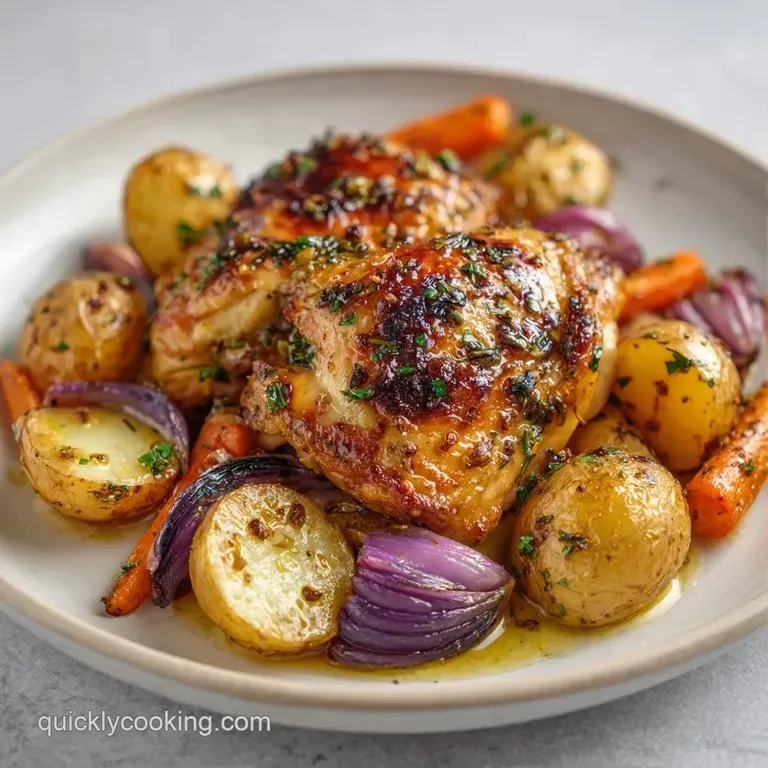
Phase 1: The Prep and Toss
- Preheat your oven to 425°F (220°C). Note: Make sure the rack is in the center for even airflow.
- In a large mixing bowl, combine the chicken thighs, potatoes, carrots, and onions.
- Whisk together the seasoning blend (extra virgin olive oil, garlic powder, smoked paprika, kosher salt, black pepper, and dried oregano) in a small cup.
- Pour the seasoning over the chicken and vegetables, and toss thoroughly to coat. Note: Use your hands to make sure every potato crevice is oiled.
Phase 2: The Strategic Layout
- Lightly grease a rimmed baking sheet with 1 tablespoon of olive oil.
- Spread the mixture onto the sheet, placing chicken thighs spaced evenly apart.
- Arrange vegetables in the gaps to avoid overcrowding. Note: If they are piled on top of each other, they will steam instead of roast.
Phase 3: The Roast and Check
- Roast in the center rack for 30–35 minutes until the chicken reaches 165°F (74°C) and potatoes have golden brown edges.
- Allow the meat to rest on the pan for 5 minutes before serving to lock in the juices.
Fixing Common Roasting Issues
The most common mistake people make with a Thigh Sheet Pan is temperature management. If your oven isn't fully preheated, the vegetables will release their water before the oil can sear them, leading to a "boiled" texture.
Why are my vegetables soggy?
This happens when the pan is too crowded or the oven temp is too low. When vegetables are packed tight, the steam can't escape. Use a larger pan or roast in two batches to ensure the moisture evaporates quickly.
The chicken is done, but the potatoes are hard.
This usually means the potatoes were cut too large or were too cold from the fridge. Try to keep your potato halves under 1 inch. If you're using larger potatoes, toss them in the oven 10 minutes before adding the chicken.
My chicken looks pale.
Pale chicken means there wasn't enough direct heat or oil. Make sure you aren't using parchment paper, which can sometimes act as a barrier to that "sear." For more on over high heat roasting, Serious Eats has great guides on maximizing surface browning.
| Problem | Root Cause | Solution |
|---|---|---|
| Mushy Carrots | Cut too thin | Slice into 1 inch rounds |
| Burnt Seasoning | Oven too hot | Check rack position (center) |
| Dry Chicken | Overcooked | Use a thermometer for 165°F |
Common Mistakes Checklist
- ✓ Did I preheat the oven fully to 425°F?
- ✓ Is there a gap between every piece of chicken?
- ✓ Did I grease the pan BEFORE adding the food?
- ✓ Are the potatoes and carrots roughly the same size?
- ✓ Did I let the meat rest for 5 minutes?
Flavor Variations and Substitutes
If you don't have everything on the list, don't sweat it. This recipe is very flexible. If you want a different vibe, try these swaps. If you love the potato texture here, you can apply similar roasting logic to my KFC Potato Wedges for a side dish.
| Original Ingredient | Substitute | Why It Works |
|---|---|---|
| Baby Potatoes (1 lb) | Parsnips (1 lb) | Similar density; Note: Sweeter and more earthy |
| Carrots (2 cups) | Broccoli (2 cups) | Great color; Note: Add in last 15 mins or it burns |
| Smoked Paprika (1 tsp) | Cumin (1 tsp) | Earthy profile; Note: Moves toward a taco style flavor |
| Red Onion (1 cup) | Shallots (4-5) | More delicate; Note: Cut in halves to prevent burning |
The Mediterranean Twist
Swap the smoked paprika for dried rosemary and add a handful of Kalamata olives during the last 10 minutes of roasting. Squeeze fresh lemon juice over everything the second it comes out of the oven.
The Honey Garlic Glaze
Whisk 1 tablespoon of honey into the oil blend. The honey will caramelize at 425°F (220°C), giving the Chicken Thigh Sheet Pan a sticky, sweet glaze that pairs perfectly with the salty potatoes.
Saving and Warming Leftovers
This meal keeps surprisingly well. The chicken thighs stay moist, and the vegetables hold their flavor.
Storage Store leftovers in an airtight container in the fridge for up to 4 days. Avoid stacking the chicken on top of the vegetables if you want to keep some of that texture.
Freezing You can freeze the cooked chicken and vegetables for up to 3 months. However, the potatoes can get a bit grainy when frozen. I recommend freezing the chicken and carrots, but eating the potatoes fresh.
Reheating Don't use the microwave if you can help it - it makes everything soggy. Instead, put the leftovers back on a sheet pan at 350°F (180°C) for about 10 minutes. This brings back the crispiness of the edges.
Zero Waste Tips Don't throw away the onion skins or carrot ends from your prep. Toss them in a freezer bag. Once the bag is full, simmer them with water and a bay leaf to make a quick vegetable stock for soups.
Making the Pan Look Great
Since this is a one pan meal, the presentation can look a bit chaotic. To make it look a bit more put together, don't just scoop it onto a plate.
Arrange the vegetables as a bed on the plate first, then nestle the chicken thighs on top. This keeps the juices from the meat soaking into the potatoes, which keeps them crispier for longer. A sprinkle of fresh parsley or sliced green onions adds a pop of color that breaks up the orange and brown tones of the roast.
If you're serving this to guests, you can transfer everything to a platter and drizzle a bit of the pan juices over the top. It looks rustic and intentional, rather than just "food from a tray." Trust me, the smell alone will have people heading for the table before you've even set the forks.
High in Sodium
860 mg 860 mg of sodium per serving (37% 37% of daily value)
The American Heart Association recommends a daily limit of 2,300 mg of sodium to maintain healthy blood pressure.
Tips to Reduce Sodium
-
Cut the Salt-25%
Reduce the kosher salt by half or replace it with a salt free alternative to significantly lower the sodium content.
-
Add Fresh Citrus-10%
Squeeze fresh lemon juice over the chicken and potatoes after roasting to provide a bright, tangy flavor that mimics salt.
-
Check Your Spices-5%
Double check that your garlic powder and smoked paprika are pure spices and not pre-mixed 'seasoning salts' containing sodium.
-
Boost Aromatics
Incorporate fresh parsley, thyme, or rosemary to add depth and complexity to the dish without adding any salt.
Recipe FAQs
How to bake chicken thighs in the oven?
Preheat your oven to 425°F (220°C) and roast for 30 35 minutes. Toss chicken and vegetables in the seasoning blend and spread them on a greased rimmed baking sheet.
How to cook boneless and skinless chicken thighs in an oven?
Toss with olive oil and spices, then roast at 425°F (220°C). Place the mixture in the center rack until the chicken reaches an internal temperature of 165°F (74°C).
What is the best way to cook skinless chicken thighs?
Use a high heat sheet pan method at 425°F (220°C). This ensures the meat stays moist while the baby potatoes and carrots develop golden brown edges.
What can I do with two pounds of boneless chicken thighs?
Prepare a scaled-up version of this sheet pan roast. Increase the vegetables and seasoning proportionally and use a larger rimmed baking sheet to prevent overcrowding.
How to cook chicken thighs in a pan?
Spread them on a greased rimmed baking sheet and roast at 425°F (220°C). Using a sheet pan instead of a skillet allows you to cook the chicken and vegetables together for a complete meal.
Is it true that crowding the baking sheet doesn't matter?
No, this is a common misconception. Overcrowding the pan traps moisture, causing the ingredients to steam rather than roast, which leads to mushy vegetables and pale chicken.
How to ensure chicken thighs stay juicy?
Allow the meat to rest on the pan for 5 minutes before serving. This locks in the juices for a more tender result. If you mastered the temperature precision here, apply it to our sourdough focaccia for perfect results.
Chicken Thigh Sheet Pan