Creamy Lobster Risotto: Velvety and Buttery
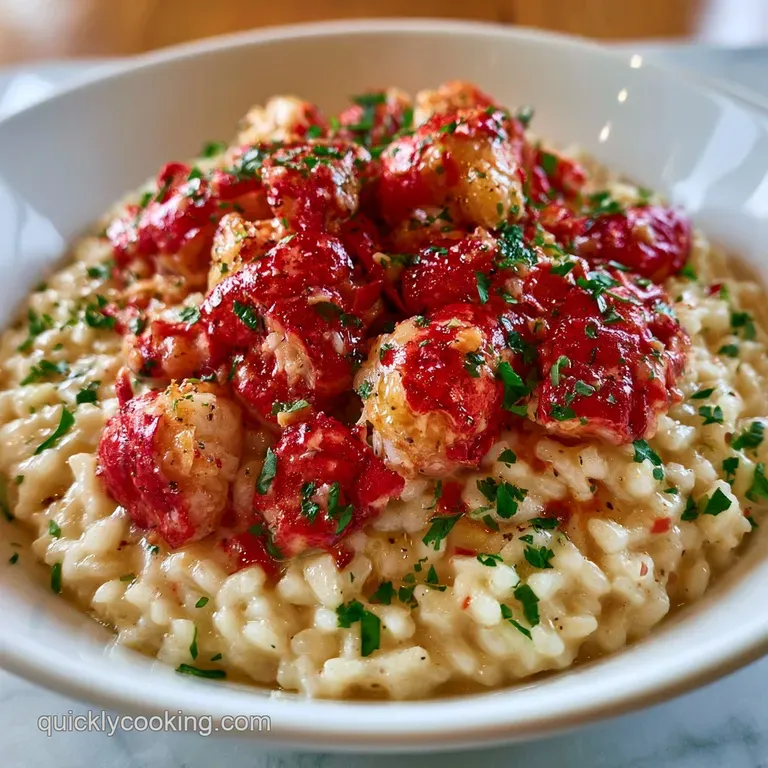
- Time:15 minutes prep + 30 minutes cook = Total 45 minutes
- Flavor/Texture Hook: Velvety, buttery rice with tender, seared lobster chunks
- Perfect for: Special date nights or a high end dinner party
The sizzle of butter hitting a hot pan is the best sound in the kitchen, especially when you drop in chunks of fresh lobster. I remember the first time I tried making this for a small anniversary dinner. I was so focused on the rice that I almost overcooked the lobster, turning it into bouncy rubber bands.
It was a stressful 30 minutes, but the moment I folded that butter seared seafood back into the rice, the smell of salt and lemon filled the room.
Since then, I've focused on efficiency. You don't need to be a professional chef to get a restaurant style result. You just need to manage your heat and keep your stock warm. This recipe isn't about spending hours stirring; it's about understanding the cues the food gives you.
You'll end up with a Creamy Lobster Risotto that feels luxurious but doesn't require a million pots and pans. We're going to use a couple of simple tools and a few specific timing checkpoints to make sure the lobster stays tender and the rice stays silky.
The Secret to the Texture
Getting the right consistency is where most people trip up. It's not actually about adding cream, but about how the rice interacts with the liquid.
Starch Friction: Stirring Arborio rice causes the grains to rub against each other, knocking the starch off the outside. This starch thickens the stock into a velvety sauce.
Temperature Stability: Using warm stock prevents the pan temperature from dropping every time you add liquid. If you add cold stock, the rice grains seize and you lose that creamy flow.
The Finish: Adding cold butter and cheese at the very end, known as the mantecatura, creates a final emulsion. This is what gives the dish its glossy, professional look.
Acid Balance: A splash of lemon juice at the end cuts through the heavy fats of the butter and cheese. It wakes up the lobster flavor so the dish doesn't feel too "heavy."
| Method | Time | Texture | Best For |
|---|---|---|---|
| Stovetop | 30 minutes | Velvety/Controlled | Traditional results |
| Oven | 45 minutes | Consistent/Uniform | Large crowds |
Component Analysis
The ingredients in a Creamy Lobster Risotto aren't just for flavor; they each have a specific job to do in the pan.
| Ingredient | Science Role | Pro Secret |
|---|---|---|
| Arborio Rice | Amylopectin Source | Stir frequently to maximize creaminess |
| Dry White Wine | pH Regulator | Deglazes the pan and balances fat |
| Seafood Stock | Flavor Carrier | Keep it simmering in a separate pot |
| Parmesan | Emulsifier | Grate it finely so it melts instantly |
Ingredients You'll Need
Grab these items before you start. I've found that having everything chopped and measured (mise en place) is the only way to keep this fast paced.
- 1 lb (450g) lobster tails, shelled and cut into bite sized chunks
- 4 tbsp (56g) unsalted butter, divided Why this? High fat for searing and finishing
- 2 cloves (6g) garlic, minced
- 1/2 tsp (3g) sea salt
- 1/4 tsp (1g) black pepper
- 1.5 cups (300g) Arborio rice Why this? High starch content for the sauce
- 1 medium (50g) shallot, finely diced
- 1/2 cup (120ml) dry white wine Why this? Adds brightness and cuts richness
- 6 cups (1.4L) seafood stock, kept warm
- 1/2 cup (50g) Parmesan cheese, freshly grated
- 1 tbsp (15ml) fresh lemon juice
- 1 tbsp (4g) fresh parsley, chopped
| Original Ingredient | Substitute | Why It Works |
|---|---|---|
| Arborio Rice | Carnaroli | More starch. Note: Holds its shape better than Arborio |
| Seafood Stock | Clam Juice | Similar brine. Note: Dilute with water to avoid over salting |
| Parmesan | Pecorino | Sheep's milk fat. Note: Saltier and sharper flavor profile |
The Essential Tools
You don't need a kitchen full of gear. I keep it simple to minimize cleanup. A wide skillet for the lobster and a heavy bottomed Dutch oven for the rice are the only essentials. I prefer a wooden spoon for stirring because it doesn't scratch the pot and gives a good feel for the rice's resistance.
Chef's Note: If you have a wide, shallow pan, use it for the risotto. More surface area means the liquid evaporates more evenly, which helps the rice cook consistently.
Step-by-step Cooking Guide

Let's crack on. Keep your seafood stock simmering on a low burner right next to your main pot.
Phase 1: Lobster Prep
- Melt 2 tbsp (28g) of butter in a wide skillet over medium heat.
- Sauté minced garlic for 30 seconds until fragrant but not brown. Note: Burnt garlic makes the whole dish bitter
- Add lobster chunks and season with salt and pepper. Sear for 2 minutes per side until the edges are opaque but the center is slightly translucent.
- Remove lobster and any accumulated juices from the pan and set aside. Note: Do not throw away those juices; they are pure flavor
Phase 2: Toasting Rice
- In a Dutch oven, melt the remaining 2 tbsp (28g) of butter over medium heat.
- Add the diced shallots and sauté for 3 minutes until translucent and soft.
- Add the Arborio rice. Stir constantly for 2-3 minutes until the edges look translucent but the center is still white. Note: This toasting prevents the rice from becoming mushy
Phase 3: Adding Stock
- Pour in the white wine. Stir until the liquid is completely absorbed and the raw alcohol smell is gone.
- Add one ladle (about 1/2 cup) of warm seafood stock. Stir frequently, waiting until the liquid is almost gone before adding the next ladle. Repeat this for the remaining stock. Note: According to Serious Eats, the constant movement is what creates the creamy texture
Phase 4: The Finish
- Once the rice is tender but al dente, stir in the Parmesan cheese, lemon juice, and fresh parsley. The texture should be "wavvy" (all'onda), not a stiff pile.
- Gently fold in the seared lobster and its reserved juices just before serving. Note: Folding prevents the lobster from breaking apart
Fixing Common Risotto Issues
Risotto can be temperamental. Usually, it comes down to the ratio of liquid to starch or the heat of your stove. If your rice is sticking, you're likely using too high a heat. If it's soupy, you've added too much stock too quickly.
Troubleshooting Common Issues
| Issue | Solution |
|---|---|
| Why Your Rice Is Grainy | This happens when the rice hasn't released enough starch or hasn't cooked through. It's often caused by adding stock too fast or not stirring enough. |
| Why Your Lobster Is Rubbery | Overcooking is the enemy here. If the lobster stays in the pan too long during the sear or is cooked too long during the final fold in, it will toughen up. |
| Why Your Sauce Is Gluey | Too much stirring or using a rice with too much starch (like some super starch varieties) can make the dish thick like paste. |
Common Mistakes Checklist
- ✓ Did you keep the stock warm? (Cold stock kills the creaminess)
- ✓ Did you toast the rice? (Untoasted rice becomes mush)
- ✓ Is the lobster only seared, not boiled? (Keep the center translucent)
- ✓ Did you add the lemon at the end? (Acid should be a finishing touch)
- ✓ Is the consistency "wavvy"? (It should flow on the plate, not stand still)
Fun Ways to Swap
If you want to change the vibe of this Creamy Lobster Risotto, you can easily pivot the flavors. For a more earthy taste, stir in some sautéed wild mushrooms or a pinch of saffron during the rice toasting phase. Saffron gives it a stunning gold color and a floral scent that pairs brilliantly with seafood.
If you're looking for something a bit more veggie forward, add some frozen peas or blanched asparagus tips during the last five minutes of cooking. For those who want a different kind of creamy comfort, you might enjoy my German Hunters Sauce for a meatier experience.
For a budget friendly version, you can substitute the lobster with shrimp or scallops. Use the same searing technique: high heat, short time, and remove them before they fully cook through. The result is still a high end seafood risotto but at a fraction of the cost.
| Option | Addition | Impact |
|---|---|---|
| Luxury | Saffron threads | Floral aroma, deep gold color |
| Garden | Fresh Peas | Pops of sweetness and color |
| Budget | Large Shrimp | Lower cost, similar texture |
Storage and Leftovers
Risotto isn't the best for leftovers because the rice continues to absorb liquid even after it's off the heat. However, you can store it in the fridge for up to 2 days in an airtight container.
To reheat, don't use the microwave if you can help it. Instead, put the risotto back in a pan over medium low heat and add a splash of water, stock, or white wine. Stir gently until it loosens up and returns to that velvety state.
For zero waste, use your lobster shells to make a quick stock. Simmer the shells with water, a bit of onion, and celery for 20 minutes, then strain. You can use this as the base for your seafood stock in the next batch of Creamy Lobster Risotto.
Serving and Pairing Ideas
This dish is rich, so you need something to cut through that butter. A crisp glass of Sauvignon Blanc or Pinot Grigio is the standard choice. If you're looking for a side, a simple arugula salad with a sharp lemon vinaigrette works wonders.
If you want some bread on the side to soak up the leftover sauce, my Garlic Knots recipe is a great choice for adding a bit of crunch and punchy garlic flavor.
Decision Shortcut
- If you want it more decadent → Stir in an extra tablespoon of cold butter at the end.
- If you want it lighter → Increase the lemon juice and omit half the Parmesan.
- If you're serving a crowd → Use the oven method for the rice to save your arms from stirring.
Recipe FAQs
What is Lobster Risotto?
A rich, creamy Italian rice dish featuring lobster. It utilizes Arborio rice slowly simmered in seafood stock and white wine, then finished with butter and Parmesan.
What is in Gordon Ramsay's Lobster Risotto?
This version focuses on lobster tails, Arborio rice, seafood stock, and white wine. It is refined with shallots, garlic, Parmesan cheese, lemon juice, and fresh parsley for a bright, balanced flavor.
What is the secret to making creamy risotto?
Stir frequently to release the rice's natural starch. Adding warm stock one ladle at a time creates a velvety emulsion. If you enjoyed mastering this technique, see how the same principle of fat and liquid balance works in our homemade Caesar dressing.
What can I add to risotto to make it creamy?
Stir in Parmesan cheese, butter, and lemon juice. These official ingredients are folded in at the very end to provide the signature glossy finish and richness.
How to prevent the lobster from becoming rubbery?
Sear for only 2 minutes per side. Remove the lobster while the center is still slightly translucent and only fold it back into the rice just before serving.
Why is my risotto grainy?
You likely added the stock too fast or did not stir enough. This prevents the rice from releasing the starch needed to bind the liquid into a smooth sauce.
Is it true that risotto cannot be stored as leftovers?
No, this is a common misconception. You can store it in the fridge for 2 days, though you must add a splash of stock or white wine when reheating to restore the creamy texture.
Creamy Lobster Risotto