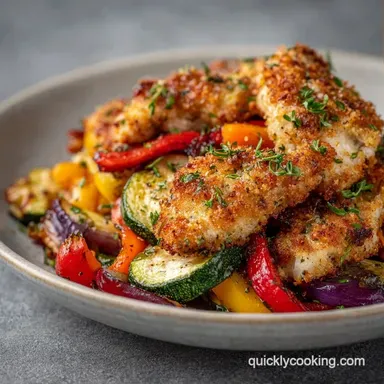
Parmesan Chicken and Veggies: Sheet Pan
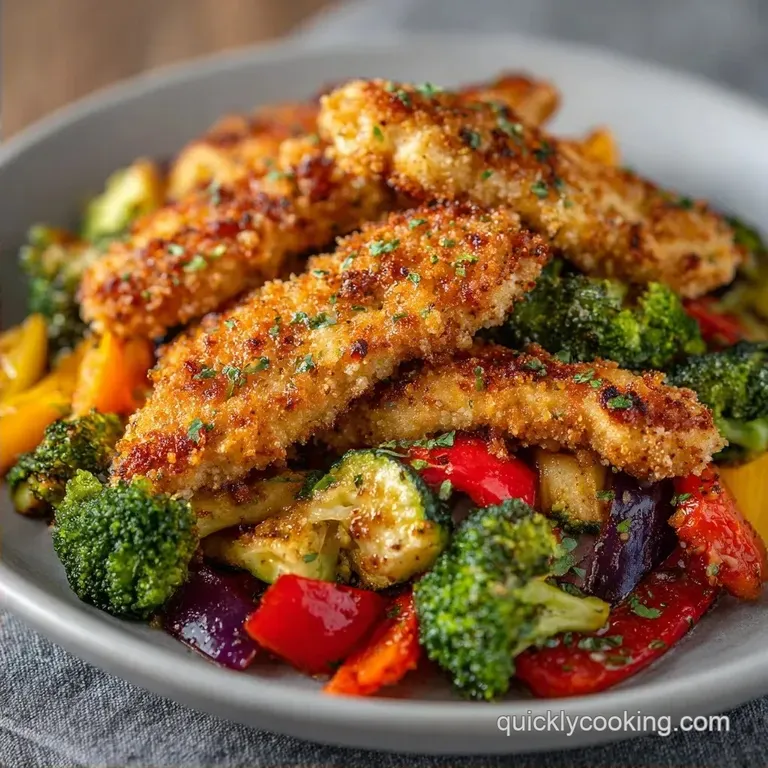
- Time: 15 min active + 25 min cook
- Flavor/Texture Hook: Salty, golden brown crust with tender, juicy interiors
- Perfect for: Fast weeknight dinners or healthy meal prep
The smell of toasted cheese and garlic hitting a hot oven is a total trigger for me. It takes me back to those nights when I tried to be fancy but ended up with a kitchen full of grease and a soggy crust.
For a long time, I thought the only way to get that restaurant style crunch was to deep fry everything or stand over a skillet for an hour, flipping pieces and praying they didn't stick.
But here is the truth: you don't need a vat of oil to get a crust that actually shatters. You just need the right temperature and a bit of timing. This method swaps the frying pan for a baking sheet, and it works because the oven creates a dry heat environment that crisps the cheese and Panko without soaking the meat in oil.
Expect a dinner that hits all the marks. You get a protein, a starch, and a green all on one tray, and the Parmesan Chicken ends up with a deep golden hue that looks like it took way more effort than it actually did. Right then, let's crack on with how to actually make this happen.
Parmesan Chicken
The secret to this dish is the staggered entry. If you throw everything in at once, you end up with burnt broccoli and raw potatoes, or overcooked chicken and hard veggies. By giving the potatoes a head start, everything hits the finish line at the same time. It's all about the flow of the pan.
I remember a time when I just dumped the broccoli and chicken in with the raw potatoes. The result was a disaster the chicken was like rubber, and the potatoes were basically steamed. Once I started timing the additions based on how long each ingredient takes to brown, the whole process became a breeze.
This is essentially a high speed system. You prep your breading station, get the oven screaming hot, and then just slide components in as needed. It's the most efficient way to get a full meal on the table without spending your whole evening scrubbing pans.
The Logic Behind The Crunch
- Panko Air Pockets: Unlike standard breadcrumbs, Panko is flakier. This creates tiny gaps that allow hot air to circulate and crisp the coating faster.
- Staggered Roasting: Potatoes take longer to soften than broccoli or chicken. Starting them early ensures a uniform texture across the whole tray.
- Butter Binding: Melted butter acts as the glue. It doesn't just help the crumbs stick, it also browns faster than oil, adding a nutty flavor to the Parmesan Chicken.
- Internal Temp Target: Pulling the meat at exactly 165°F (74°C) stops the fibers from tightening, which is what keeps the strips juicy.
| Approach | Texture | Effort | Best For |
|---|---|---|---|
| Fresh Breadcrumbs | Denser, softer crust | Higher (toasting) | Traditional feel |
| Panko Shortcut | Shatter crisp, light | Lower (direct) | Maximum crunch |
| Fresh Garlic | Pungent, bold | Medium (mincing) | Gourmet taste |
| Garlic Powder | Even, consistent | Low (sprinkle) | High efficiency |
Component Analysis
| Ingredient | Science Role | Pro Secret |
|---|---|---|
| Parmesan | Fat & Salt Binder | Use finely grated for a seamless crust |
| Panko | Structural Crunch | Press firmly to avoid "bald spots" |
| Butter | Browning Agent | Melt it slightly beyond liquid for richness |
| Paprika | Color & Earthiness | Adds the "golden" look without overcooking |
The Ingredient List
For the chicken and the crust, you'll need these specific items. Don't bother with low-fat cheese here it doesn't melt or brown the same way, and you'll lose that velvety richness.
- 1.5 lbs boneless skinless chicken breasts, sliced into 1 inch strips Why this? Strips cook faster and more evenly than whole breasts
- 1/2 cup Panko breadcrumbs Why this? Provides a lighter, crispier texture than standard crumbs
- 1/2 cup grated Parmesan cheese Why this? Adds salt and creates a savory, toasted crust
- 1 tsp garlic powder Why this? Distributes flavor evenly without burning like fresh garlic
- 1/2 tsp paprika Why this? Gives the Parmesan Chicken a deep golden color
- 1/4 tsp salt Why this? Enhances the natural savoriness of the meat
- 1/4 tsp black pepper Why this? Adds a subtle, sharp heat
- 2 tbsp melted unsalted butter Why this? Acts as the primary binder for the breading
For the sheet pan veggies: 1 lb baby potatoes, quartered Why this? High starch content helps them brown in the oven 3 cups broccoli florets Why this? Holds up well to high heat without turning to mush 2 tbsp olive oil Why this? High
Smoke point for roasting 1 tsp dried oregano Why this? Adds a Mediterranean herbaceous note Salt to taste Pepper to taste
- Chicken Breast
- Use chicken thighs for a juicier, fattier result. Note: they may need 5 more minutes of cook time.
- Panko
- Regular breadcrumbs work, but the result is denser.
- Parmesan
- Pecorino Romano works well, though it's saltier.
- Broccoli
- Cauliflower or asparagus are great swaps.
Essential Kitchen Tools
You don't need a fancy arsenal for this. A few basics will do the trick, but using a rimmed sheet is non negotiable. If you use a flat cookie sheet, the butter and oil will run off the edges and start a fire in your oven.
- Large rimmed baking sheet: This keeps everything contained.
- Parchment paper: This is a life saver for cleanup and prevents the Parmesan Chicken from sticking.
- Medium mixing bowl: For the breading mixture.
- Small bowl: For the melted butter.
- Meat thermometer: The only way to be sure the chicken is safe but not dry.
- Tongs: Essential for moving the potatoes and flipping the chicken if needed.
The Cooking Process
Let's get into the flow. Follow these steps exactly to hit those precision checkpoints.
- Heat the oven. Preheat your oven to 400°F (200°C) and line your large rimmed baking sheet with parchment paper. Note: A hot oven is what creates the initial sizzle for the crust.
- Prep the potatoes. Toss your quartered baby potatoes with 1 tbsp olive oil, salt, and pepper. Spread them out on the pan and roast for 10-12 minutes. until they start to soften and smell earthy.
- Mix the breading. In a medium bowl, combine the Panko, grated Parmesan, garlic powder, paprika, salt, and pepper. Stir until the color is uniform.
- Coat the meat. Dip each chicken strip into the melted butter, then press it firmly into the Parmesan mixture. Note: Really press the crumbs in so they don't fall off during the bake.
- Clear the space. Remove the baking sheet from the oven and push those pre roasted potatoes to one side.
- Add the greens. Put the broccoli florets in the center. Toss them right on the pan with the remaining 1 tbsp olive oil and dried oregano.
- Position the chicken. Place your breaded chicken strips on the remaining open side of the pan. Make sure they aren't touching, or they'll steam instead of crisp.
- The final roast. Bake for 15-20 minutes. until the chicken reaches an internal temperature of 165°F (74°C) and the crust is deep golden brown.
Chef's Note: If you notice the broccoli is browning too fast, you can toss it with a tiny bit more oil or move it further from the oven's heating element.
Troubleshooting Your Bake
Getting a sheet pan meal right is mostly about managing moisture. When too many things are crowded together, they release steam, and that steam is the enemy of a crispy Parmesan Chicken.
Soggy Crust Causes
If your coating feels soft or damp, you likely overcrowded the pan. When chicken strips touch, the moisture escaping the meat gets trapped, turning your breading into a paste. Always leave at least an inch of space between each piece.
Dry Chicken Issues
Overcooking by even three minutes can turn your dinner into rubber. Using a thermometer is the only way to be certain. If the chicken is dry, you probably missed the 165°F window.
Burnt Veggie Problems
Broccoli has thin florets that burn quickly. If the edges are charred but the stems are raw, your oven might be running hot. Try moving the pan to the middle rack or adding a splash of water to the bottom of the pan to create a tiny bit of steam for the veggies.
| Problem | Root Cause | Solution |
|---|---|---|
| Breading falling off | Not enough butter/pressure | Press crumbs firmly into the meat |
| Potatoes still hard | Not enough head start | Roast potatoes 5 mins longer before adding chicken |
| Pale crust | Oven temp too low | Ensure oven is fully preheated to 400°F |
Common Mistakes Checklist:
- ✓ Did you use parchment paper? (Prevents sticking)
- ✓ Did you press the Panko firmly? (Ensures a thick crust)
- ✓ Did you leave space between strips? (Prevents sogginess)
- ✓ Did you check the temp at 165°F? (Prevents dryness)
- ✓ Did you roast potatoes first? (Ensures they are cooked through)
Flavor Variation Ideas
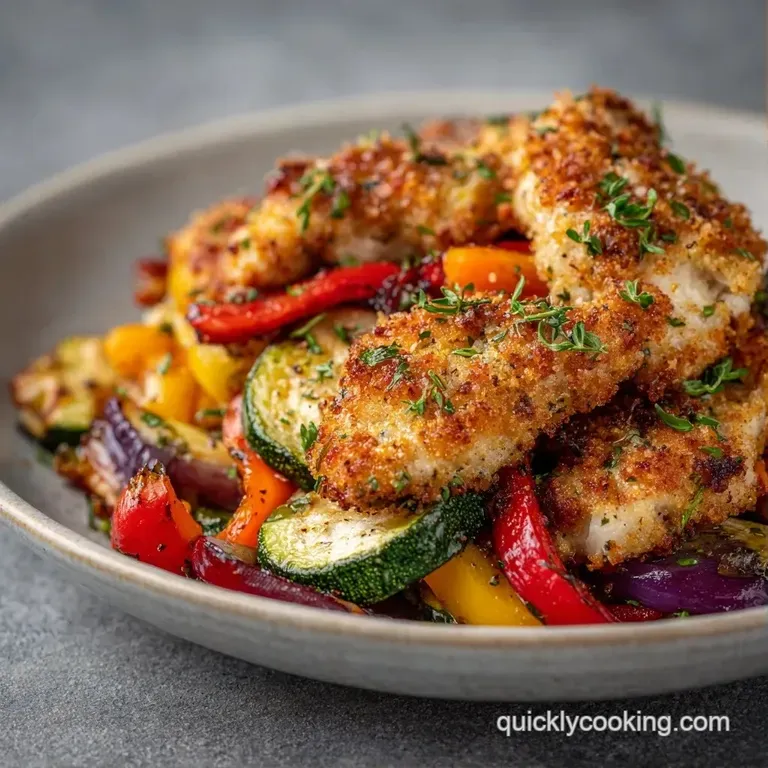
Once you have the base Parmesan Chicken down, you can really play with the flavors. The beauty of a sheet pan is how easy it is to swap a few seasonings.
For a Zesty Kick Mix in a teaspoon of lemon zest and some dried parsley into the breading. This cuts through the richness of the Parmesan and makes the whole dish feel lighter.
For a Spicy Twist Add 1/2 tsp of cayenne pepper or a pinch of red pepper flakes to the Panko mixture. If you want more heat, serve the finished meal with a drizzle of hot honey. This creates a sweet and spicy contrast that's brilliant.
For a Low Carb Lifestyle Swap the Panko for almond flour or crushed pork rinds. You'll lose some of the "shatter" effect, but the Parmesan still provides a great salty crust. If you do this, swap the potatoes for radishes or cauliflower.
For a Heartier Meal Use chicken thighs instead of breasts. Thighs are more forgiving and stay juicy even if you overcook them by a few minutes. Just remember to add about 5 minutes to the final bake time.
If you're looking for a creamy addition to balance the crunch, try pairing this with some Homemade Caesar Dressing on the side. The acidity of the dressing works perfectly with the toasted cheese.
Adjusting the Portion Size
Scaling a sheet pan meal isn't as simple as doubling the ingredients because you're dealing with limited surface area. If you crowd the pan, the Parmesan Chicken will steam, and you'll lose that crunch.
Scaling Down (1/2 Batch) If you're just cooking for two, use a smaller baking sheet. Reduce the potato roast time by about 20% since there's less mass in the oven. Beat one egg or melt 1 tbsp of butter, then use only what you need.
Scaling Up (2x or 4x Batch) Never try to fit double the food on one pan. Work in batches or use two separate sheets. For the seasoning, don't double the salt and paprika increase them by 1.5x only. Spices can become overwhelming when scaled linearly.
If you're baking two pans at once, lower the oven temperature to 375°F (190°C) and extend the cooking time by 5-10 minutes. Also, rotate the pans halfway through (top to bottom, front to back) to ensure even browning.
Debunking Common Myths
There are a few things people say about roasting meat that just aren't true. Let's clear those up.
The "Searing Seals in Juices" Myth You'll often hear that you need to sear meat in a pan first to "lock in" the juices. This is false. Moisture loss happens regardless of how you start. The crust on the Parmesan Chicken is for flavor and texture, not for moisture retention.
The "Fresh Cheese is Always Better" Myth While fresh Parmesan is great for pasta, pre grated, dry Parmesan actually works better for breading. It has less moisture, which helps the Panko stay crisp rather than becoming soggy.
Storage and Waste Tips
Don't let the leftovers go to waste. This meal holds up surprisingly well if you handle it correctly.
Refrigerator Storage Place the chicken and veggies in an airtight container. It'll stay good for 3-4 days. The crust will soften in the fridge, but we can fix that.
Reheating for Maximum Crunch Avoid the microwave at all costs. It will make the Parmesan Chicken rubbery. Instead, pop the pieces back into a 350°F (175°C) oven or an air fryer for 5 minutes. This brings back the shatter crisp texture.
Freezing Instructions You can freeze the cooked chicken for up to 2 months. Wrap each strip individually in foil before putting them in a freezer bag. Reheat from frozen in the oven at 350°F (175°C) until heated through.
Zero Waste Ideas Don't toss the broccoli stems. Peel the woody outer layer, slice the tender inside into rounds, and toss them on the pan with the florets. They taste like mini carrots.
Also, if you have leftover potato peels, toss them in oil and salt and roast them at 400°F for 10 minutes for a quick snack.
Best Side Pairings
Since this is a full meal in itself, you only need a few additions to make it feel like a feast.
The Comfort Route If you want something truly filling, serve this with a side of Garlic Knots recipe. The soft, buttery bread is a great contrast to the crispy chicken.
The Light & Fresh Route A simple arugula salad with lemon juice and olive oil cleanses the palate. The bitterness of the greens balances the saltiness of the Parmesan.
The Classic Route A dollop of garlic aioli or a side of marinara sauce for dipping is always a win. If you have some leftover pasta, tossing it in a light butter sauce works wonders.
This Parmesan Chicken approach is all about speed and results. By controlling the timeline and the temperature, you get a high end dinner without the high end stress. It's a reliable, fast paced system that delivers a velvety interior and a crunch that actually lasts.
Trust me on this once you stop frying and start roasting, you won't go back.
Critical Sodium Level
1240 mg 1,240 mg of sodium per serving (54% 54% of daily value)
The American Heart Association recommends a daily sodium limit of 2,300 mg, with an ideal limit of 1,500 mg for most adults to reduce the risk of cardiovascular disease.
Tips to Reduce Sodium
-
Eliminate Added Salt-25%
Remove the 1/4 tsp salt and the 'salt to taste' additions entirely. This is the most effective way to drop sodium levels instantly.
-
Reduce Parmesan Cheese-15%
Cut the grated Parmesan cheese in half or substitute it with nutritional yeast for a similar savory, nutty flavor with much less salt.
-
Check Breadcrumb Sodium-5%
Switch to a low-sodium or unsalted Panko brand, as some commercial breadcrumbs contain hidden salt.
-
Enhance with Aromatics
Add fresh lemon juice, zest, or extra black pepper to provide a bright, sharp flavor profile that compensates for the lack of salt.
Recipe FAQs
How to bake chicken thighs in the oven?
Preheat the oven to 400°F (200°C). Coat the chicken in melted butter and the Parmesan Panko mixture, then bake for 15-20 minutes until the internal temperature reaches 165°F.
What is the best way to cook skinless chicken thighs?
Slice them into uniform 1 inch strips. This ensures they cook quickly and evenly alongside the roasted baby potatoes and broccoli.
How to cook boneless and skinless chicken thighs in a pan?
Sear in olive oil over medium heat. Cook for 3-5 minutes per side until the crust is golden brown and the meat hits 165°F.
What can I do with two pounds of boneless chicken thighs?
Prepare a double batch of this sheet pan meal. Use two separate baking sheets to avoid overcrowding, which prevents the crust from steaming.
Why is my chicken crust not getting crispy?
Avoid overcrowding the baking sheet. Too many items release steam that softens the breading. If you enjoyed managing moisture for a crisp finish here, see how we handle liquid reduction in our German hunters sauce.
How to reheat leftovers for maximum crunch?
Pop the pieces into a 350°F (175°C) oven or air fryer. Heat for 25 minutes to restore the shatter crisp texture and avoid the microwave.
Is it true that I must use eggs to make the breading stick?
No, this is a common misconception. Melted butter provides sufficient adhesion to keep the Panko and Parmesan firmly attached to the chicken.
Sheet Pan Parmesan Chicken